Author: WalkintotheFuture

  • Walk-up Music

    Walkup music image

    Major League Baseball (MLB) players leverage music to help in their in-game preparations.  The concept of hearing music at MLB games is not new but today’s modern players have really stepped up their games and insert their personalities and thoughts into their ‘Walk-up’ music selection.  Walk-up music is what you hear as a hitter steps up to the plate for an at-bat or a pitcher enters the game.  The music is normally picked by the hitter or pitcher and played over the stadium speakers to energize the crowd and the specific player.

    View a list of 2017 Walk-up music here:  https://ftw.usatoday.com/2017/04/mlb-walk-up-songs-list-best-nelly

    As you can see, the players select a wide range of music to represent them and to hype them up.

    So, why are we discussing Walk-up music as part of your Walk into the Future?

    Excellent question!  How do you get ready to tackle your day?  What actions do you take before giving a big presentation at work?  What impact would your personal Walk-up music have on your daily interactions?

    Incorporating Walk-up music or some semblance into your daily interactions can provide the inspiration needed to accomplish your task.  Not saying you will have music blasting over a stadium PA system, but you can find your inspiration in music to generate the mindset needed for success.

    As an introvert I still need an extra push prior to any speaking engagement I have.  My speaking engagements range from on-campus workshops, Chamber of Commerce presentations, Economic Vitality Council recruiting events and Keynote speaker responsibilities.  Most people who have seen me in front of a crowd assume I don’t experience nerves or anxiety before I take the stage.  Well, truth be told even with the amount of speaking I have done, I still need that extra push to get me prepared to speak and deliver the content needed.

    I have leveraged Walk-up music my entire professional career like MLB players are doing.

    Big presentation for me and I go directly to an 80’s Hip Hop classic by Eric B and Rakim:  Move the Crowd.  This song reminds me the main reason I’m speaking is to connect with my audience and provide them with content they can use.  It reminds me to lock in and focus on what I’m saying, how it’s said and why it’s needed.  I play this music in the car, on the computer or on my phone prior to my presentation.

    I switch up my Walk-up music and where it’s played when I do Keynote speaking.  I have a love for Reggae music and the ‘Irie’ vibe it provides.  I like to play Bob Marley music for my audience prior to my introduction.  The Reggae sounds helps relax and focus me and seems to put the audience members into a great mood to receive my message.  I always play the song Jammin’ right before I’m ready to take the stage and impart my words of wisdom on the audience.  Again, the concept of Walk-up music is designed to get me and the audience ready in these situations.

    So, I ask again:

    • How do you get ready to tackle your day?
    • What actions do you take before giving a big presentation at work?
    • What impact would your personal Walk-up music have on your daily interactions?

    Look to generate your own Walk-up music ideas to help you during the day.  Leverage this concept to help mentally prepare for that big presentation you have coming up.  Find the music needed to help you thrive and enjoy the process.

    Let me know your final selections for your Walk-up music!  Thanks!

    Walkup music stats

  • Building Resiliency

    Resilience Bottom

    Resilience is that affable quality that allows some people to be knocked down by life and come back stronger than ever (Psychology Today).

    Building resiliency can provide a new window towards stated goals and help adjust your mental outlook.  There will still be days where you will face challenges, but resiliency helps adapt to the challenges and come out stronger.

    There are multiple techniques to use to build resiliency.  The American Psychological Association (APA) list the following:

    • Make connections
    • Avoid seeing crisis as insurmountable
    • Accept change
    • Move towards your goals
    • Take decisive actions
    • Look for opportunities for self-discovery
    • Nurture a positive view of yourself
    • Keeps things in perspective
    • Maintain a hopeful outlook
    • Take care of yourself

    These are great reminders to add to your toolkit to help your personal and professional growth.

    Two stand out to me:  Move towards your goals and nurture a positive view of yourself.

    Goal Setting

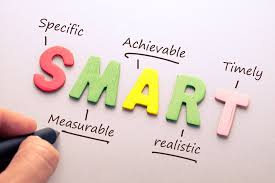
    Setting SMART (Specific, Measurable, Attainable, Results-focused, time based) goals can enhance your journey towards resiliency. The SMART goal process will create a platform to view progress and adjust as needed.  SMART goal formation shows if you are truly moving towards your goals and highlights growth.

    Nurture a positive view of yourself

    This trait comes back to self-awareness and the ability to foster positive self-talk.  We can be our own worst critic in life, but it doesn’t have to be that way.  Look for ways to give yourself credit for your progress (SMART goals) and generate positive thoughts (Irie) needed to enjoy the day.  There will be bumps in the road, but resiliency helps you navigate the tough times and come out on the other side better than before.  Continue to practice positive self-talk as you interact throughout the day.

    Building resiliency is an on-going process.  Practice resiliency daily and adjust as needed.  It will be well worth it as resiliency will help you power through your day.

    References

    The Road to Resilience. (n.d.). Retrieved September 24, 2018, from http://www.apa.org/helpcenter/road-resilience.aspx

    Resilience

  • Orange Theory Fitness

    Orange Theory Fitness (OTF) is based on the science of Excess Post-Exercise Oxygen Consumption (EPOC) designed to get clients’ in their ‘target zone’ to stimulate metabolism and increase energy (OTF).  This approach allows OTF clients to burn calories during their 60-minute workout and up to 36 hours after workout completion.  This group training program is led by a coach who provides instruction, motivation and an extra little push as needed throughout the training session.

    I decided to try OTF to see if this training program can be added to help me with my half marathon training program.  Still looking for training methods to help me with my stated goal to run a half marathon under 2 hours.  My normal training and running routines are going very well but wanted to explore OTF to see if this type training would increase endurance and speed needed to meet my running goal.

    My local OTF studio allowed me to sign-up for a free session to experience the workout and ‘afterburn’ advertised.  I was able to pick a day and time that fit my schedule.  The studio staff did a very good job explaining the science behind the OTF process.  They also conduct an in-depth interview to gauge each client’s fitness levels and goals.  This information is used to help the session coach understand how to help each client meet or exceed their goals.  Identifying my running goals allowed my session coach to come over and provide individualized coaching on ways to improve my endurance, speed and running form.

    My free session was focused on ‘endurance’ and was comprised of multiple treadmill, water row and weight lifting cycles.  The first half of my session had me rotating between cardio stations (treadmill and water row).  We were given time and distance goals for each station and rotated after meeting those goals.  Example:  4 minutes on the treadmill at 5.5 miles per hour then 700-meter water rows then repeat 3 times.  This comprised the first portion of the session.

    My small group rotated over to the weight floor to complete a series of weight/body weight exercises.  Compound movements were used to help/maintain endurance and proved tougher than I thought they would be.  We could pick our own weights but were given guidelines on what we should lift for each rotation.  There were 6 different movements required to complete this portion—some I’ve never tried before.  I was surprised how tough body weight pushups became after a few cycles based on the other movements we completed.  Example:  dumb bell ski lifts (12 reps), push-back push-up (12 reps), dumb bell kicks (12 reps) then repeat 3 times, followed by dumb bell swings (12 reps), bicycle abs (24 reps), push-back push-up (descending reps) repeated 3 times.

    Sounds like a lot of work but it was fun, and I could tell I had completed a good workout.  My pump was intense, and I felt surprisingly good after my OTF experience.

    Researching the multiple membership options provided to see which would benefit me the most.  This type program can enhance my current half marathon training and get me under my stated goal of two hours.

    Have you ever tried the OTF program?  What benefits can a program like this bring to your current fitness level?  Curious.

    orangetheory-fitness-audubon

  • Coffee Shops

    The past few months on my ‘Walk into the Future’ have allowed me to discover and immerse myself into the coffee shop world.

    Not saying I’ve never been in a coffee shop, but my current walk has me exploring coffee shops as an outlet for my creative flow.  Most of my previous blog posts were imagined, designed and written in a coffee shop.  I find the environment rich with audial, creative and visual stimulation to help generate ideas and then put them in some measurable format to share via blog.

    The people watching in this environment is first rate!  It’s amazing watching the people interactions within a coffee shop—regardless of the time of day.  The amount of business being transacted within coffee shops highlights the benefits of networking away from an actual office.  People bring clients or prospective clients out for coffee to discuss work product, marketing designs and mergers.

    Friendly get togethers are another large portion of the people who frequent coffee shops on a random Tuesday.  Friends meeting up after a morning yoga class or run occupy most of the seats today.  The demographics of these groups highlight a diverse crowd who really enjoy good coffee and conversation.

    I make a point to patronize multiple local coffee shops to experience interactions on multiple spectrums.  Some of the shops I frequent have a faster pace to patron interactions, tone of the conversations and the actual noise level within.  Others have the pace, feel and sound inflections like a library with the real or perceived ‘hush’ look from people.

    I find myself gravitating towards the quieter coffee shops because I can concentrate a bit more and research/write additional context.

    My favorite coffee shop so far is Lucky Goat.  Good coffee, pastries, atmosphere and the people are always friendly.  There are numerous coffee shop options available but Lucky Goat continues to draw me in.

    What’s your favorite local coffee shop?


    Luck Goat2Lucky Goat3

  • Meditation

    Funny Meditation

    Meditation is an active process to train your mind.  This form of training can be done to relax or focus your mind when needed.

    According to Harvard Researcher Herbert Benson, meditation triggers a ‘relaxation response’ that causes activity reduction of the sympathetic nervous system.

    Areas meditation research have shown to help are:  lower blood pressure, reduce anxiety, stress relief and my favorite deep relaxation.

    Meditation practice can be used throughout the day to help improve your walk into the future.

    Find a comfortable place when needed to begin your meditation process.

    My day starts with a minimum of 5 minutes to meditate and properly prepare for the day.  I prefer a completely dark room without distractions (TV, music, etc.) in the background.  This process allows me to calm my thought process and identify things I want to focus on for the day.  I make a few declarations during this time:

    • Today will be a great day
    • I will make a difference today
    • Positive thoughts create positive results
    • Others as needed

    This provides the springboard needed to start the day off to generate desired results.

    Meditating at work is a little more challenging but can be accomplished.

    For those with an actual office, look for an opportunity to close your door for a few minutes.  Sit comfortably and close your eyes to begin.  Focus on your breathing and how your body reacts.  Let the concepts of your breathing rhythms help calm your mind, body and heart rate.   This process provides the most benefit when experiencing high stress periods in the work day.  Consistency in your meditation practice will allow you to find time in the day to take this mental and physical break needed.

    For those in a cubicle environment, look for an opportunity to get up from your desk and walk.  You can use this time to refocus, collect your thoughts or relax as needed.  A quick trip down the hall or outside to find a quiet spot to recharge can be the thing needed to get through a trying day.

    Leverage meditation during your day to regain focus, relax and eliminate stress.  It will not be one size fits all but can be beneficial to help you accomplish what’s needed.

    How can you use meditation to help conquer your day?  Curious.

    meditate3

  • Partnering

    Partner–A person who shares or is associated with another in some action or endeavor

    (Dictionary.com)

    Partnership2

    I leverage the Walk into the Future blog to highlight some of my travel, adventures and thoughts on multiple subjects (personal and professional).  There are times when I create blog content to help one of my ‘branches’ when they are experiencing different things in their professional and personal environments.  This is one of my ways to continue to keep my tree growing and to help others in a different way.  The content you read is generated once I get a ‘theme’ or ‘idea’ I believe I can develop into something I hope others would enjoy reading.  My goal is to always have two months’ worth of content I can select from when it’s time for me to post on Thursdays.

    I was extremely happy and honored when one of my former UCF students, mentee and friend, Daniel Botero asked me to partner with him on his extremely successful podcast, Mastering College.  Daniel decided to use his voice and create a platform to give back and help students, parents and faculty/staff understand ways current and future college students can maximize their time in college.

    I am proud to say Daniel and I spent numerous hours in my office when he was a UCF student and I worked in the Career Center discussing/creating his plan of action for his life after graduation.  He has done a fantastic job translating his knowledge and bringing in experts to create substantive content to help the next generation understand ‘Best Practices’ on the Mastering College podcast and maximizing efforts to become a successful student with a job after graduation.

    You can listen to Daniel’s podcast here:   https://linktr.ee/thedanielbotero

    Podcast episodes #10 and #11 are the episodes I partnered with Daniel while in Orlando in September.

    Please share the podcast with anyone you believe would benefit from this excellent resource.

    You can also follow Daniel via LinkedIn:  https://www.linkedin.com/in/thedanielbotero/

    Enjoy!

    Please note: I’m always looking for partnership ideas so reach out and let me know how I can partner with you or your organization.

    Partnership

  • Intermittent Fasting

    Intermittent fasting continues to grow in popularity as more people discover the positive benefits of the program.

    I was introduced to the concept through a friend during my time in Orlando.  Decided to give it a try after doing my personal research.  The concept of fasting does not appeal to most people and I was skeptical how this would improve health and physical wellbeing.

    I currently use the 16:8 model—16 hours of fasting with an 8-hour window to eat.  I can eat whatever I want during the 8-hour window including desserts.  No solid food at all during the 16-hour fasting window.  Example:  8-hour window = 11 am – 7 pm, 16-hour window = 7 pm – 11 am.  This can be adjusted based on daily activities.

    Other popular Intermittent Fasting models are:

    • Eat-Stop-Eat—you would fast for 24 hours, once or twice a week
    • 5:2 Diet—take in 500-600 calories on two non-consecutive days while eating normally on the other 5 days

    I always work out and run on an empty stomach so not eating first thing in the morning was not a tough adjustment for me when I decided to utilize Intermittent Fasting.  Your body will adjust to this concept quickly.  The initial hunger you feel will subside over time during your ‘fast’ period.  You can also suppress hunger by increasing your water intake.  Again, you can eat whatever you want during the 8-hour eating window.  No calorie counting, no avoiding certain foods during this timeframe.  Enjoy your meals, drinks and dessert if you want.

    I have not lost a massive amount of weight while following the intermittent fasting program.  I have lost inches on my waist and my body composition is more toned than before.  I attribute the toning process to my body using fat as energy during my fasting period.  I’m sure I can lose more weight if needed by adjusting the foods I eat during the 8-hour period.  I have a love affair with cake, so I’ve never eliminated it from my diet.

    The best thing about intermittent fasting is you own the process.  You can adjust the program to fit your daily lifestyle, weekend plans or travel.  It is not so rigid where you feel you are cheating if you break the times on occasion. Just pick back up as soon as you can to continue to reap the benefits of this health program.

    Check out intermittent fasting to see if the program would work for you.

    Intermittent Fasting

  • Volunteer

    The Salvation Army states, ‘We are dedicated to doing the most good’ when researching the organizational mission statement.

    This simple concept caught my eye as I looked for opportunities to volunteer and make a difference in the local community.  There are multiple local organizations geared to help others, but the Salvation Army was a great starting point to dip my toes back into the volunteer world.

    I reached out to their Volunteer Coordinator to check on the process and see what opportunities they had available.  She was quick to reply and let me know they always need help in the Retail Store, but the most pressing need was organizing the donated items for the Library.

    I decided to tackle the Library project since it was identified as a pressing need.  Turns out they had hundreds of donated items (bibles, hymnals, books, games) but no real organizational structure for the room.  My task was to bring some order to the Library and get items off the floor and on shelves—easy enough!

    Took me a little over two hours to create an organizational structure for the donated items and get everything on the shelves.  This project was not rocket science, but it was something the staff needed done to enhance their operations and introduce visitors to the Library.

    I shared a little about my academic and professional background with the Volunteer Coordinator and quickly discovered I could help them in additional ways.  Her major volunteer need for the holiday season will be Red Kettle bell ringers around the city.  Statistics show volunteer bell ringers garner more donations than paid bell ringers.  This is because the volunteers truly want to be there and are more engaging when greeting potential donors.

    I’m using my local network of contacts to help the Salvation Army with their recruitment program to find bell ringers for the holiday season.  I’m sure they will have a few other projects I can lend a hand with and enhance programming to meet their needs.  Looking forward to a long and productive partnership with the Salvation Army.

    What organizations can you help in your local area?  What special ‘skills’ can you lend to enhance the organizational mission and make a difference?

    Make it a great day!

    Volunteer

  • Authentic Leadership – Part 2 / The Interview

    Authentic Leadership and the four variables (self-awareness, internalized moral perspective, balanced processing and relational transparency) were introduced in Part 1.

    This posting will highlight an interview conducted by Danielle Sebranek who was an Employer Relations Graduate Assistant (GA) at the Florida State University (FSU) Career Center during my time there.

    Danielle wanted a better understanding of Authentic Leadership and we agreed to partner on this interview project in the Spring 2018 semester, so she could ask questions to get a better Authentic Leadership understanding and how to integrate this leadership style into daily interactions with direct reports.

    Danielle provided her approval to post her questions and overall summary below.  My direct responses follow her questions:

    • What first introduced you to the concept of authentic leadership? Is this something you sought out or did you naturally possess many of the qualities of a good authentic leader?
      • I stumbled across authentic leadership.  I wanted to complete my dissertation on the ‘1st Year Experience’ course but my advisor identified there was not enough Industrial/Organizational (I/O) Psychology involved with this subject.  My dissertation mentor introduced me to Authentic Leadership.  I liked the idea because I could relate to this leadership style.  After doing additional research, Authentic Leadership was selected as my preferred leadership style.
    • What are some ways you seek to create a positive work environment for your team?
      • I use daily interactions, adjusted for each person. Some team members I high five, some get a fist bump or elbow, etc.  Others, I just say good morning.  Establishing this daily routine and having personal conversations helps them know you are there for them.  I also take their input into consideration.  It is not my style to only talk to my team when I need something from them.
    • Who/What inspired these practices? In your work history, have you had a positive work environment stand out to you?
      • Honestly, I look back on two of my worst supervisors. I made a vow to not do things I didn’t like about their supervisory style.  My years at Macon State College standout because my supervisor (now mentor) gave our team the freedom to find our niche and conduct outreach to students as we saw fit.  I played volleyball with students on-campus as part of my outreach program.  The students saw me as a person and approachable.  Overall, my supervisor was willing to see things differently.  Colin Powell’s leadership approach also influences me daily.
    • What experiences have shaped your self-awareness?
      • Becoming a leader in the Air Force was the start of being self-aware because I couldn’t assume everyone learns the same and knows what I mean without explanation. The National Association of Colleges and Employers (NACE) Management Leadership Institute (MLI) feedback program was also important because I heard what past colleagues had to say about my work and I learned how others viewed me.  I learned you always need to check yourself and you need to be self-aware every day.  I approach my team on purpose; they don’t need to come to my office to approach me.
    • Is there someone in your past work experiences who showed relational transparency?
      • My mentor at Macon State College showed relational transparency. She took the time to explain processes.  My last Air Force supervisor was also good at pushing the team out to do things to understand the big picture.
    • How do you demonstrate relational transparency with your team?
      • I never sit on a high horse and say I’m the boss. I always listen to my team.  If something can’t be done, I make sure to explain the limitations.
    • What past experiences have helped you develop a strong internalized moral perspective?
      • I’ll share a conversation that has stuck with me and feels like it just happened yesterday. When I was a young Air Force instructor, a more veteran administrator observed my work and pulled me to the side for a quick chat.  He praised my work and asked me out of the blue if I wanted to know how to be successful in life.  He gifted me with this knowledge, “Be where you’re supposed to be, doing what you’re supposed to be doing, when you’re supposed to do it”.  Never compromise yourself and not be able to look yourself in the mirror.
    • Using balanced processing and welcoming feedback from your team is something you practice on a regular basis. Is this something you received training on or did you learn from experience?
      • I learned from experience and through reading Colin Powell’s book on leadership principles. If you don’t get up and walk around, it gives the perception you don’t care.  That’s why I go to my people.  I realized this concept (walking around) was tied to authentic leadership after conducting additional research.
    • How has your leadership style changed from each industry you’ve worked in? Have some environments been easier or more difficult to lead with authenticity?
      • Yes, I have grown as a leader. In the Air Force, leadership was based on rank.  People can complain but ultimately you can order people to do things.  Leadership is adaptable, and I have grown to be adaptable by learning how different people on my team work.  I talk with Gen X team members differently than Millennials. I’m comfortable enough to understand conversations with team members will all be different.  I know when certain team members ask ‘why’, they aren’t questioning authority but looking to understand.  Overall, authentic leadership works with and helps balance a team with multiple generations present.

    Danielle’s Summary:

    My conversation with Dr. Williams provided valuable insight into how to both grow as a leader and adopt authentic leadership in the workplace.  Leaders are not born overnight; it takes conscious reflection and communication with others to develop the necessary self-awareness.  Practicing authentic leadership foremost entails establishing approachability with your direct reports.  Daily interactions, visiting your team in their space, taking the time to learn about their individual personalities and backgrounds, and valuing their voices and opinions all help to show you care.  Adaptability is also an essential component of authentic leadership.  Recognizing team members think and behave differently allows you to cater your interactions in a way that is relatable to them.  Lastly, Dr. Williams stressed the importance of mentorship and learning from example.  Find someone you look up to in your workplace and sit down with them to hear their story and how they implement leadership in their role.


    Authentic Leadership

  • Authentic Leadership

    “Be yourself.  Everyone else is already taken”.

    (Oscar Wilde)

    Authentic Fish

    Authentic Leadership is rooted in positive psychology and can lead to greater self-awareness and regulated behavior of leaders.  This leadership style continues to grow and can be applied to multiple organizations and work settings.

    Authentic Leadership can be used to create positive work outcomes and improve organizational performance.  Authentic leaders are true to themselves, to others and are trusted by all levels.  Authentic leaders seek continued growth and can align thoughts, feelings and actions.  They are humble and consistent; this can be a positive predictor of direct report satisfaction.

    The four components or variables of Authentic Leadership are:  self-awareness, internalized moral perspective, balanced processing and relational transparency.

    • Self-awareness: the authentic leader has a full understanding of their strengths, values, weaknesses and how others view their leadership
    • Relational Transparency: the authentic leader presents authentic self to build trust.  They are consistent with words, thoughts and actions.
    • Internalized Moral Perspective: ability to integrate personal morals with self-perspective.  The leader must be self-aware to understand how their internal morals influence their actions.
    • Balanced Processing: the authentic leader can view both sides of an issue (positive and negative) before deciding.  This encourages the leader to seek multiple views and opinions and eliminates taking a defensive position when information is received.
      • My research shows direct report job satisfaction is best explained when leaders display balanced processing.

    Authentic Leadership implications for the work place

    • Interventions are received better
    • Work place efficiency improves
    • Encourages direct reports engagement
    • The leader is approachable, trusted, influential and displays relational interactions with direct reports

    How can you leverage Authentic Leadership in your work environment?  How would an Authentic leader impact your current work place?

    Authentic Leadership Part 2