Life is a marathon, not a sprint, Every mile leaves its own imprint. Some roads are smooth, some hills are steep, Some lessons are learned when everyone is still asleep.
We start with dreams and a distant goal, A fire within that fuels the soul. But dreams alone won’t carry us through, It’s the daily commitment to what we must do.
There will be days when the pace feels wrong, When the legs feel weak and the road feels long. When progress slows and doubts appear, And yesterday’s confidence turns into fear.
But wisdom teaches us when to run, When to rest, and when the work is done. For strength isn’t measured by speed alone, But by the patience and courage we’ve shown.
A marathon teaches what leaders should know, That lasting success takes time to grow. You cannot rush what must be earned, Or skip the lessons that must be learned.
Some miles are lonely, some shared with friends, Some require courage around unexpected bends. And those who encourage us along the way, Help us find strength for another day.
So, train with purpose, run with grace, Trust your journey, embrace your pace. The future belongs to those who see, That every step shapes who they will be.
And when the finish line comes into view, Remember the miles that carried you through. For the greatest victory isn’t how fast you ran, But the stronger person you became with a plan.
“Character is the real thing, whereas reputation is merely the shadow.”
(Abraham Lincoln)
One of the most important decisions a leader makes is choosing the right people to join their team. Organizations often focus heavily on experience, technical expertise, and credentials when evaluating candidates. While those qualities matter, there is another factor that frequently determines long-term success: character.
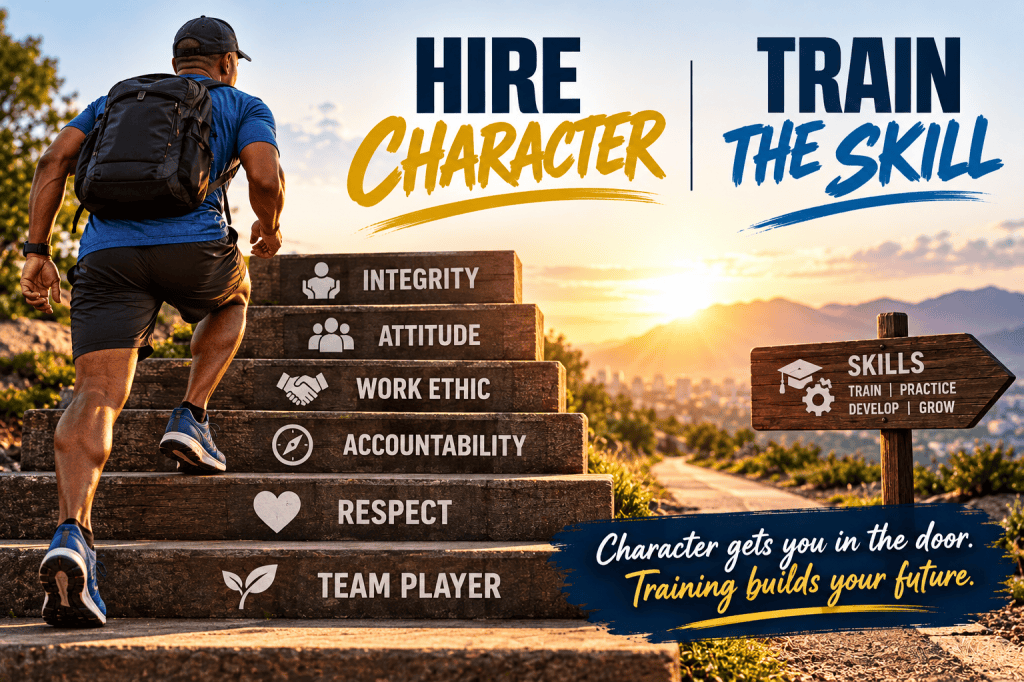
I adopted the hire character and train the skill philosophy years ago. My mentor hired me for a role at Macon State College simply on my character. She identified traits that she saw in me and decided to train me for the role. What an amazing concept, huh? I’m being funny with that last statement. 😊
The quick lesson is skills can be taught, knowledge can be acquired, and experience can be gained. Character, however, is much harder to develop. Fun fact, the few times I went against my own hiring concept ended with me having to remove a staff member who had the skill but lacked the character we needed in the work environment.
I coach new leaders to help them understand a simple but powerful principle: Hire character and train the skill.
What is character? Great question, Jayla. Character is the collection of values, habits, and behaviors that define how a person responds when no one is watching. It includes qualities such as integrity, accountability, humility, respect, work ethic and a positive attitude. I’m sure we could add more qualities, but these are the things I am looking for when hiring. All these qualities are important for me, but humility stands out when I’m making the final decision.
These traits influence how individuals interact with others, handle challenges, and contribute to organizational culture. A candidate may possess impressive technical skills, but if they lack integrity or accountability, those skills can become liabilities rather than assets.
Top organizations invest millions of dollars each year in training and development because skills are teachable. Employees can learn new software, technical procedures, customer service skills and communication strategies. Most people can improve these skills over time provided with the right work environment, coaching and a willingness to learn. What is much harder to teach is honesty, empathy, responsibility, and a genuine desire to contribute to the success of others.
Every hiring decision impacts organizational culture. This is not a huge stretch on the impact of hiring on the organizational culture. When leaders hire individuals with strong character, they strengthen the foundation of the team. These employees provide support for their colleagues, acknowledge mistakes, maintain a positive attitude during adversity and contribute to a healthy work environment.
By contrast, highly skilled employees with poor character can damage morale, create conflict, and undermine trust. Culture is not built by policies alone. It is built by people.
Many leaders have experienced the frustration of hiring someone with an outstanding resume only to discover that the individual struggles to work with others or align with organizational values. This type of employee must be identified quickly to avoid the following:
Increased turnover / conflict in the work environment / lower team morale / lost trust
A technically skilled employee may perform tasks well, but if their behavior negatively impacts the team, the overall cost can outweigh the benefits. This is the time for leaders to eliminate the potential for this employee to cause conflict in the work environment.
When leaders hire for character, they are also investing in future leadership. People with strong character often possess qualities that make them excellent leaders. They value relationships, earn trust and place the team’s success above personal recognition. These are the individuals who often rise through organizations and positively influence those around them.
I advise leaders to look beyond technical qualifications and ask questions that reveal character during the hiring process. Consider exploring examples of overcoming adversity, times when the candidate admitted a mistake and situations where they helped a teammate succeed. You can add other examples here, but these are things that I focus on when hiring.
The answers often reveal far more about future performance than a list of accomplishments on a resume. New systems will emerge, and job requirements will adapt. Yet the qualities that define character will remain timeless: integrity, respect and accountability will always matter.
Leaders who prioritize character create organizations that can adapt, grow, and thrive regardless of changing circumstances. The best teams are not necessarily made up of the most talented individuals. They are made up of people who combine talent with character.
As leaders, our responsibility is not simply to fill positions. It is to build teams capable of achieving extraordinary results while treating people with dignity and respect.
When given the choice, hire a person whose values align with your mission, whose integrity earns trust, and whose attitude elevates others. Then invest in teaching the skills they need to succeed. Because while skills may open the door, character determines how far someone will go.
Reflection Question
When evaluating talent, do you spend more time assessing skills or character—and how might your hiring outcomes improve if character became your primary filter?
Walk Into the Future Leadership Thought:
Skills may qualify someone for the job, but character determines whether they will elevate the team. Hire for who they are, then train them for what they need to know.
Irie!
Calvin Williams
“Focus on character over reputation, as character reflects who you truly are.”
The Walk into the Future blog provides unlimited access to new ideas and topics for me to explore. I have been making a concerted effort this year to expand my knowledge and topic base for myself and my readers. I’ve discovered a new level to my research and writing this year that will allow me to continue to get better daily.
Authentic Leadership is my foundational leadership philosophy but I’m looking to grow my leadership knowledge and practice. Fun fact, I had an Indian River State College colleague tell me last week that he patterns his entire work life off Authentic Leadership because I introduced it to him. What do you think about that, Alisa? 😊
Leadership books fill bookstore shelves while podcasts feature today’s top executives. The conferences you attend project the latest leadership trends and breakthroughs. My favorite leadership resource remains one that has been around for thousands of years—the Book of Proverbs. I live Proverbs 27:17 daily and it helps me make a positive difference in the world.
The Book of Proverbs is much more than a collection of wise sayings. It is a practical guide to leading with integrity, wisdom, humility, and purpose. While technology, organizations, and workplaces have evolved dramatically, human nature has not. The workplace still brings difficult decisions, interpersonal conflicts, ethical dilemmas, and the responsibility of influencing others. The Book of Proverbs provides timeless principles that remain remarkably relevant even in today’s fast-paced world.
One of the greatest mistakes I see leaders make is believing they must always have immediate answers. The Book of Proverbs teaches a different approach.
“The way of fools seems right to them, but the wise listen to advice.” (Proverbs 12:15)
My research shows that exceptional leaders are lifelong learners. They seek counsel, ask thoughtful questions, and welcome perspectives that challenge their own thinking. Wisdom is not found in having all the answers; it is found in being willing to learn before making decisions. Organizations become stronger when leaders embrace wisdom over ego.
Authentic leadership begins with consistency between words and actions. Staff members are inspired by leaders who demonstrate honesty, fairness, humility, and accountability. Skills may earn a promotion, but character earns trust. People rarely remember every decision a leader makes. They always remember how that leader made them feel and whether they could be trusted. Integrity becomes a leader’s greatest competitive advantage.
“The integrity of the upright guides them.” (Proverbs 11:3)
I have found that most leaders believe leadership means talking. The Book of Proverbs reminds us that leadership often begins with listening. Listening communicates respect, uncovers hidden challenges and strengthens relationships. When team members know they are heard, engagement rises, trust grows, and collaboration becomes easier.
The most influential leaders are often the best listeners.
“To answer before listening—that is folly and shame.” (Proverbs 18:13)
Success can quietly convince leaders they no longer need feedback. The Book of Proverbs warns against this mindset. Humility does not mean thinking less of yourself. It means recognizing that leadership is about serving others rather than elevating yourself. Humble leaders admit mistakes and they celebrate the success of others. These leaders continue learning long after reaching positions of influence. Fun fact, this is why I’m always reading something new to learn to enhance my leadership skills. This mindset creates organizations where continuous improvement becomes part of the culture.
“Pride goes before destruction, a haughty spirit before a fall.” (Proverbs 16:18)
Leadership is displayed in the work environment one conversation at a time. All conversations leaders have either builds trust or weakens it. There’s no middle ground as far as I can see. Constructive feedback delivered with respect creates growth; encouragement fuels confidence and recognition increase motivation. Simple concept, huh? Leaders who choose their words carefully shape healthy workplace cultures.
The Book of Proverbs encourages leaders to pursue something greater than personal success. Leadership is about influence, service and leaving a legacy. I’m proud to say I’ve left every work environment better than when I arrived. That’s a huge part of my Authentic Leadership legacy. The greatest leaders understand that success is measured not only by profits or promotions but by the people they develop, the culture they create, and the lives they positively impact. Shoutout to everyone who brings this same level of leadership to their work environment. My tree branches have no choice; this is a requirement. 😊
Leadership trends will continue to change. New technologies will reshape industries. Organizational structures will evolve but the qualities that define exceptional leadership remain constant.
These principles are as valuable today as they were thousands of years ago. Don’t overlook this timeless wisdom as you Walk into the Future. The Book of Proverbs reminds us that leadership is not about having power over people, it’s about having the wisdom to serve them well.
Reflection Questions
Which proverb best describes your current leadership style?
Where could wisdom replace impulse in your decision-making?
How are your words shaping the culture around you?
What legacy are you building through your leadership today?
I say leadership is not defined by your title but by your character, your influence, and your commitment to helping others become their best. Sometimes the most powerful leadership lessons aren’t new at all, they’re timeless.
Irie!
Calvin Williams
“The only true wisdom is knowing you know nothing.”
“Yoga is the fountain of youth. You’re only as young as your spine is flexible.”
(Bob Harper)
As runners, we often measure progress in miles, pace, heart rate, or race results. We celebrate finishing long runs, setting personal records, and crossing finish lines. But after age 50, success in running is measured by something even more valuable—the ability to keep running year after year. That’s where yoga enters the picture.
Many runners dismiss yoga as simply stretching. It’s one of the most effective ways to improve performance, reduce injuries, and extend a lifetime of running. Years of running can tighten the muscles that do the heavy lifting—hamstrings, calves, hip flexors, glutes, and lower back. Tight muscles alter running mechanics and increase the likelihood of injury.
Yoga gently restores mobility where runners need it most. Improved flexibility allows for a more efficient stride, better posture, and smoother movement with every mile. I started yoga years ago but have not stayed consistent over the years. This year I dedicated more time to my yoga practice to enhance my running efficiency and avoid injuries. I’ve been mostly successful with these concepts. I’ve suffered a few dings this year but I’m still running. 😊
Balance naturally begins to decline with age. Running strengthens the cardiovascular system, but it doesn’t necessarily improve stability. My yoga practice develops balance by strengthening the smaller stabilizing muscles throughout the body. Standing poses challenge coordination while improving ankle, knee, and hip stability—three areas that are critical when navigating uneven sidewalks, trails, or fatigue late in a race.
Every efficient runner depends on a strong core. Yoga strengthens the muscles surrounding the abdomen, lower back, hips, and pelvis. These muscles help maintain proper posture during long runs and reduce unnecessary movement that wastes energy.
When fatigue sets in mile eight or mile eighteen, a strong core helps me maintain good mechanics and finish strong. Most runners think improvement comes only from pushing harder. The truth is that growth happens during recovery. Yoga encourages circulation, reduces muscle tension, and promotes active recovery without placing additional stress on the joints. A twenty-minute yoga session after a hard workout may do more for your next run than another set of speed intervals.
Yoga improves joint mobility while strengthening the muscles that support those joints. Better alignment reduces unnecessary stress and helps distribute forces more evenly throughout the body. Running doesn’t have to wear out your body. Done wisely, it can strengthen it for decades.
Running challenges the body. Yoga trains the mind. Breathing techniques, mindfulness, and controlled movement teach patience, focus, and calm under pressure. These same skills prove invaluable during difficult training runs and races. When runners learn to stay present rather than panic during discomfort, they often discover another level of endurance.
Perhaps the greatest benefit of yoga isn’t improving flexibility or reduced soreness — it’s longevity. My objective isn’t simply running another race. It’s being healthy enough to run next year…and five years from now. Daily habits determine far more than birthdays ever will. A consistent yoga practice helps preserve strength, mobility, balance, and confidence—qualities that support not only running but every aspect of life.
One of my favorite sayings is, “Take care of your body. It’s the only place you have to live.”
As leaders, professionals, and runners, our health is one of our greatest assets. Every decision we make today shapes the opportunities we’ll have tomorrow. Walking into the Future isn’t just about reaching the next finish line. It’s about arriving there healthy, resilient, and ready for whatever comes next.
Sometimes the path to becoming a stronger runner begins by slowing down, taking a deep breath, and stepping onto a yoga mat.
Walk into the Future with strength. Walk into the Future with flexibility. Walk into the Future prepared for every mile ahead.
Who’s ready to join me in a yoga session? 😊
Fun fact, I started leveraging Tai Chi this year too. I’m at the beginning stages but enjoying the mindfulness so far.
Success isn’t about talent alone is a statement I love to share with my tree branches.
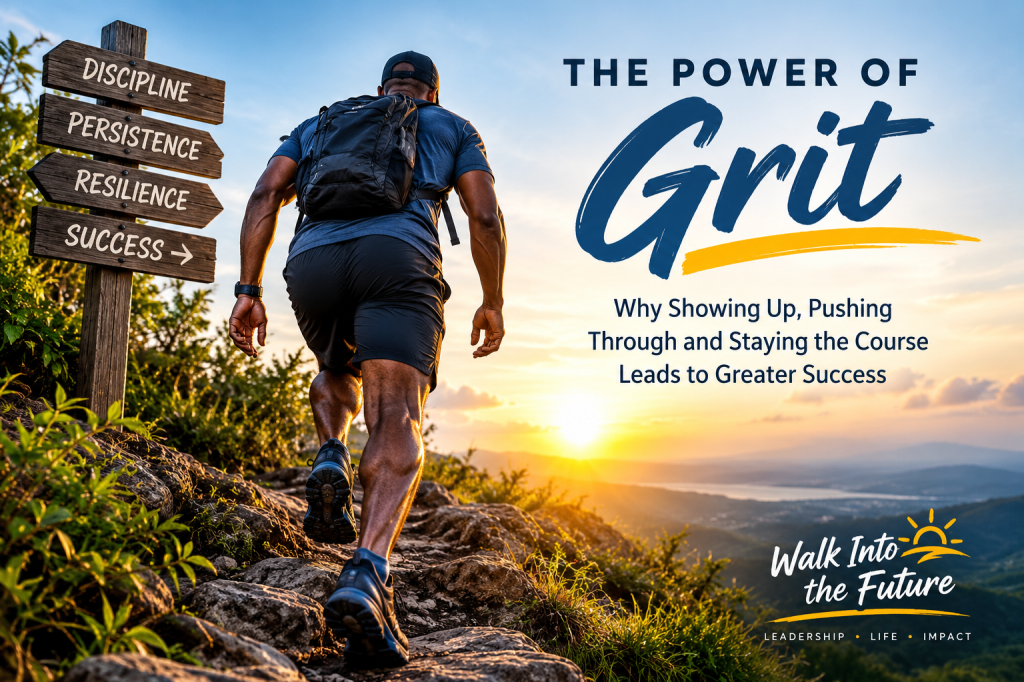
When we think about great leaders, we often focus on intelligence, charisma, experience, or natural ability. While those qualities certainly matter, there is another characteristic that often separates exceptional leaders from everyone else: grit.
Grit is the ability to persevere through challenges, maintain commitment during adversity, and continue moving forward when success seems distant. In leadership, grit is not about being stubborn. It is about having the resilience to pursue meaningful goals despite obstacles, setbacks, and disappointments.
The leaders who make the greatest impact are often not the most talented individuals in the room—they are the ones who refuse to quit.
As a runner, I’ve learned that success in long-distance races doesn’t happen because of one great workout. It comes from consistently showing up, especially on the days when motivation is low. Leadership works the same way.
Organizations face economic uncertainty, staffing shortages, changing priorities, and unexpected challenges. During these difficult times, team members look to their leaders for stability and direction. Grit allows leaders to remain focused on the mission while adapting to changing circumstances. It helps them stay committed to long-term goals rather than becoming distracted by temporary setbacks.
People follow leaders they trust. This is not a huge revelation or insight into building trust. Trust is not built when everything is going well. Trust is built when challenges arise and leaders demonstrate courage, consistency, and determination. When employees see their leader remain calm under pressure, continue serving others during difficult times, and stay committed to organizational values, confidence grows. Team members begin to believe that together they can overcome obstacles.
A gritty leader communicates a powerful message: “We may face challenges, but we will face them together.”
Grit creates a culture of resilience. Leadership behavior becomes organizational behavior. When leaders demonstrate perseverance, employees are more likely to adopt the same mindset. Instead of viewing obstacles as reasons to quit, teams begin viewing them as opportunities to learn and improve.
Organizations led by gritty leaders often develop cultures characterized by:
These qualities help teams thrive in environments where change is constant. Failure becomes a variable that teaches organizational lessons. All leaders experience some level of failure during their time running organizations. Projects fall short of intended goals, some decisions don’t work out, and criticism is inevitable in these situations.
The difference between successful leaders and unsuccessful leaders is not the absence of failure. It is how they respond to failure. Grit allows leaders to view setbacks as lessons rather than permanent defeats. Instead of asking, “Why did this happen to me?” gritty leaders ask, “What can I learn from this experience?”
Growth begins when the excuses end. Leaders who display grit inspire their teams and others who watch their daily interactions. One of the greatest gifts a leader can offer is hope. When people witness a leader overcoming adversity, they become inspired to push through their own challenges. The leader’s example becomes a source of motivation.
Think about the leaders who have influenced your life. Chances are they faced obstacles, criticism, and uncertainty. Yet they continued moving forward with determination and purpose.
Their grit became contagious and direct reports want to emulate this level of determination.
The future belongs to leaders who are willing to stay the course when others give up.
Talent may open doors. Experience may create opportunities. But grit is what sustains success over time.
How do you display grit in your daily interactions? What improvements can you make in this process?
Irie!
Calvin Williams
“It does not matter how slowly you go as long as you do not stop.”
“For me, races are the celebration of my training.”
(Dan Browne)
The Track Shack running season kicked off as soon as the calendar turned to August.
This has been the cadence for me for over 15 years now. I said it before and I will keep saying that I love running with Track Shack and the Orlando running community. I seriously thought about joining the Track Shack Fanatics program this year, but I can only make half of the six races in the series. I will stick to picking and choosing Track Shack races that fit within my running schedule and cheer for folks participating in the races I can’t make.
The Celebration of Running 5K has become one of my annual measuring sticks. It gives me an opportunity to see where I am early in my training season and determine what I need to do to prepare for the longer races ahead. Of course, running a 5K in Florida during August comes with its own set of challenges.
Heat, humidity and more humidity are always on the menu when I venture over to Winter Park for an August race but that’s part of the deal. I could complain about the weather, the course or how my body feels that morning. And, believe me, runners are pretty good at coming up with excuses. 😊 But running has taught me something important. You don’t always get to choose the conditions. You get to choose how you respond to them. This lesson extends well beyond running. Leadership is a lot like running
Leadership and running have more in common than we sometimes realize. Leadership and running require patience, discipline and the ability to adjust. There are no guarantees in either of these venues that things will go according to plan.
My training program is geared towards getting ready for the 2026 Atlantic City Marathon in October. My goal for the Celebration of Running 5k was to test my fitness and see how much work I still need to put in as I prepare for Atlantic City. I was prepared mentally and physically but sometimes that’s not enough. The heat and humidity were major factors in my race results this year. I started and finished with a smile on my face but found myself struggling with the conditions halfway through the race. I was able to focus and get myself to the finish line, but I didn’t improve on my 2025 race time. No huge deal, that’s life sometimes on race day. 😊 There’s always a lesson to learn when I struggle on race day.
Leadership and running have more in common than we sometimes realize. Leadership and running require patience, discipline and the ability to adjust. There are no guarantees in either of these venues that things will go according to plan.
As a leader, you can prepare for the meeting, develop the strategy, communicate the vision and build the team—but circumstances will inevitably change. Staff members leave, there are budget cuts, technology doesn’t always work and the organization changes direction. These things happen all too often. Things happen in the work environment, and we must be able to adapt to these changes. How do you respond?
Running has taught me to embrace that reality. You start with a plan, but you must be willing to adjust along the way. One of the biggest lessons I’ve learned as I continue to race is that progress isn’t always measured by a faster time. Sometimes progress is simply showing up. Progress can be completing a workout when I’m not feeling great. It can also be highlighted by slowing down because my body tells me to. I realize my performance from one race does not define my ability to perform in my next race. Running is funny like that.
These things are true in leadership, too. We can become so focused on the next goal that we fail to recognize the progress we’ve already made. Leaders need to celebrate progress—not just perfection.
When I look at my running journey since 2010, I see much more than races and finish times. I see growth, discipline, perseverance, patience and resilience. I continue to learn how to handle setbacks as a runner and a leader. Most importantly, I’ve learned that the journey matters.
That’s also what I try to bring to my leadership philosophy through Authentic Leadership.
Leadership isn’t about having all the answers. It’s about being willing to learn. It’s about understanding your people. It’s about creating an environment where people can grow. True leaders must recognize that everyone is on a journey—and helping them become better along the way.
My leadership philosophy is simple: Impact people in a positive way and leave them better than when you found them.
That’s my WHY statement that I leverage daily in the work environment. Running has reinforced that philosophy for me. The people I’ve met through running have encouraged me, challenged me, supported me and, in many cases, become friends.
Track Shack has been part of that journey for more than 15 years. So, when I show up for another Celebration of Running 5K, I’m not just running a race. I’m continuing a journey while testing myself on the course and the weather. Also, I’m reminding myself that there is always another mile ahead. This is true in running, leadership and life.
You don’t have to have the entire journey figured out. You just need to take the next step.
One step. One mile. One race. One leadership lesson at a time.
Keep moving forward and Walk into the Future! 😊
“Running is the answer. The question is irrelevant.”
“Adopt the pace of nature: her secret is patience.”
(Ralph Waldo Emerson)
The Walk into the Future blog continues to look for new adventures in this life we lead. No huge surprise that I love to try new things. The concept of staying physically fit is a daily part of my life. One of my new exercise adventures is rucking.
Rucking is a very simple fitness program that does not need expensive equipment. I just put weights into a backpack, put on my shoes and just walk—nothing complicated! 😊
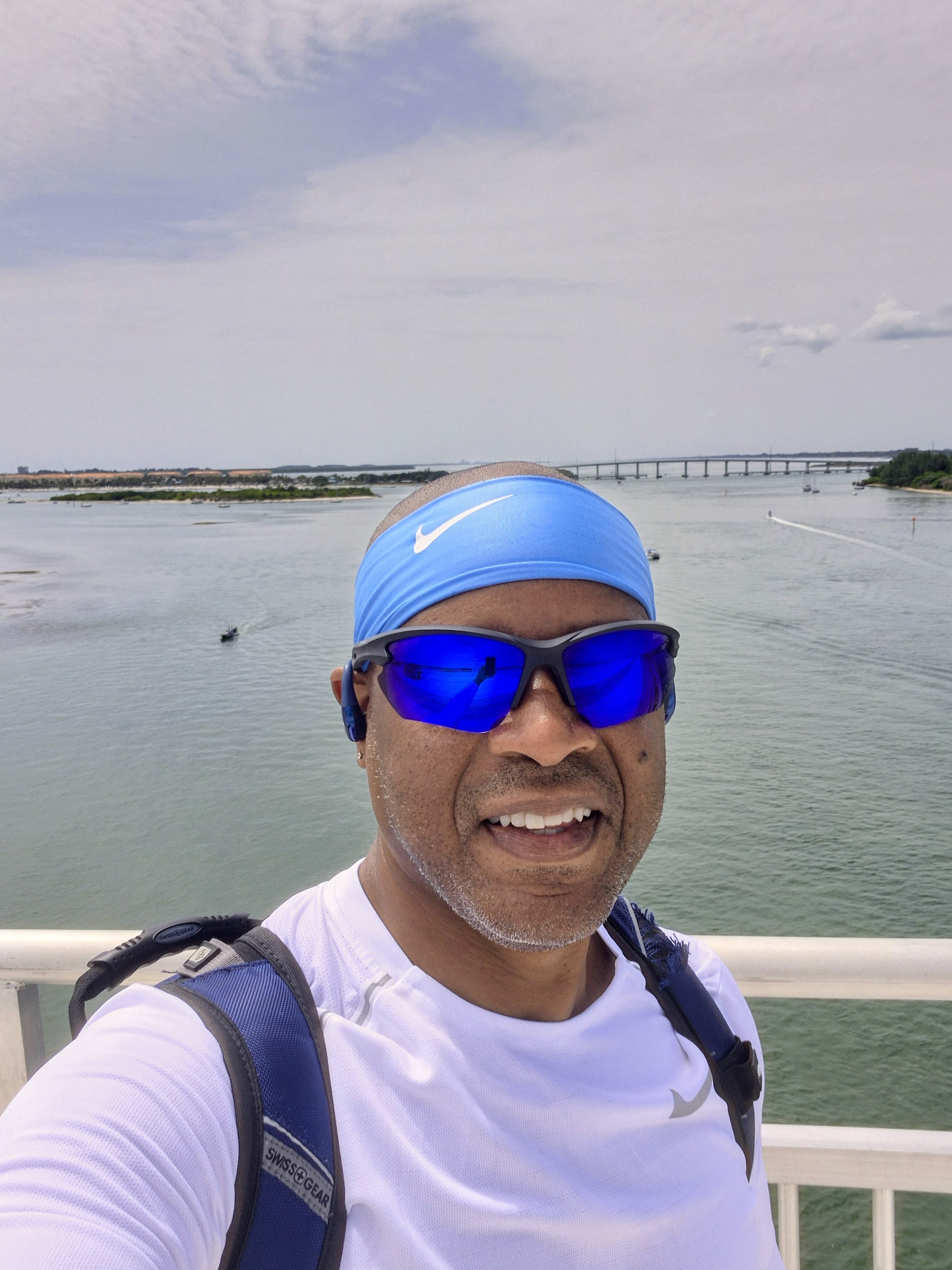
My first rucking adventure had me walking on the new North Hutchinson island bridge. I’ve done multiple runs over local bridges but rucking the new bridge got me excited to test my physical conditioning in a new way. Why rucking? Great question, Lauren!
I noticed the rucking trend and decided to see how it could help with my marathon training program. Rucking is becoming one of the most practical ways to improve physical health, mental resilience, and leadership performance. It was originally developed as military training; rucking has evolved into a powerful exercise that anyone can incorporate into a daily routine. Whether leading an organization, managing a team, or striving to become your best self, rucking offers benefits that extend far beyond physical fitness.
Rucking is simply walking while carrying a weighted backpack (known as a rucksack). Unlike running, which places significant impact on the joints, rucking adds resistance while allowing you to maintain a natural walking pace. There is no need for specialized skills or elite conditioning to ruck. I simply put a 10-pound weight in an old book bag and started walking. My first ruck covered 2.5 miles up and over the bridge. I’ve started to add rucking to my Sunday cardio routine by walking in my neighborhood for 45 minutes. This is an easy way to get additional cardio in without added pressure on my joints that come from running.
The physical benefits of rucking are huge. Rucking combines cardiovascular exercise with strength training, making it one of the most efficient workouts available. I was surprised to discover that rucking helps with cardiovascular endurance, muscle development in the legs, core and back. Putting weights in your ruck sack (book bag) burns a lot more calories than a regular walk. I find my posture getting better as I balance the weights in my book bag while keeping an upright walking motion.
So, how does rucking impact you as a leader? Great question, Melissa! 😊
Leadership requires more than intelligence, it requires resilience. Rucking provides uninterrupted time to think, reflect, and solve problems. I find my best ideas while moving instead of sitting behind a desk. Every mile becomes an opportunity to clear my head and refocus on things that matter most to me. I’m able to lock in mentally while rucking and create new projects and blog ideas.
One of the greatest leadership qualities is perseverance. There are moments during every ruck when the weight feels heavier than expected. Hills become steeper. Fatigue sets in. The easiest option is to stop. But every step teaches an important lesson: we are capable of more than we think. Keep moving forward!
Leadership often requires carrying heavy responsibilities that others never see. Rucking becomes a physical reminder that strength is developed by consistently carrying difficult loads—not by avoiding them. Great leaders don’t ask for lighter loads. They develop stronger shoulders. The ruck becomes a lesson in endurance, preparation, adaptability, and determination.
How did I start this new adventure? I simply put two dumb bells in an old backpack, put on my shoes and started walking. Sounds like something all my readers could do! 😊 I recommend you focus on consistency instead of speed. I normally try to ruck for an hour. The distance is not important to me, but I want to keep moving forward.
Success in leadership, health, and life rarely comes from dramatic breakthroughs. It comes from small, consistent steps taken day after day. Rucking reminds me that growth happens when we willingly carry challenges instead of avoiding them. Every mile strengthens the body. Think about grabbing a backpack instead of another leadership book when preparing for your next leadership challenge. You may discover that the path to becoming a stronger leader begins with simply putting one foot in front of the other.
Walk into your future—one step, one mile, and one challenge at a time.
“Every day is a fresh start; don’t measure yourself by yesterday’s troubles.”
(Dagny Scott Barrios)
The Walk into the Future blog decided to concentrate on marathon training in 2026 instead of highlighting the weekly sessions. My initial goal was to simply write about the 2026 Atlantic City Marathon when I finished in October, but I’ve had several tree branches ask me how my training program is going.
I found the quote above and thought it was a sign to write about my ongoing training efforts. I will not rehash the weekly sessions but provide a summary of where I’m at in this training cycle. FYI—it’s super-hot in Florida this year. I’m not sure I’m breaking news to anyone, but the heat and humidity are at a different level in 2026. ☹
The Hal Higdon 18-week training program has been good for me over the past four marathons, so I decided to stay with this program for marathon #5. I like the ease of following this plan as it lays out the training sessions and provides slow progression to build up mileage. I also like this format because it has me running four days a week. I’ve seen some programs where you train six days a week and that seems like running would take over my life. Training four days a week fits into my current work and life situations and provides some flexibility if I miss a session. I’m not sure how many more marathons I have in these legs, but the Hal Higdon program is the training plan I’m using to get ready. Fun fact, the program helped guide me to another Personal Record (PR) last October and I’m looking forward to repeating this feat again this year.
I’m currently in Week #10 of my training program as I write this blog article. That’s 378 training miles so far at this point. I count all my cardio sessions in my mileage totals, and this includes runs, bike sessions and rowing. The plan calls for cross training, and I leverage my gym sessions to get a few extra miles in before lifting weights. Fun fact, 80% of my mileage total comes directly from my running sessions on Tuesdays, Wednesdays, Thursdays and Saturdays. I adjust if I miss a session but have been good getting up in the mornings and putting in the road work. 😊
I’ve started to incorporate yoga and Tai Chi into my weekly routines to help with flexibility and prevent injuries. Tai Chi has quickly become a favorite exercise for me because of the calming impact it has on my mental state. I’m not sure why it took me so long to start training with Tai Chi.
I’m averaging 35 miles per week so far during this training cycle. The program will have me increasing my miles starting in Week #11. I have a 17-mile training run scheduled for this week and an 18-mile training run coming next week. The 20-mile run is scheduled for Week #15 so it’s time for me to mentally and physically lock in for the next two months.
I’m looking forward to completing my marathon build up and then starting the taper process in Week #17 as I let my body recover in time for race day.
I’m enjoying the training process and love seeing the results so far. I’m maintaining a comfortable body weight, but I know I’m going to lose a few inches and pounds as I increase the mileage and intensity in the training program.
Fun fact, I’ve started including rucking into my cross-training program to increase my endurance.
Tai Chi and rucking are my new additions to get me to race day and help me get this next PR. 😊
Training is still enjoyable and I look forward to the transformation I’m going through both mentally and physically. Again, I’m not sure if I will run another marathon after 2026, but the training still appeals to me. Rise and grind daily!
Irie!
Calvin Williams
“Success is the sum of small efforts, repeated day in and day out.”