Category: Mentoring

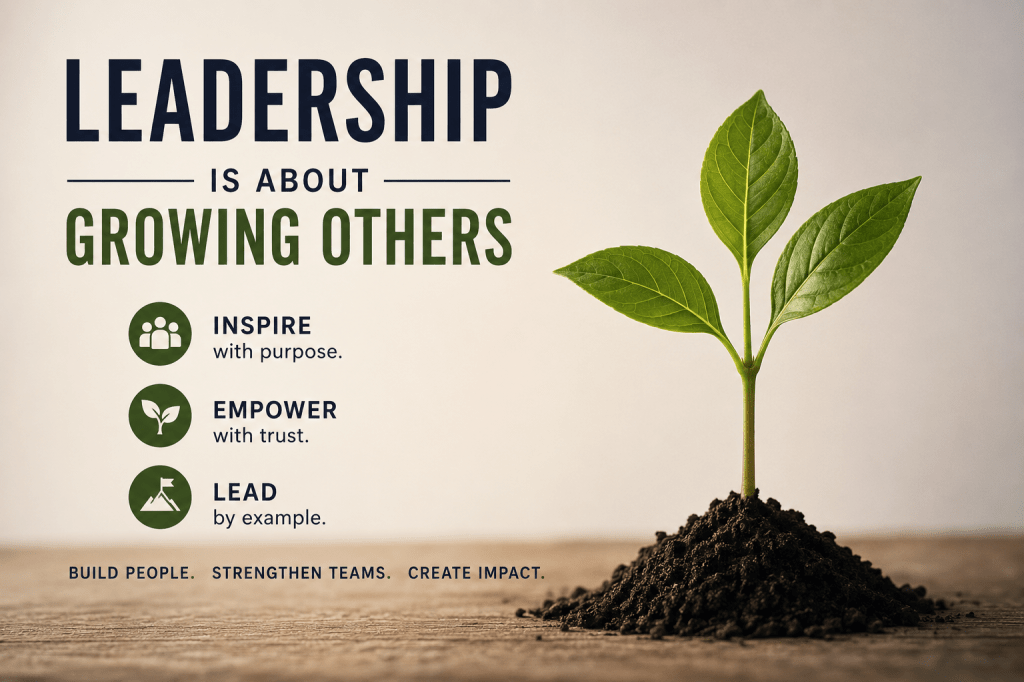
  • Leadership Lessons Hidden in a Tomato Flower 🌱

    When people think about growing tomatoes, they usually focus on the result—the ripe, red fruit ready to harvest.

    But long before the tomato appears, there is a small flower.

    That flower holds the potential for something greater.

    Leadership works the same way.

    Great leaders understand that results do not happen overnight. They begin with planting seeds:

    🌱 A clear vision
    🌱 A commitment to values
    🌱 Trusting relationships
    🌱 Opportunities for growth

    The tomato flower reminds us that potential must be nurtured before it can produce results.

    Every person in an organization represents a flower of possibility. Inside each team member is talent, creativity, and leadership potential waiting for the right environment to grow.

    Authentic leaders create that environment by providing:

    ✅ Encouragement instead of fear
    ✅ Accountability with support
    ✅ Coaching instead of criticism
    ✅ Opportunities instead of limitations

    A gardener cannot force a tomato plant to grow faster by pulling on the stem. Growth requires patience, consistency, and the right conditions.

    Leadership development is no different.

    People need time to learn, make mistakes, gain confidence, and discover their ability to lead.

    Sometimes flowers fall before fruit appears. In leadership, setbacks happen too. A missed opportunity, a failed project, or a struggling employee does not mean growth is impossible. Great leaders examine the environment, adjust, and continue investing in people.

    The true measure of leadership is not just what you accomplish.

    It is what grows because of your influence.

    So, ask yourself:

    What seeds am I planting? What environment am I creating? Who is growing because I chose to lead?

    Authentic leadership is like nurturing a growing plant—when you invest in people with purpose, patience, and integrity, everyone can flourish.

    Let’s talk Authentic Leadership and how it can help your organization grow—pun intended! 😊

    Fun fact—I started growing tomatoes as a new hobby last week and my tomato plants inspired this article.

    Irie!

    Calvin Williams

    #AuthenticLeadership #LeadershipDevelopment #EmployeeGrowth #OrganizationalCulture #WalkIntoTheFuture

    ***This article was originally published on my LinkedIn profile***

  • The Impact of Authentic Leadership on Mentoring

    “A mentor is someone who allows you to see hope in yourself.”

    (Oprah Winfrey)

    Leadership is often measured by results, performance metrics, and organizational success. However, one of the most enduring legacies of a leader is not found in strategic plans or annual reports—it is found in the people they develop. Authentic leadership plays a critical role in mentoring because it creates an environment built on trust, transparency, and genuine human connection.

    Authentic leadership is the practice of leading with integrity, self-awareness, and consistency between values and actions. Authentic leaders embrace who they are, acknowledge their strengths and weaknesses, and create meaningful relationships with those they serve.  When applied to mentoring, authenticity becomes the foundation upon which growth and development are built.

    The most effective mentoring relationships are grounded in trust. Mentees are more likely to seek guidance, share concerns, and accept feedback when they believe their mentor is genuine and sincere.  When trust exists, mentoring moves beyond transactional conversations and becomes transformational development.

    Authentic leaders foster environments where their mentees feel safe to learn, ask questions, and make mistakes. Instead of judging every misstep, they view challenges as opportunities for growth. Psychological safety encourages mentees to take calculated risks, share ideas, seek feedback without fear and learn from failures.  I make it a point to let all my direct report know I don’t care if they make mistakes.  Just don’t make the same mistake multiple times.

    As a result, mentees become more confident, resilient, and willing to stretch beyond their comfort zones.

    One of the most powerful aspects of Authentic leadership is the willingness to continue learning. Authentic leaders recognize that leadership is a journey, not a destination.  Mentees who observe authentic leaders adopt similar habits: seeking continuous improvement, embracing feedback and pursuing professional development opportunities.

    Leadership is often “caught” more than it is taught, and authentic leaders model the behaviors they want to see in others.  Mentoring is not about creating followers; it is about developing future leaders. Authentic leaders understand that their success is measured by the success of those they mentor.

    Rather than focusing on control, they focus on empowerment.  Authentic leaders encourage mentees to think independently, make decisions, and develop their own leadership style.  This approach creates a ripple effect throughout organizations and communities as mentees become mentors themselves.

    Many people may forget a leader’s title, position, or accomplishments, but they rarely forget how a leader made them feel. Authentic leaders leave a lasting impact because they invest in people, not just performance.  Their influence extends beyond the workplace into families, communities, and future generations of leaders.

    As we walk into the future, organizations will continue to face new challenges and rapid change. The leaders who will make the greatest difference are those who choose authenticity over appearance and mentorship over authority.

    The future belongs to leaders who develop people, inspire trust, and create opportunities for others to succeed. Authentic leadership is not simply a leadership style—it is a legacy-building commitment to helping others become the best versions of themselves.

    Who’s ready to build your own legacy?

    Who was the most authentic mentor in your life, and what leadership lesson from them continues to shape your journey today?

    I welcome your thoughts!

    Irie!

    Calvin Williams

    “Find a mentor who will cast a shadow for you to follow.”

    (Unknown)

  • Marathon Training and Leadership: The Journey Matters

    “Don’t dream of winning, train for it.”

    (Mo Farah)

    My Walk into the Future continues at the halfway point of 2026. This year has been exciting for me as I explore new adventures and topics for my readers.  Please note, these adventures and topics are exciting to me and I’m happy to share with you—hopefully you are enjoying the journey so far in 2026. 

    Shoutout to Lauren for accepting a new role within the Villanova University Career Center—well done my friend! 😊

    I started reflecting on how to compare training for a marathon and leadership. There are a few things that both have in common.  At first glance, marathon training and leadership may seem worlds apart. One involves logging miles on roads and trails, while the other focuses on guiding people and organizations toward success. However, the more time I spend pursuing both, the more I realize they share many of the same principles.

    Success in both begins with a vision.  No huge revelation there, huh?  Nobody wakes up one morning and accidentally completes a marathon. The journey begins with a clear goal and a commitment to achieving it. Leadership works the same way. Effective leaders establish a vision, communicate it clearly, and create a plan to move forward.

    Whether training for 26.2 miles or leading a team through a challenging project, success starts by knowing where you want to go.  Many new runners believe success comes from one great workout. Experienced marathoners know that consistent training over time produces results. Success as a leader follows the same pattern.

    The most respected leaders are not the people who deliver occasional moments of brilliance. They consistently show up, communicate effectively, support their teams, and make sound decisions day after day.  These small daily actions consistently create outstanding outcomes for the team.  How do you build an ant hill—one grain of sand at a time! 😊

    Every marathon training plan includes periods where progress feels slow. There are days when the miles feel difficult, motivation is low, and improvement seems invisible. Leadership presents similar daily challenges. Organizational change takes time. Team development takes time. Building trust takes time.  Great leaders understand that meaningful progress rarely happens overnight. They remain committed to the process even when immediate results are not apparent.

    Every marathon includes difficult runs and occasional bad weather. Every leader faces obstacles as they attempt to move the team and organization forward. In training, challenging workouts strengthen the body and mind. In leadership, difficult conversations, unexpected setbacks, and periods of uncertainty develop resilience and character. The challenges we face often become the experiences that prepare us for future success.

    Although marathon runners cross the finish line individually, their success is often supported by coaches, training partners, family members, and friends.  Thanks Jayla, Lauren and Lynn! 😊

    Leadership is no different. Strong leaders recognize that success is a collective effort. They invest in relationships, empower others, and understand that accomplishments are rarely achieved in isolation.  The strongest leaders know how to build strong teams.

    Marathon training includes many small victories before race day: completing a long run, reaching a new distance, or achieving a personal best.  Leadership journeys should include celebrations as well. Recognizing progress boosts morale, reinforces positive behaviors, and reminds teams that their efforts matter.  Success is not just about reaching the finish line—it is about appreciating the journey.

    Marathon training has taught me lessons that extend far beyond running. It has reinforced the value of discipline, resilience, patience, and purpose—qualities that define effective leadership. Both journeys require commitment and demand perseverance. And both remind us that the most rewarding accomplishments are earned one step at a time.  This seems to be a recurring theme. 😊

    As you continue your own leadership journey, remember that progress is made through consistent forward movement. Just like a marathon, leadership is not a sprint. It is a long-term commitment to growth, improvement, and helping others reach their potential.

    Keep moving forward. Your future is waiting.

    Irie!

    Calvin Williams

    “Everything you wanted to know about yourself, you can learn in 26.2 miles.”

    (Dr. George Sheehan)

  • Iron Sharpens Iron: The Power of Mutual Growth

    (ChatGPT designed image)

    “No man will make a great leader who want to do it all himself, or to get all the credit for doing it.”

    (Andrew Carnegie)

    The Walk into the Future blog pivoted to more leadership content in the past few weeks.  This is not surprising as I look to expand my leadership consulting program and reach potential clients with my content.

    Proverbs 27:17 highlight one of my favorite leadership principles: “As iron sharpens iron, so one person sharpens another.”

    Iron becomes sharper only through friction. In the same way, leaders grow through relationships and situations that challenge their thinking, stretch their abilities, and refine their character.

    The normal trend is for leaders to surround themselves with people who simply agree with every decision. While agreement may feel comfortable, it rarely produces growth. The best leaders intentionally seek colleagues, mentors, and team members who ask difficult questions, offer honest feedback, and encourage continuous improvement. 

    General Colin Powell has a specific leadership rule that I leverage daily with my team.  General Powell states, “If you agree with everything I say then one of us is redundant.”  I love that quote! 😊

    Healthy leadership isn’t about avoiding friction—it’s about embracing constructive conversations that make everyone stronger. Great teams operate with this mindset. They celebrate successes, challenge for improvements and hold everyone accountable with respect and trust. Their goal isn’t to win arguments; it’s to help shape everyone into better leaders.

    Authentic leaders should ask the following questions:

    • Who sharpens me?
    • Who am I sharpening?
    • Am I creating an environment where honest feedback is welcomed rather than feared?

    Leadership is not about standing above others. It is about growing alongside the team members. When leaders intentionally sharpen one another, organizations become stronger, cultures become healthier, and people reach their full potential.

    As you walk into the future, don’t seek people who simply tell you what you want to hear. Seek those who challenge you to become the leader you were created to be.

    My final thoughts highlight leadership is about developing people, not just directing them.  The strongest leaders are the ones who continually sharpen themselves while helping sharpen others in their workspace.

    Who did YOU sharpen today?

    Irie!

    Calvin Williams

    “Real leadership is leaders recognizing that they serve the people that they lead.”

    (Pete Hoekstra)

  • Leadership Lessons from Twelve O’clock High

    (ChatGPT generated image)

    “The key to successful leadership today is influence, not authority.”

    (Ken Blanchard)

    The Walk into the Future blog is leaning into leadership more this year. This is not a major revelation, but I wanted to ensure that my readers are ready for additional doses of leadership wisdom.  The blog content is developed through life experiences and thoughts that I want to share.  I kept playing a leadership lesson I learned from the movie Twelve O’clock High on repeat during one of my 8-mile runs recently.

    I was introduced to this movie during a Non-Commissioned Officer (NCO) Leadership Academy I attended while stationed at Kadena Air Base, Japan (Okinawa).  The academy was designed to prepare future leaders in the best way to ensure career and professional development.  This academy is a steppingstone for airmen who have been identified as the future of leadership.  I never saw Twelve O’clock High prior to this training, but I have watched it multiple times over the years and continue to learn new lessons from the movie. 

    The message I got from Twelve O’clock High is that effective leadership requires strength and compassion, especially when the leader is under pressure.  The movie follows Brigadier General (BG) Frank Savage, played by Gregory Peck as he takes command of a demoralized bomber group during World War II. At first, his leadership style appears harsh and demanding, but the movie gradually reveals several themes to his leadership style.

    Leadership can be viewed as lonely because leaders must make difficult decisions that may not be popular with the team.  BG Savage is forced to prioritize the overall mission and the welfare of the organization over personal friendships and comfort.

    A high performing organization requires accountability.  The movie highlights that excellence is achieved through discipline, clear standards, and holding people accountable, even when doing so is uncomfortable. 

    The movie highlights the concept that people can rise above what they think they can do.  Many of the airmen believed they had reached their limits, but BG Savage brought them strong leadership and renewed confidence.  They discovered greater resilience than they thought possible. 

    One of the movie’s most powerful messages is that leaders carry emotional burdens. BG Savage appears tough, but the strain of responsibility eventually affects him as well. The film shows that courage is not the absence of stress or fear.

    The movie demonstrates that great leaders must care about results and people simultaneously. Being overly soft can hurt performance, but being overly rigid can damage morale.

    The movie continues to attract viewers even though it is set during World War II.  The movie is frequently used in leadership training because the lessons apply to business, education, government, and nonprofit organizations. It explores how leaders transform struggling teams, build trust, and sustain performance during periods of intense change and uncertainty.

    This classic movie shows great leadership means inspiring ordinary people to accomplish extraordinary things while carrying the weight of responsibility with integrity and courage.

    Twelve O’clock High remains one of my favorite movies for the content and leadership lessons from BG Savage.  I highly recommend it for anyone looking to enhance their leadership skills.

    What’s another movie that depicts what great leadership looks like?

    Irie!

    Calvin Williams

    “Leadership is vision, influence, and execution.”

    (Brad Lomenick)

    Top of Form

  • Ellucian Live 2026

    “A podcast is a great way to develop relationships with hard-to-reach people.”

    (Tim Paige)

    My Walk into the Future provides a viable platform to share information and my thoughts.  I never imagined I would still be blogging eight years from my first article.  Thanks to everyone who reads my work!

    Ellucian Live 2026 was held in Denver, Colorado this year and this was my second time attending.  We made an appearance last year in Orlando, Florida for the same event.  Fun fact, Denver is one of my favorite cities and I was excited to get back out there.  I was also a featured panelist with several of my outstanding teammates at Indian River State College.

    The Ellucian team has been working with Indian River State College on implementing the Banner ERP system.  We have been at this for over two years now and the Ellucian representative thought it would be worthwhile for my teammates and me to share some of our Change Management lessons learned during the implementation process.

    I never turn down an opportunity to spread Authentic Leadership, and this was an outstanding platform for me to share my thoughts.  The panel was moderated by our Ellucian Change Management partner and one of our internal Project Managers.  Both ladies are brilliant and leaders in the field of Change Management.  We were in great hands for the panel!  Thanks, Cathy! 😊

    Our panel was scheduled for the first day of the conference and provided us with a prime-time slot , location and access to reach a large audience.  Again, we were not sure how many people wanted to hear from a small school in Florida, but our session was full.  We had folks from around the country and a few international attendees as well.  A nice surprise for the team.

    We started the panel with team introductions, so everyone knew who we were and our roles on the team.  The panel flowed into questions from our moderators so we could share our thoughts and actions to ensure we had a good Change Management program.  I am proud of my teammates for their knowledge and willingness to share their expertise with the attendees.  The final 15 minutes were a questions and answers session where attendees grabbed a microphone and asked questions specific to their locations.  This was fun for me because it allowed us to come off script a bit and provide real-time solutions for other schools. 

    We all got an invite to attend another regional conference to share with other groups.  I have not seen the written invitation for this request, but we are available to speak with anyone who wants us to join them.  Yes, share with anyone you know looking for panelists, key notes and breakout session. 😊There were several folks who came up to speak with us after the panel was over to share contact information and ask follow questions.

    My Vice President, Beth Gaskin and I left the panel and headed to our next speaking engagement of the day.  We got invited to do the EdUp Experience podcast which was hosted in the lobby of the Denver Convention Center.  This session was not scripted, so we fielded questions about leadership, culture building, fun in the work environment and our thoughts on the future of Higher Education.  This was an outstanding experience for us, and we had a ball sharing insight with another audience.  I’m not sure how many people follow this podcast, but it is a great platform to learn from professionals making positive things happen. 

    Give our episode a run here:  https://www.edupexperience.com/calvinandbeth/.  I’m looking forward to getting another invite to speak on this great platform.  No pressure, Dr. Jodi Blinco! 😊

    We are always looking for adventures and discovered Snoop Dogg and Ice Cube were playing at the Red Rocks Amphitheater.  Beth got tickets for the show, and we were off to take in the Red Rocks sights and see two Hip Hop legends in concert.  The Red Rocks venue was breathtaking as advertised.  The seating is built into the rocks and there was not a bad seat in the venue.  We were able to rap along with the Hip Hop legends and enjoyed the show.  The entire Marley family is playing Red Rocks in June.  I may have to get back there to check them out.

    I was able to get in a good run session to test myself against the altitude in Denver.  The thin air was a welcome change from the Florida humidity.  I was able to handle the altitude without much issue, but I could tell a difference in my breathing after my three-mile journey.  It would be great to have altitude training available on a regular basis. 

    This was a great trip for networking, sightseeing and enjoying the mountain views.

    I look forward to getting back to Denver soon!

    Where are you travelling this summer?

    Irie!

    Calvin Williams

  • The Power of Positive Leadership

    “A leader is a dealer in hope.”

    (Napoleon)

    The Walk into the Future blog decided to get back into writing a bit more on leadership.  Everyone who follows this blog knows I identify as an Authentic Leader.  This is the leadership style that resonates with me the most.  Fun fact, Authentic Leadership leverages aspects from other leadership style with Positive Leadership being one of those.

    Positive Leadership: Leading with Purpose, Energy, and Impact

    Leadership has evolved far beyond simply managing tasks and directing teams. In today’s work environment, team members are searching for leaders who inspire confidence, encourage growth, and create environments where they feel motivated to succeed. This is where Positive leadership becomes a transformative force.

    Positive leadership is not about ignoring challenges or pretending everything is perfect. Instead, it focuses on leading with optimism, encouragement, resilience, and purpose while bringing out the best in others. Positive leaders understand that attitude and culture have a direct impact on performance, morale, and long-term success.

    So, what is Positive leadership? Great question, Jayla! 😊

    Positive leadership is a leadership style centered on empowering people, building meaningful relationships, and creating environments where staff members can thrive. Positive leaders focus on strengths rather than weaknesses and encourage collaboration instead of fear-based management.

    This leadership style emphasizes:

    • Emotional intelligence
    • Respectful communication
    • Personal and professional growth
    • Building a strong workplace culture

    Positive leadership creates momentum by helping team members believe in themselves and in the mission.

    Staff members perform at their highest levels when they feel valued, respected, and motivated. Leaders set an emotional tone for organizations, teams, and departments. A leader’s mindset often influences workplace energy, productivity, and morale.

    Positive leadership matters because it helps create:

    • Better teamwork and collaboration
    • Stronger workplace relationships
    • Improved resilience during change

    When leaders consistently bring positivity into the workplace, they help reduce unnecessary stress and create environments where people feel encouraged to contribute their best work.  There will be times when the leader does not feel like being positive but emotional intelligence helps leaders maintain a positive approach in the work environment.

    One of the greatest strengths of positive leadership is its ability to strengthen team dynamics. Positive leaders recognize individual strengths and create opportunities for employees to grow and succeed.

    Instead of focusing solely on mistakes, they provide constructive feedback while also celebrating progress and achievements. This balanced approach builds confidence and encourages continuous improvement.

    Teams led by positive leaders often experience:

    • Greater trust
    • Open communication  
    • Stronger collaboration  

    People naturally work harder for leaders who believe in them.

    Every organization faces obstacles, uncertainty, and periods of change. Positive leadership helps teams remain resilient during difficult times. Leaders who remain calm, encouraging, and solution-focused help others maintain perspective and confidence.

    Positivity in leadership does not eliminate challenges, it helps teams navigate them more effectively.  This mindset creates stability and trust even during stressful situations.

    Positive leadership recognizes that staff members are more than job titles or productivity numbers. It values the human side of work by prioritizing empathy, communication, and connection.

    Leaders who genuinely care about people often create stronger workplace cultures because employees feel appreciated and respected. Small actions such as listening actively, recognizing effort, and showing gratitude can significantly improve morale and engagement.

    Positive leadership reminds organizations that success is built through people first.

    In a world where workplace stress and uncertainty are common, positive leadership stands out by bringing encouragement, resilience, and purpose into everyday interactions.  The most effective leaders are not always the loudest voices in the room. Often, they are the individuals who uplift others, inspire beliefs, and create cultures where people are motivated to grow together.

    I’m not abandoning Authentic Leadership but looking to merge these two leadership styles more in my daily interactions.  These leadership styles provide a strong foundation for organizational growth, team development and building great relationships.

    How can you leverage Positive leadership into your daily interactions?

    Irie!

    Calvin Williams

    “The growth and development of people is the highest calling of leadership.”

    (Harvey S. Firestone)