Category: Networking

Article discussing the benefits of networking.

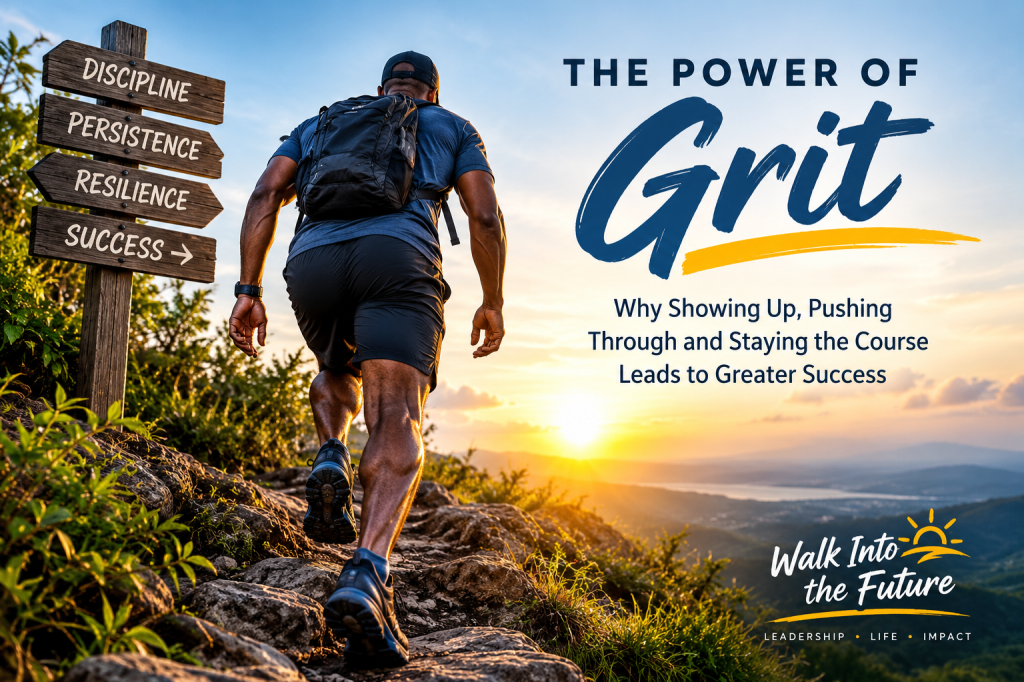
  • Why Grit Is a Leadership Superpower

    “As much as talent counts, effort counts twice.”

    (Angela Duckworth)

    Success isn’t about talent alone is a statement I love to share with my tree branches.

    When we think about great leaders, we often focus on intelligence, charisma, experience, or natural ability. While those qualities certainly matter, there is another characteristic that often separates exceptional leaders from everyone else: grit.

    Grit is the ability to persevere through challenges, maintain commitment during adversity, and continue moving forward when success seems distant. In leadership, grit is not about being stubborn. It is about having the resilience to pursue meaningful goals despite obstacles, setbacks, and disappointments.

    The leaders who make the greatest impact are often not the most talented individuals in the room—they are the ones who refuse to quit.

    As a runner, I’ve learned that success in long-distance races doesn’t happen because of one great workout. It comes from consistently showing up, especially on the days when motivation is low.  Leadership works the same way.

    Organizations face economic uncertainty, staffing shortages, changing priorities, and unexpected challenges. During these difficult times, team members look to their leaders for stability and direction. Grit allows leaders to remain focused on the mission while adapting to changing circumstances. It helps them stay committed to long-term goals rather than becoming distracted by temporary setbacks.

    People follow leaders they trust.  This is not a huge revelation or insight into building trust. Trust is not built when everything is going well. Trust is built when challenges arise and leaders demonstrate courage, consistency, and determination. When employees see their leader remain calm under pressure, continue serving others during difficult times, and stay committed to organizational values, confidence grows. Team members begin to believe that together they can overcome obstacles.

    A gritty leader communicates a powerful message: “We may face challenges, but we will face them together.”

    Grit creates a culture of resilience.  Leadership behavior becomes organizational behavior. When leaders demonstrate perseverance, employees are more likely to adopt the same mindset. Instead of viewing obstacles as reasons to quit, teams begin viewing them as opportunities to learn and improve.

    Organizations led by gritty leaders often develop cultures characterized by:

    • Persistence / Accountability / Continuous improvement / Adaptability

    These qualities help teams thrive in environments where change is constant. Failure becomes a variable that teaches organizational lessons.  All leaders experience some level of failure during their time running organizations.  Projects fall short of intended goals, some decisions don’t work out, and criticism is inevitable in these situations.

    The difference between successful leaders and unsuccessful leaders is not the absence of failure. It is how they respond to failure. Grit allows leaders to view setbacks as lessons rather than permanent defeats. Instead of asking, “Why did this happen to me?” gritty leaders ask, “What can I learn from this experience?”

    Growth begins when the excuses end.  Leaders who display grit inspire their teams and others who watch their daily interactions.  One of the greatest gifts a leader can offer is hope. When people witness a leader overcoming adversity, they become inspired to push through their own challenges. The leader’s example becomes a source of motivation.

    Think about the leaders who have influenced your life. Chances are they faced obstacles, criticism, and uncertainty. Yet they continued moving forward with determination and purpose.

    Their grit became contagious and direct reports want to emulate this level of determination.

    The future belongs to leaders who are willing to stay the course when others give up.

    Talent may open doors. Experience may create opportunities. But grit is what sustains success over time.

    How do you display grit in your daily interactions?  What improvements can you make in this process?

    Irie!

    Calvin Williams

    “It does not matter how slowly you go as long as you do not stop.”

    (Confucius)

  • 2026 Celebration of Running 5k!

    “For me, races are the celebration of my training.”

    (Dan Browne)

    The Track Shack running season kicked off as soon as the calendar turned to August.

    This has been the cadence for me for over 15 years now.  I said it before and I will keep saying that I love running with Track Shack and the Orlando running community.  I seriously thought about joining the Track Shack Fanatics program this year, but I can only make half of the six races in the series.  I will stick to picking and choosing Track Shack races that fit within my running schedule and cheer for folks participating in the races I can’t make. 

    The Celebration of Running 5K has become one of my annual measuring sticks. It gives me an opportunity to see where I am early in my training season and determine what I need to do to prepare for the longer races ahead.  Of course, running a 5K in Florida during August comes with its own set of challenges.

    Heat, humidity and more humidity are always on the menu when I venture over to Winter Park for an August race but that’s part of the deal.  I could complain about the weather, the course or how my body feels that morning. And, believe me, runners are pretty good at coming up with excuses. 😊 But running has taught me something important. You don’t always get to choose the conditions. You get to choose how you respond to them.  This lesson extends well beyond running. Leadership is a lot like running

    Leadership and running have more in common than we sometimes realize.  Leadership and running require patience, discipline and the ability to adjust.  There are no guarantees in either of these venues that things will go according to plan.

    My training program is geared towards getting ready for the 2026 Atlantic City Marathon in October.  My goal for the Celebration of Running 5k was to test my fitness and see how much work I still need to put in as I prepare for Atlantic City.  I was prepared mentally and physically but sometimes that’s not enough.  The heat and humidity were major factors in my race results this year.  I started and finished with a smile on my face but found myself struggling with the conditions halfway through the race.  I was able to focus and get myself to the finish line, but I didn’t improve on my 2025 race time.  No huge deal, that’s life sometimes on race day. 😊 There’s always a lesson to learn when I struggle on race day.

    Leadership and running have more in common than we sometimes realize.  Leadership and running require patience, discipline and the ability to adjust.  There are no guarantees in either of these venues that things will go according to plan.

    As a leader, you can prepare for the meeting, develop the strategy, communicate the vision and build the team—but circumstances will inevitably change.  Staff members leave, there are budget cuts, technology doesn’t always work and the organization changes direction.  These things happen all too often.  Things happen in the work environment, and we must be able to adapt to these changes.  How do you respond?

    Running has taught me to embrace that reality. You start with a plan, but you must be willing to adjust along the way.  One of the biggest lessons I’ve learned as I continue to race is that progress isn’t always measured by a faster time.  Sometimes progress is simply showing up. Progress can be completing a workout when I’m not feeling great.  It can also be highlighted by slowing down because my body tells me to.  I realize my performance from one race does not define my ability to perform in my next race.  Running is funny like that.

    These things are true in leadership, too. We can become so focused on the next goal that we fail to recognize the progress we’ve already made. Leaders need to celebrate progress—not just perfection.

    When I look at my running journey since 2010, I see much more than races and finish times. I see growth, discipline, perseverance, patience and resilience.  I continue to learn how to handle setbacks as a runner and a leader. Most importantly, I’ve learned that the journey matters.

    That’s also what I try to bring to my leadership philosophy through Authentic Leadership.

    Leadership isn’t about having all the answers. It’s about being willing to learn. It’s about understanding your people. It’s about creating an environment where people can grow. True leaders must recognize that everyone is on a journey—and helping them become better along the way.

    My leadership philosophy is simple: Impact people in a positive way and leave them better than when you found them.

    That’s my WHY statement that I leverage daily in the work environment.  Running has reinforced that philosophy for me. The people I’ve met through running have encouraged me, challenged me, supported me and, in many cases, become friends.

    Track Shack has been part of that journey for more than 15 years. So, when I show up for another Celebration of Running 5K, I’m not just running a race. I’m continuing a journey while testing myself on the course and the weather. Also, I’m reminding myself that there is always another mile ahead.  This is true in running, leadership and life.

    You don’t have to have the entire journey figured out. You just need to take the next step.

    One step. One mile. One race. One leadership lesson at a time.

    Keep moving forward and Walk into the Future! 😊

    “Running is the answer.  The question is irrelevant.”

    (Unknown)

    Irie!

    Calvin Williams

  • The Leadership Superpower: Gratitude

    “Some people feel the rain.  Others just get wet.”

    (Bob Marley)

    The Walk into the Future blog continues to lean into the concept of leadership and how it impacts organizational growth and staff professional development.  I will get back to some travel and running articles shortly but please indulge my leadership focus over the past few months—thanks! 😊

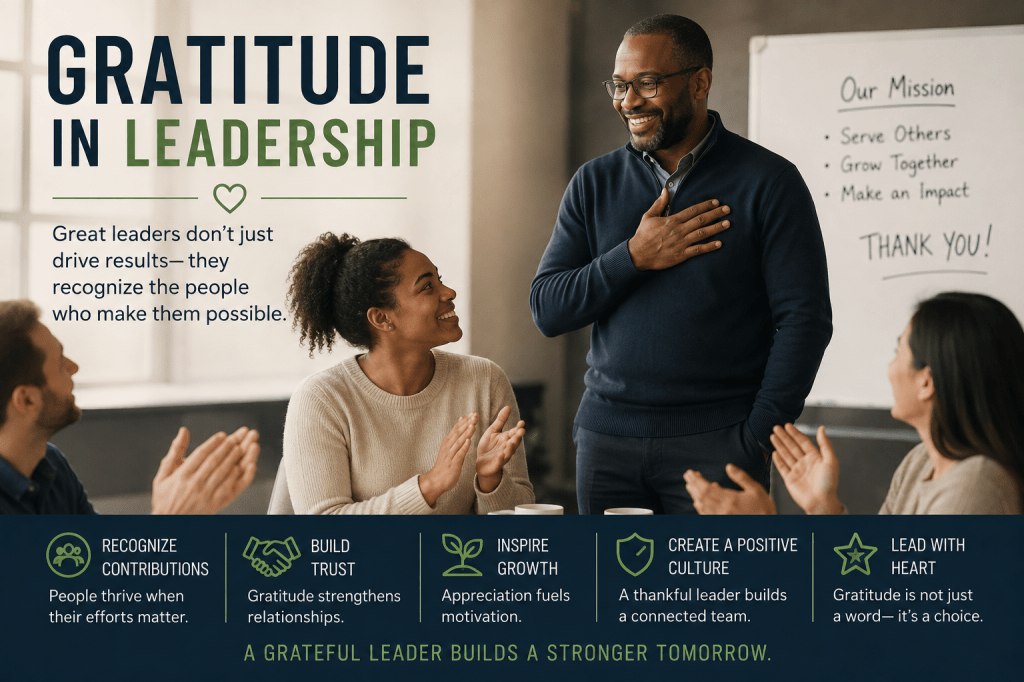
    Leaders often focus on strategy, performance metrics, and achieving results. While these elements are important, one of the most powerful leadership tools is often overlooked: gratitude.

    Gratitude is more than saying “thank you.” It is a mindset that recognizes the value of others, appreciates contributions, and acknowledges that success is rarely achieved alone. Leaders who intentionally practice gratitude create stronger relationships, healthier workplace cultures, and more engaged teams.

    Gratitude may be one of the most important leadership skills we can cultivate as we Walk into the Future.  How does this work?  Outstanding question, Jayla? 😊

    Leadership is fundamentally about people. No huge revelation, huh? Staff members want to feel seen, valued, and appreciated for their efforts. When leaders consistently express gratitude, they strengthen trust and deepen relationships with their team members.

    Simple acts of appreciation can have a profound impact:

    • Recognizing someone’s hard work during a meeting.
    • Sending a handwritten note of thanks.
    • Celebrating milestones and accomplishments.
    • Acknowledging contributions that often go unnoticed.

    Staff members are more likely to remain committed to leaders who genuinely appreciate them.

    Workplace culture is created by what leaders consistently model and reinforce. A grateful leader sets a positive tone that often spreads throughout the organization.  When gratitude in the workplace is present then team members are more likely to support each other, collaboration increases and workplace conflict decreases.   Team members begin focusing less on what’s missing and more on what’s possible. This shift creates an environment where people are motivated to contribute their best work.

    One of the most common reasons employees become disengaged is feeling unappreciated. People want to know that their efforts matter.  A grateful leader understands recognition fuels staff motivation.  When staff members receive sincere appreciation, they are more likely to take ownership of their work, remain committed during challenging times and contribute innovative ideas.  Workplace engagement grows when your team believes their contributions make a difference.

    Leadership comes with challenges, setbacks, and uncertainty. During difficult seasons, gratitude helps leaders maintain perspective.  Rather than focusing solely on obstacles, grateful leaders recognize:

    • Lessons learned from failures.
    • Opportunities hidden within challenges.
    • The support of colleagues and team members.
    • Wins (fun fact: this is my 2026 word for my current work environment) 😊

    Gratitude does not ignore difficulties—it helps leaders navigate them with optimism and resilience.

    Authentic leaders understand that leadership is not about personal recognition; it is about serving and developing others. Gratitude naturally aligns with authentic leadership because it requires humility and self-awareness. When leaders express genuine appreciation, they demonstrate respect for the team, emotional intelligence, humility and commitment to people building. Authentic leaders recognize that every success story includes the efforts of many individuals working together toward a common goal. Small actions, consistently practiced, can create significant cultural change.

    Years from now, people may not remember every decision you made or every goal you achieved. They will, however, remember how you treated them and whether they felt valued under your leadership. Gratitude leaves a lasting impression because it meets a fundamental human need: the desire to be appreciated.

    As leaders, we can create environments where people feel recognized, respected, and inspired. Gratitude is not a weakness; it is a leadership strength that elevates individuals, teams, and organizations.  Remember that one sincere expression of gratitude can change someone’s day, strengthen a relationship, and inspire excellence.  This is an outstanding way to continue your Walk into the Future. 😊

    Gratitude is the bridge between leadership and influence. When people feel appreciated, they become empowered to achieve more than they ever thought possible.

    Which of your current team members deserves your gratitude today, and what impact could a simple expression of appreciation have on their future success?

    Irie!

    Calvin Williams

    “Gratitude is the opener of locked-up blessings.”

    (Marianne Williamson)

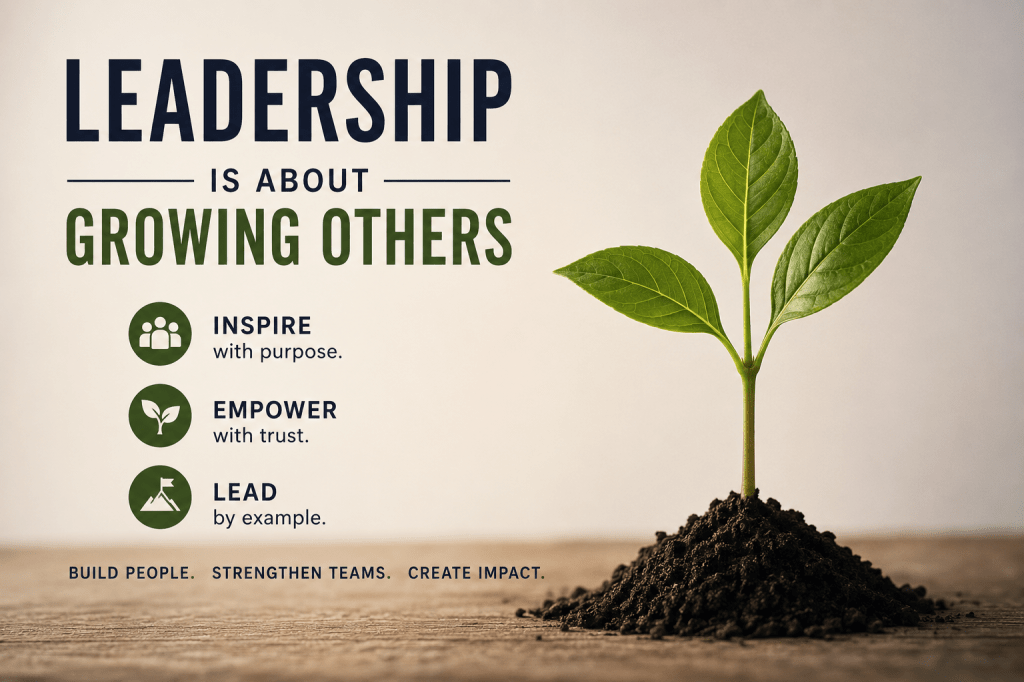
  • Leadership Lessons Hidden in a Tomato Flower 🌱

    When people think about growing tomatoes, they usually focus on the result—the ripe, red fruit ready to harvest.

    But long before the tomato appears, there is a small flower.

    That flower holds the potential for something greater.

    Leadership works the same way.

    Great leaders understand that results do not happen overnight. They begin with planting seeds:

    🌱 A clear vision
    🌱 A commitment to values
    🌱 Trusting relationships
    🌱 Opportunities for growth

    The tomato flower reminds us that potential must be nurtured before it can produce results.

    Every person in an organization represents a flower of possibility. Inside each team member is talent, creativity, and leadership potential waiting for the right environment to grow.

    Authentic leaders create that environment by providing:

    ✅ Encouragement instead of fear
    ✅ Accountability with support
    ✅ Coaching instead of criticism
    ✅ Opportunities instead of limitations

    A gardener cannot force a tomato plant to grow faster by pulling on the stem. Growth requires patience, consistency, and the right conditions.

    Leadership development is no different.

    People need time to learn, make mistakes, gain confidence, and discover their ability to lead.

    Sometimes flowers fall before fruit appears. In leadership, setbacks happen too. A missed opportunity, a failed project, or a struggling employee does not mean growth is impossible. Great leaders examine the environment, adjust, and continue investing in people.

    The true measure of leadership is not just what you accomplish.

    It is what grows because of your influence.

    So, ask yourself:

    What seeds am I planting? What environment am I creating? Who is growing because I chose to lead?

    Authentic leadership is like nurturing a growing plant—when you invest in people with purpose, patience, and integrity, everyone can flourish.

    Let’s talk Authentic Leadership and how it can help your organization grow—pun intended! 😊

    Fun fact—I started growing tomatoes as a new hobby last week and my tomato plants inspired this article.

    Irie!

    Calvin Williams

    #AuthenticLeadership #LeadershipDevelopment #EmployeeGrowth #OrganizationalCulture #WalkIntoTheFuture

    ***This article was originally published on my LinkedIn profile***

  • The Impact of Authentic Leadership on Mentoring

    “A mentor is someone who allows you to see hope in yourself.”

    (Oprah Winfrey)

    Leadership is often measured by results, performance metrics, and organizational success. However, one of the most enduring legacies of a leader is not found in strategic plans or annual reports—it is found in the people they develop. Authentic leadership plays a critical role in mentoring because it creates an environment built on trust, transparency, and genuine human connection.

    Authentic leadership is the practice of leading with integrity, self-awareness, and consistency between values and actions. Authentic leaders embrace who they are, acknowledge their strengths and weaknesses, and create meaningful relationships with those they serve.  When applied to mentoring, authenticity becomes the foundation upon which growth and development are built.

    The most effective mentoring relationships are grounded in trust. Mentees are more likely to seek guidance, share concerns, and accept feedback when they believe their mentor is genuine and sincere.  When trust exists, mentoring moves beyond transactional conversations and becomes transformational development.

    Authentic leaders foster environments where their mentees feel safe to learn, ask questions, and make mistakes. Instead of judging every misstep, they view challenges as opportunities for growth. Psychological safety encourages mentees to take calculated risks, share ideas, seek feedback without fear and learn from failures.  I make it a point to let all my direct report know I don’t care if they make mistakes.  Just don’t make the same mistake multiple times.

    As a result, mentees become more confident, resilient, and willing to stretch beyond their comfort zones.

    One of the most powerful aspects of Authentic leadership is the willingness to continue learning. Authentic leaders recognize that leadership is a journey, not a destination.  Mentees who observe authentic leaders adopt similar habits: seeking continuous improvement, embracing feedback and pursuing professional development opportunities.

    Leadership is often “caught” more than it is taught, and authentic leaders model the behaviors they want to see in others.  Mentoring is not about creating followers; it is about developing future leaders. Authentic leaders understand that their success is measured by the success of those they mentor.

    Rather than focusing on control, they focus on empowerment.  Authentic leaders encourage mentees to think independently, make decisions, and develop their own leadership style.  This approach creates a ripple effect throughout organizations and communities as mentees become mentors themselves.

    Many people may forget a leader’s title, position, or accomplishments, but they rarely forget how a leader made them feel. Authentic leaders leave a lasting impact because they invest in people, not just performance.  Their influence extends beyond the workplace into families, communities, and future generations of leaders.

    As we walk into the future, organizations will continue to face new challenges and rapid change. The leaders who will make the greatest difference are those who choose authenticity over appearance and mentorship over authority.

    The future belongs to leaders who develop people, inspire trust, and create opportunities for others to succeed. Authentic leadership is not simply a leadership style—it is a legacy-building commitment to helping others become the best versions of themselves.

    Who’s ready to build your own legacy?

    Who was the most authentic mentor in your life, and what leadership lesson from them continues to shape your journey today?

    I welcome your thoughts!

    Irie!

    Calvin Williams

    “Find a mentor who will cast a shadow for you to follow.”

    (Unknown)

  • 2026 Freedom 4-Miler

    “Please ignore the faces I make while running.”

    (Unknown)

    My Walk into the Future continues to provide me with new adventures and places to explore.  This is not a huge surprise since that is one of my goals in life and why the blog title is Walk into the Future.  Adventures await around every corner if you just open your eyes to the possibilities.

    I ventured over to Orlando last year for my first 4th of July race.  I didn’t know if I would enjoy the experience since this was a July race in Florida.  It was hot but not unbearable.  I decided to find a different 4th of July race in 2026 and signed up for the Freedom 4-miler in Tequesta, Florida.  The 4-mile distance was new for me, and I never ventured down to Tequesta before, so this was a completely new adventure for me.

    The Village of Tequesta is the northernmost city in Palm Beach County.  I passed the exit on my way to West Palm Beach, but I’ve never got off on exit 87B to explore this village.  The Freedom 4-Miler was my opportunity to run a new distance and get a chance to get to a new city.  Tequesta is only a 50-minute drive from Fort Pierce, but I decided to book a hotel down there the night before the race to eliminate me having to get on the road at 4:30 am to make the start line.  I’m a Marriott person and had enough points for a free night’s stay so this was an easy decision for me.

    The drive down I-95 was uneventful, which was great for me.  Packet pickup was held in Constitution Park, and this gave me an opportunity to get a feel for the village.  It was a cute little park, and packet pickup was very basic.  Get your Bib, T-shirt and a few goodies and leave.  There was not an EXPO feel, but the folks were super friendly and seemed to be happy to see all the runners.

    The Village of Tequesta is only two miles from the Jupiter Inlet, so I headed over there and found a seat at Square Grouper.  Yes, Jupiter has a Square Grouper, and I wanted to check it out to see if it is different from the Fort Pierce version.  Both locations have similar setups, but the Jupiter version has a boat dock, and a lot of folks pull up in their boats which I thought was a major flex move—well played rich people! 😊 I stayed at Square Grouper long enough to get a few pictures of the lighthouse and a fisherman feeding a pelican—true story!

    I headed to Duffy’s Bar and Grill to get in some carb loading.  I didn’t need anything huge for the 4-mile race but wanted to ensure I had the fuel needed to run a good race.  I stuck to the tried-and-true meal of wings, fries and plenty of beer.  I don’t have a Duffy’s close to me, but the food was pretty good, and the beer was ice-cold, baby!  My hotel was across the street from Duffy’s, so I made my way over there to get off my feet and rest up for the battle to come on the racecourse.

    I didn’t know how popular this 4-mile race was until race day.  There were 1,000+ runners registered for the 4-miler.  Most of the runners were from the local area with a few other cities mixed in. 

    I have never raced the 4-mile distance, so this was going to be a personal record (PR) regardless of how I performed.  😊  I didn’t enter the race with a preset time in mind but wanted to test my fitness in the South Florida heat and humidity safely.  I posted up in the middle of the start corral to keep from being blocked my slower runners—mission accomplished.

    The course was mostly flat, and I enjoyed that the most.  I started the race with a controlled pace and wanted to maintain my form throughout.  Unfun fact—it was HOT at 7:15 am and there was not a lot of shade for runners.  Okay, enough complaining about the heat.  My controlled pace turned out to be that I completed Mile #1 with a 10:00 minute pace.  I slowed a bit on each subsequent mile, but I didn’t fall apart considering the conditions.  I was able to find a smile on my face in the last mile because there were cameras and people everywhere.  You never want spectators to think you’re not enjoying the pain of a hot race. 😊 Mile #4 went by at a 11:47 minute pace which was fine with me considering the temperature and humidity levels. 

    I crossed the finish line with a smile and newfound respect for summer racing.  I collected my race medal, iced towel, water and headed over to the race village to cool down. There were a few vendors in the race village, but I made my way over to the table serving pancakes.  I got my short stack and found a sit under a tree in the park to enjoy the moment.  I noticed at this point that my run shorts, t-shirt and socks were completely soaked by my sweat.  I’m sure I lost about 5 pounds by sweating this much.  No worries, Jayla!  I always go to get a large meal after my races and today was not different. 

    I made my way to First Watch after showering and cooling down.  I got my traditional First Watch meal, the Trifecta with bacon, scrambled eggs, blueberry pancake, cheesy grits and coffee.  Yep, this is my meal every time I visit a First Watch regardless of the location. 😊

    My first visit to the Village of Tequesta ended with a quick visit to Publix to pick up items for me to grill later.  It is the 4th of July and what better way to celebrate than some good BBQ prepared by me! 😊

    Fun fact, I was the fastest runner from Fort Pierce for this 4-Miler! 😊

    Happy 4th of July!  America is 250!

    How did you celebrate the 4th of July?

    Irie!

    Calvin Williams

    “Running is a mental sport, and we’re all insane.”

    (Unknown)

  • Marathon Training and Leadership: The Journey Matters

    “Don’t dream of winning, train for it.”

    (Mo Farah)

    My Walk into the Future continues at the halfway point of 2026. This year has been exciting for me as I explore new adventures and topics for my readers.  Please note, these adventures and topics are exciting to me and I’m happy to share with you—hopefully you are enjoying the journey so far in 2026. 

    Shoutout to Lauren for accepting a new role within the Villanova University Career Center—well done my friend! 😊

    I started reflecting on how to compare training for a marathon and leadership. There are a few things that both have in common.  At first glance, marathon training and leadership may seem worlds apart. One involves logging miles on roads and trails, while the other focuses on guiding people and organizations toward success. However, the more time I spend pursuing both, the more I realize they share many of the same principles.

    Success in both begins with a vision.  No huge revelation there, huh?  Nobody wakes up one morning and accidentally completes a marathon. The journey begins with a clear goal and a commitment to achieving it. Leadership works the same way. Effective leaders establish a vision, communicate it clearly, and create a plan to move forward.

    Whether training for 26.2 miles or leading a team through a challenging project, success starts by knowing where you want to go.  Many new runners believe success comes from one great workout. Experienced marathoners know that consistent training over time produces results. Success as a leader follows the same pattern.

    The most respected leaders are not the people who deliver occasional moments of brilliance. They consistently show up, communicate effectively, support their teams, and make sound decisions day after day.  These small daily actions consistently create outstanding outcomes for the team.  How do you build an ant hill—one grain of sand at a time! 😊

    Every marathon training plan includes periods where progress feels slow. There are days when the miles feel difficult, motivation is low, and improvement seems invisible. Leadership presents similar daily challenges. Organizational change takes time. Team development takes time. Building trust takes time.  Great leaders understand that meaningful progress rarely happens overnight. They remain committed to the process even when immediate results are not apparent.

    Every marathon includes difficult runs and occasional bad weather. Every leader faces obstacles as they attempt to move the team and organization forward. In training, challenging workouts strengthen the body and mind. In leadership, difficult conversations, unexpected setbacks, and periods of uncertainty develop resilience and character. The challenges we face often become the experiences that prepare us for future success.

    Although marathon runners cross the finish line individually, their success is often supported by coaches, training partners, family members, and friends.  Thanks Jayla, Lauren and Lynn! 😊

    Leadership is no different. Strong leaders recognize that success is a collective effort. They invest in relationships, empower others, and understand that accomplishments are rarely achieved in isolation.  The strongest leaders know how to build strong teams.

    Marathon training includes many small victories before race day: completing a long run, reaching a new distance, or achieving a personal best.  Leadership journeys should include celebrations as well. Recognizing progress boosts morale, reinforces positive behaviors, and reminds teams that their efforts matter.  Success is not just about reaching the finish line—it is about appreciating the journey.

    Marathon training has taught me lessons that extend far beyond running. It has reinforced the value of discipline, resilience, patience, and purpose—qualities that define effective leadership. Both journeys require commitment and demand perseverance. And both remind us that the most rewarding accomplishments are earned one step at a time.  This seems to be a recurring theme. 😊

    As you continue your own leadership journey, remember that progress is made through consistent forward movement. Just like a marathon, leadership is not a sprint. It is a long-term commitment to growth, improvement, and helping others reach their potential.

    Keep moving forward. Your future is waiting.

    Irie!

    Calvin Williams

    “Everything you wanted to know about yourself, you can learn in 26.2 miles.”

    (Dr. George Sheehan)

  • Ellucian Live 2026

    “A podcast is a great way to develop relationships with hard-to-reach people.”

    (Tim Paige)

    My Walk into the Future provides a viable platform to share information and my thoughts.  I never imagined I would still be blogging eight years from my first article.  Thanks to everyone who reads my work!

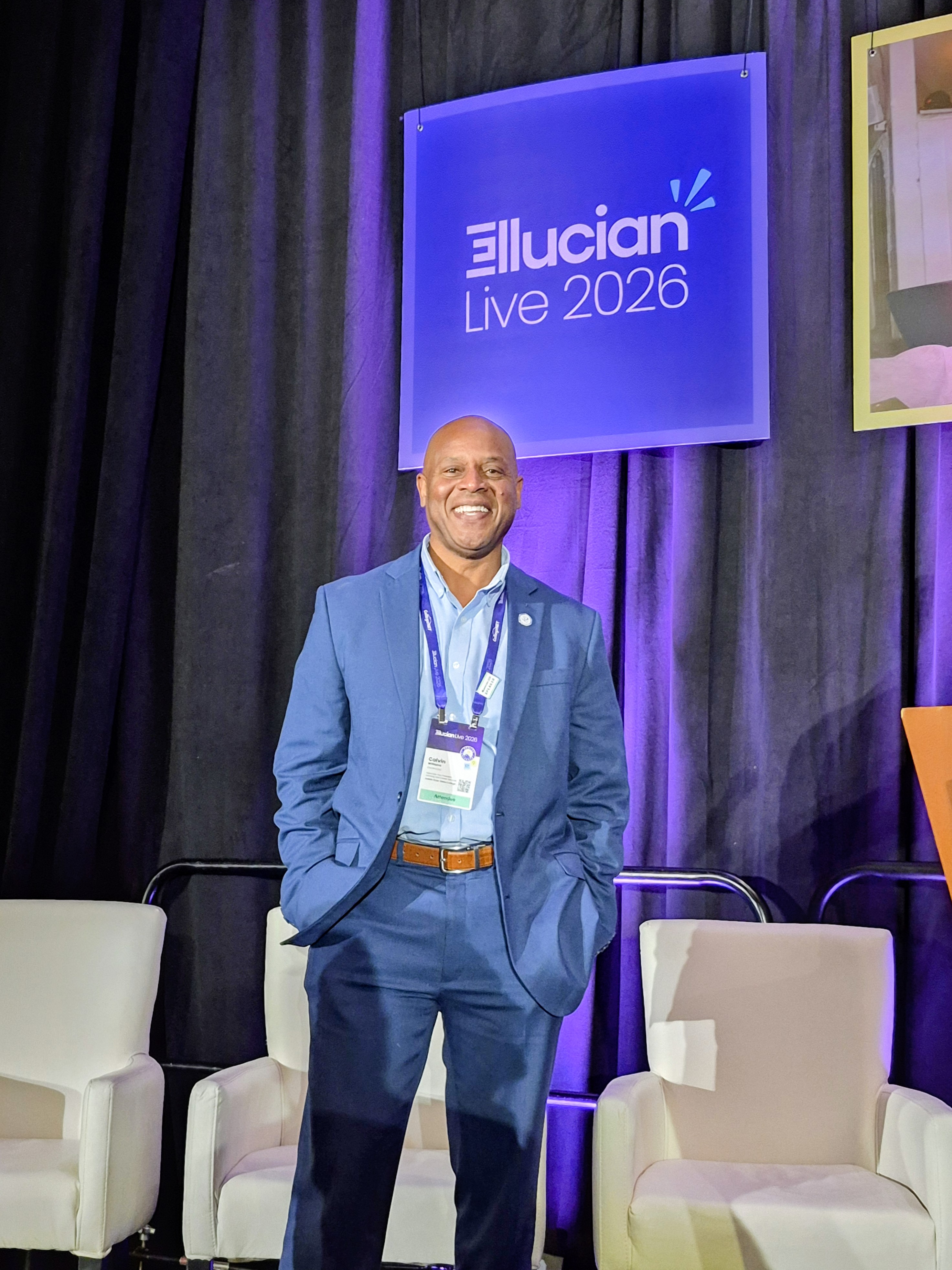
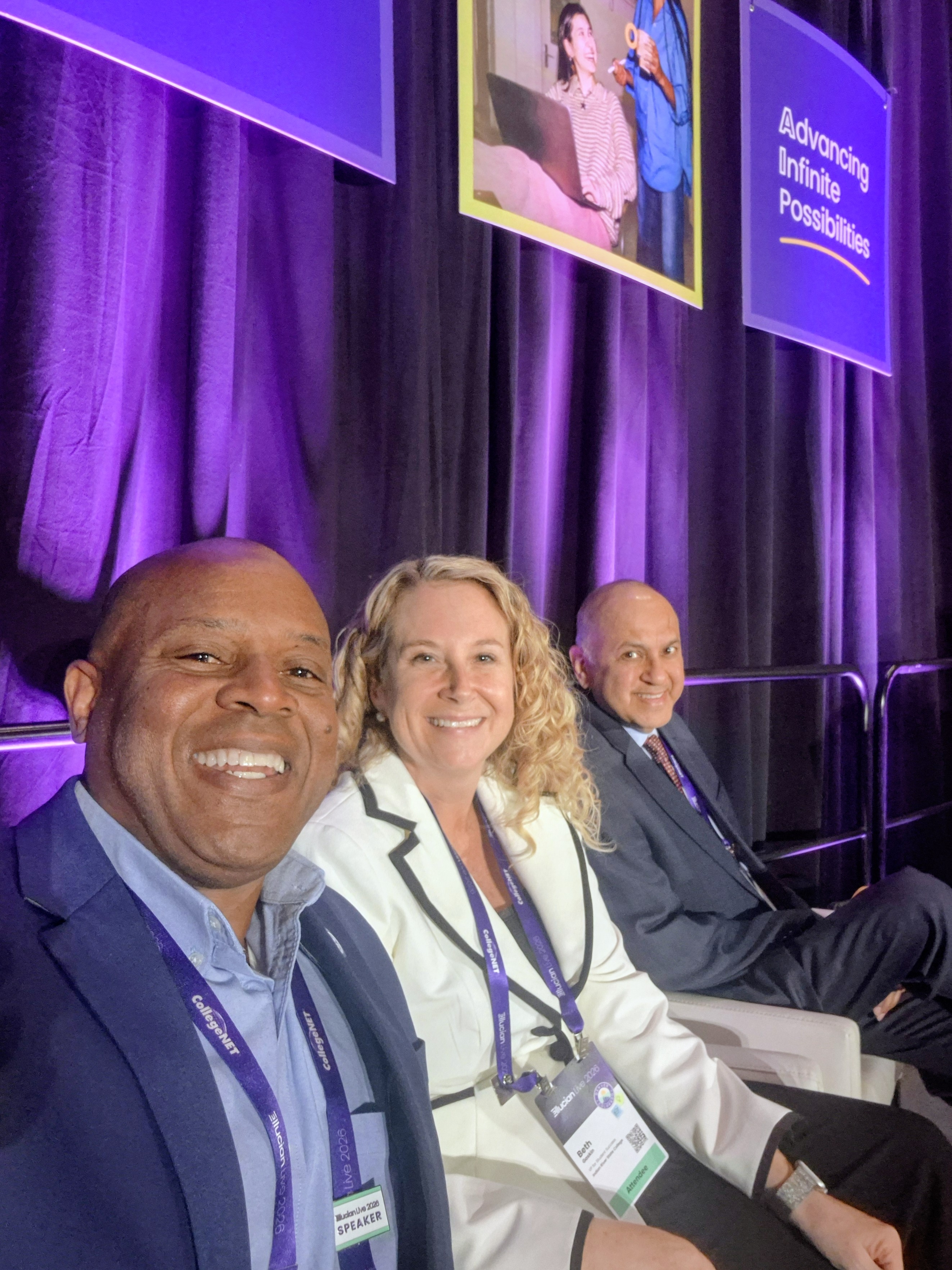
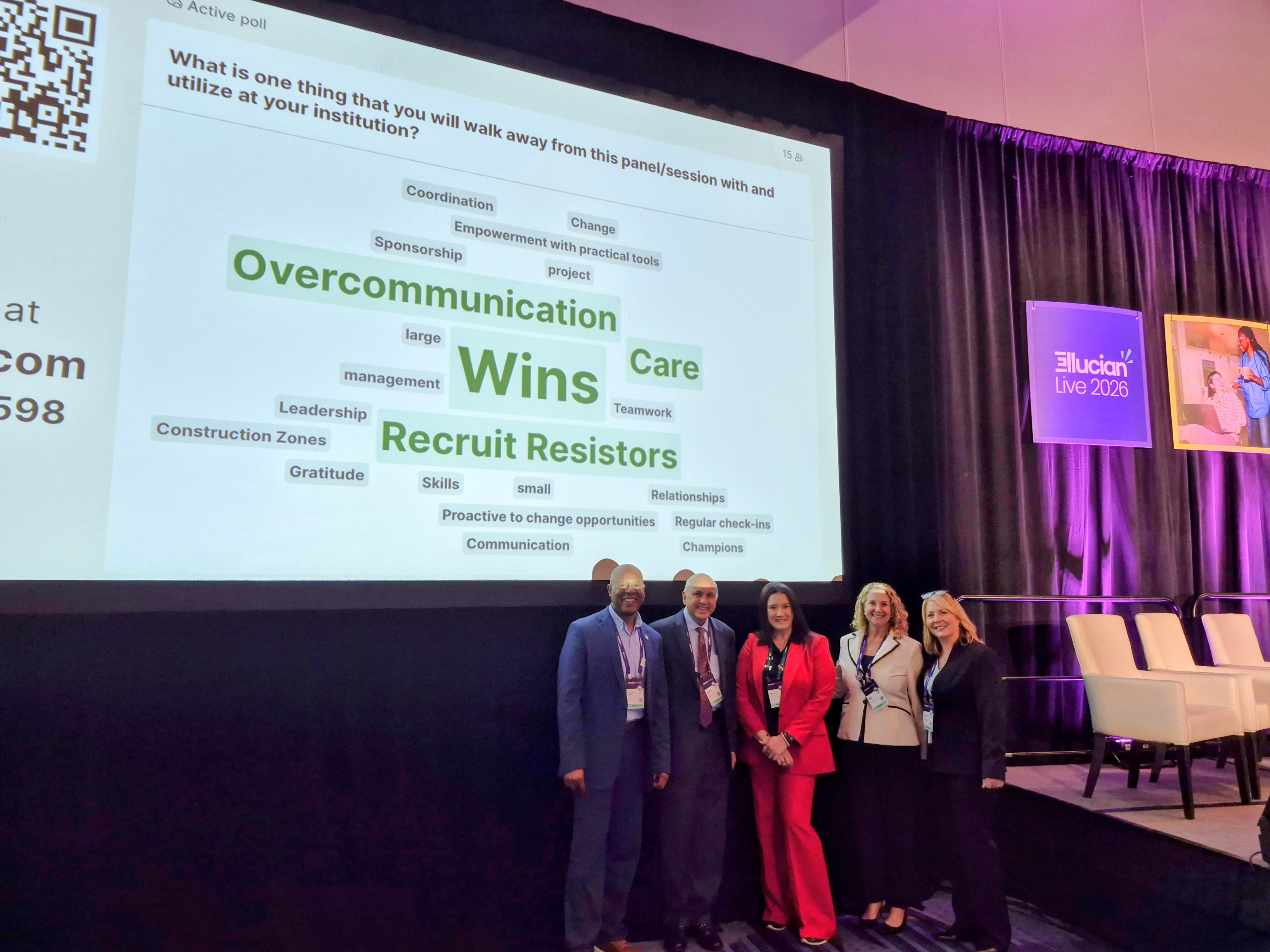
    Ellucian Live 2026 was held in Denver, Colorado this year and this was my second time attending.  We made an appearance last year in Orlando, Florida for the same event.  Fun fact, Denver is one of my favorite cities and I was excited to get back out there.  I was also a featured panelist with several of my outstanding teammates at Indian River State College.

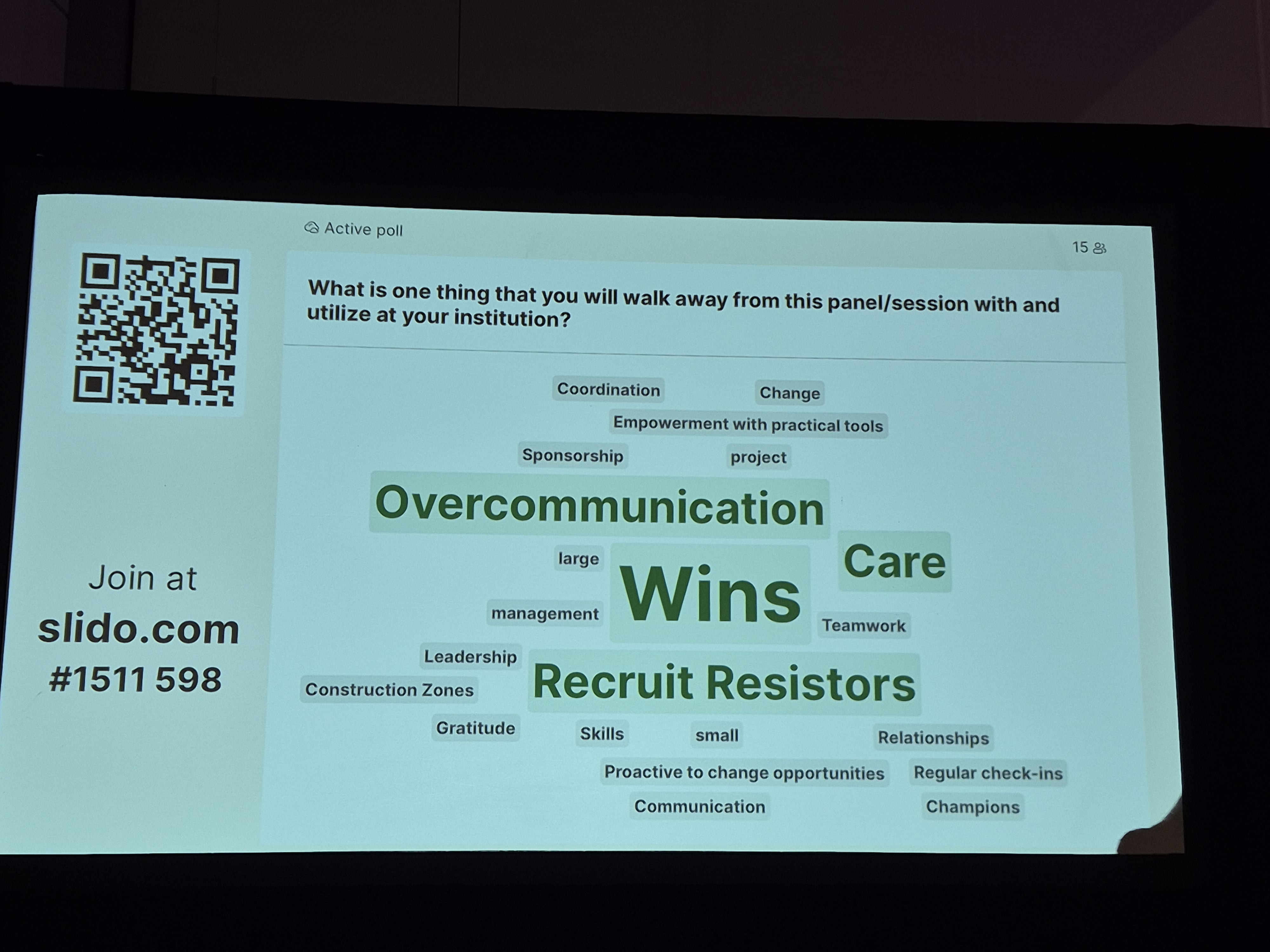
    The Ellucian team has been working with Indian River State College on implementing the Banner ERP system.  We have been at this for over two years now and the Ellucian representative thought it would be worthwhile for my teammates and me to share some of our Change Management lessons learned during the implementation process.

    I never turn down an opportunity to spread Authentic Leadership, and this was an outstanding platform for me to share my thoughts.  The panel was moderated by our Ellucian Change Management partner and one of our internal Project Managers.  Both ladies are brilliant and leaders in the field of Change Management.  We were in great hands for the panel!  Thanks, Cathy! 😊

    Our panel was scheduled for the first day of the conference and provided us with a prime-time slot , location and access to reach a large audience.  Again, we were not sure how many people wanted to hear from a small school in Florida, but our session was full.  We had folks from around the country and a few international attendees as well.  A nice surprise for the team.

    We started the panel with team introductions, so everyone knew who we were and our roles on the team.  The panel flowed into questions from our moderators so we could share our thoughts and actions to ensure we had a good Change Management program.  I am proud of my teammates for their knowledge and willingness to share their expertise with the attendees.  The final 15 minutes were a questions and answers session where attendees grabbed a microphone and asked questions specific to their locations.  This was fun for me because it allowed us to come off script a bit and provide real-time solutions for other schools. 

    We all got an invite to attend another regional conference to share with other groups.  I have not seen the written invitation for this request, but we are available to speak with anyone who wants us to join them.  Yes, share with anyone you know looking for panelists, key notes and breakout session. 😊There were several folks who came up to speak with us after the panel was over to share contact information and ask follow questions.

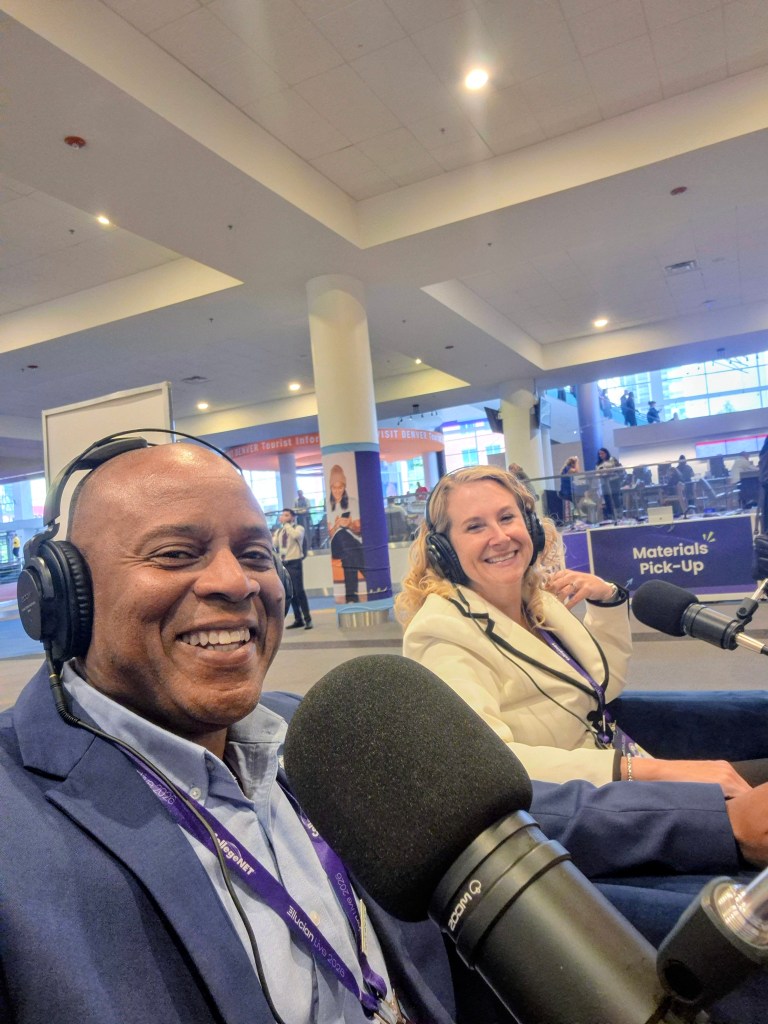
    My Vice President, Beth Gaskin and I left the panel and headed to our next speaking engagement of the day.  We got invited to do the EdUp Experience podcast which was hosted in the lobby of the Denver Convention Center.  This session was not scripted, so we fielded questions about leadership, culture building, fun in the work environment and our thoughts on the future of Higher Education.  This was an outstanding experience for us, and we had a ball sharing insight with another audience.  I’m not sure how many people follow this podcast, but it is a great platform to learn from professionals making positive things happen. 

    Give our episode a run here:  https://www.edupexperience.com/calvinandbeth/.  I’m looking forward to getting another invite to speak on this great platform.  No pressure, Dr. Jodi Blinco! 😊

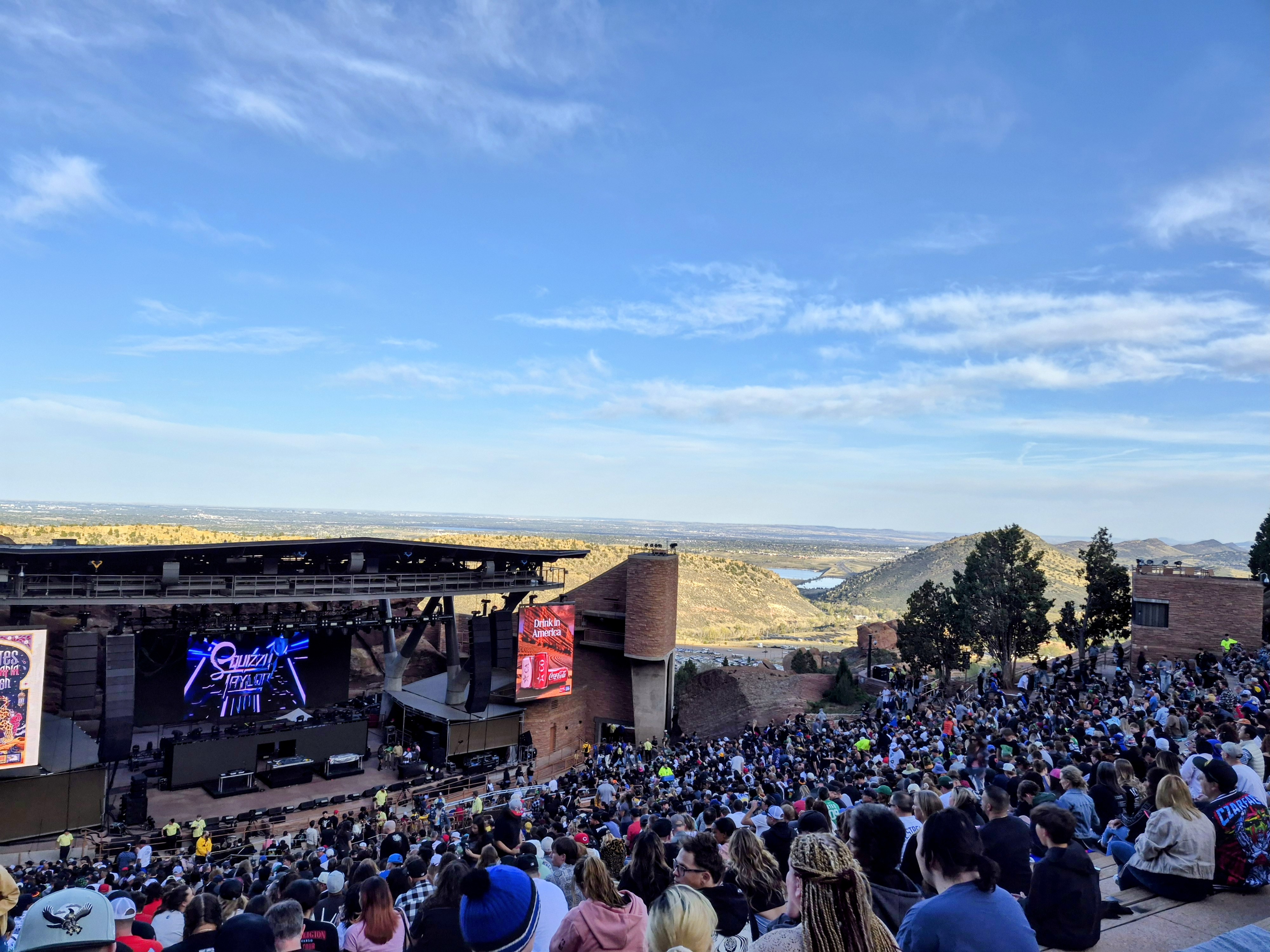
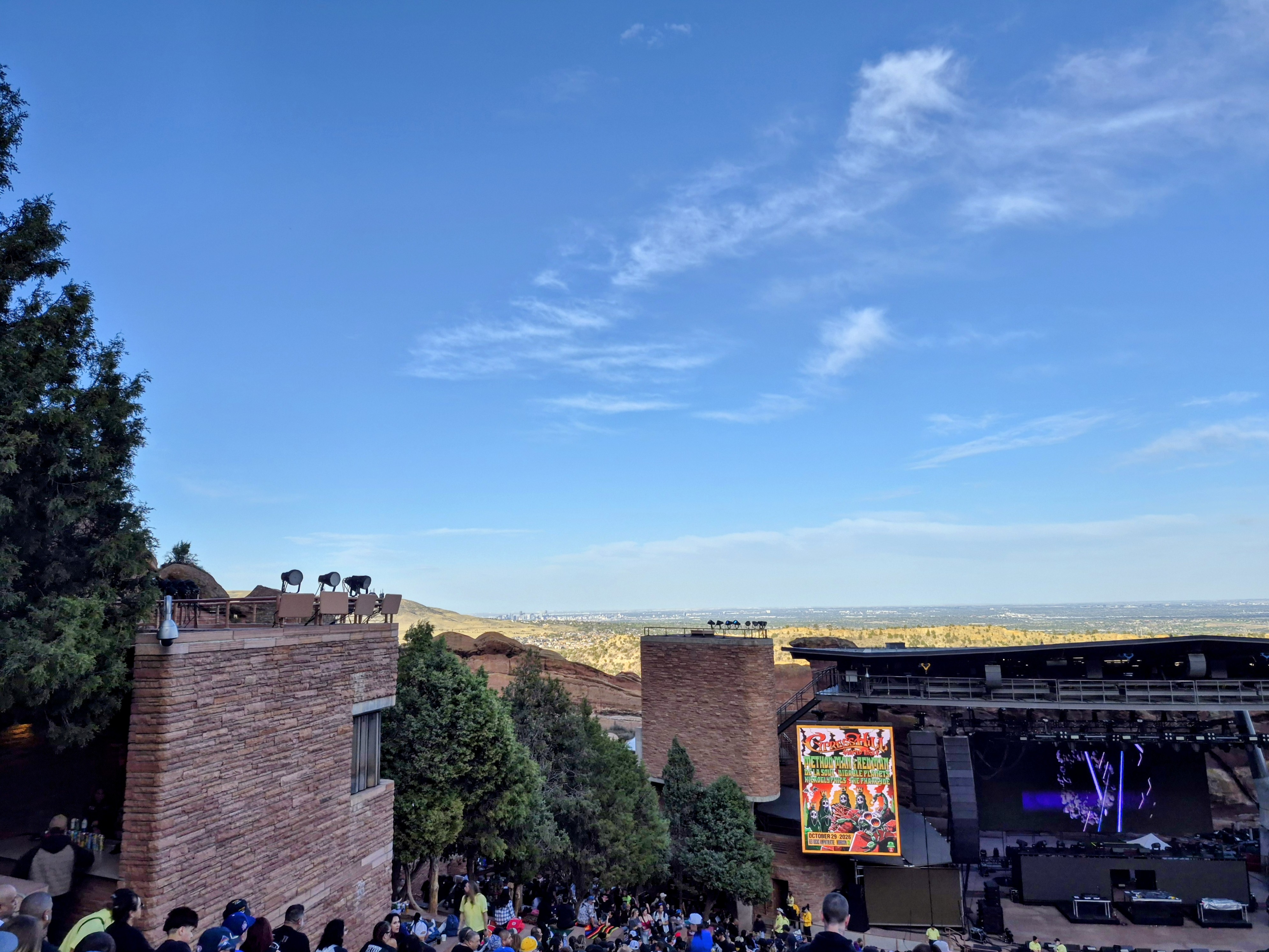
    We are always looking for adventures and discovered Snoop Dogg and Ice Cube were playing at the Red Rocks Amphitheater.  Beth got tickets for the show, and we were off to take in the Red Rocks sights and see two Hip Hop legends in concert.  The Red Rocks venue was breathtaking as advertised.  The seating is built into the rocks and there was not a bad seat in the venue.  We were able to rap along with the Hip Hop legends and enjoyed the show.  The entire Marley family is playing Red Rocks in June.  I may have to get back there to check them out.

    I was able to get in a good run session to test myself against the altitude in Denver.  The thin air was a welcome change from the Florida humidity.  I was able to handle the altitude without much issue, but I could tell a difference in my breathing after my three-mile journey.  It would be great to have altitude training available on a regular basis. 

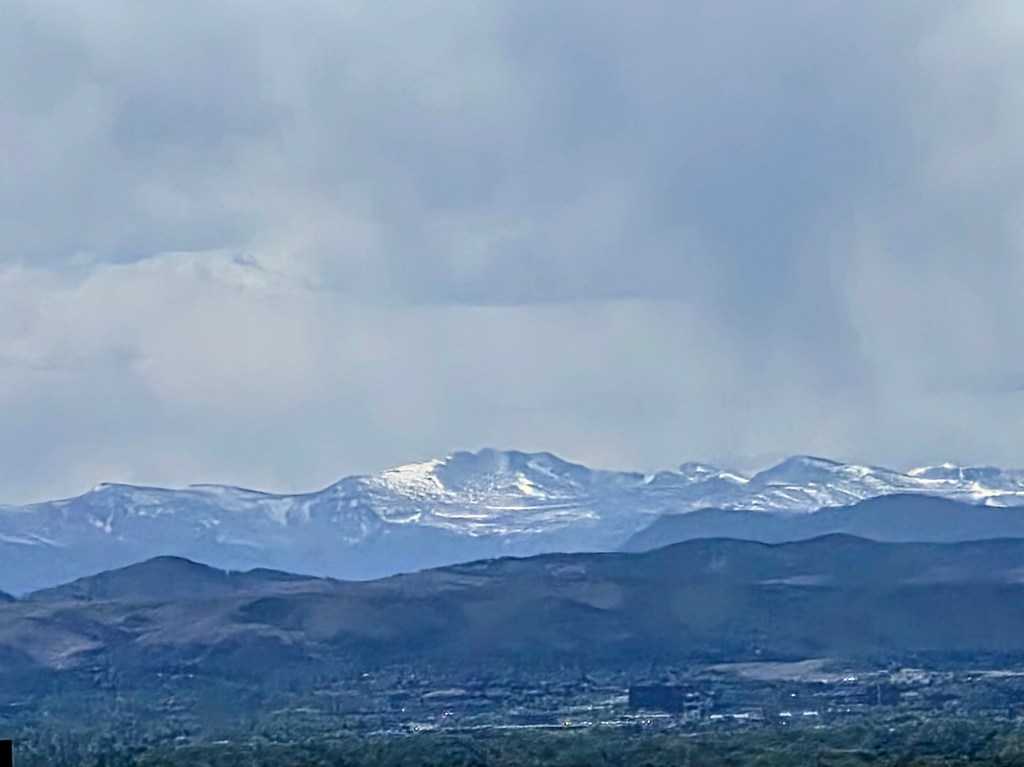
    This was a great trip for networking, sightseeing and enjoying the mountain views.

    I look forward to getting back to Denver soon!

    Where are you travelling this summer?

    Irie!

    Calvin Williams

  • The Power of Positive Leadership

    “A leader is a dealer in hope.”

    (Napoleon)

    The Walk into the Future blog decided to get back into writing a bit more on leadership.  Everyone who follows this blog knows I identify as an Authentic Leader.  This is the leadership style that resonates with me the most.  Fun fact, Authentic Leadership leverages aspects from other leadership style with Positive Leadership being one of those.

    Positive Leadership: Leading with Purpose, Energy, and Impact

    Leadership has evolved far beyond simply managing tasks and directing teams. In today’s work environment, team members are searching for leaders who inspire confidence, encourage growth, and create environments where they feel motivated to succeed. This is where Positive leadership becomes a transformative force.

    Positive leadership is not about ignoring challenges or pretending everything is perfect. Instead, it focuses on leading with optimism, encouragement, resilience, and purpose while bringing out the best in others. Positive leaders understand that attitude and culture have a direct impact on performance, morale, and long-term success.

    So, what is Positive leadership? Great question, Jayla! 😊

    Positive leadership is a leadership style centered on empowering people, building meaningful relationships, and creating environments where staff members can thrive. Positive leaders focus on strengths rather than weaknesses and encourage collaboration instead of fear-based management.

    This leadership style emphasizes:

    • Emotional intelligence
    • Respectful communication
    • Personal and professional growth
    • Building a strong workplace culture

    Positive leadership creates momentum by helping team members believe in themselves and in the mission.

    Staff members perform at their highest levels when they feel valued, respected, and motivated. Leaders set an emotional tone for organizations, teams, and departments. A leader’s mindset often influences workplace energy, productivity, and morale.

    Positive leadership matters because it helps create:

    • Better teamwork and collaboration
    • Stronger workplace relationships
    • Improved resilience during change

    When leaders consistently bring positivity into the workplace, they help reduce unnecessary stress and create environments where people feel encouraged to contribute their best work.  There will be times when the leader does not feel like being positive but emotional intelligence helps leaders maintain a positive approach in the work environment.

    One of the greatest strengths of positive leadership is its ability to strengthen team dynamics. Positive leaders recognize individual strengths and create opportunities for employees to grow and succeed.

    Instead of focusing solely on mistakes, they provide constructive feedback while also celebrating progress and achievements. This balanced approach builds confidence and encourages continuous improvement.

    Teams led by positive leaders often experience:

    • Greater trust
    • Open communication  
    • Stronger collaboration  

    People naturally work harder for leaders who believe in them.

    Every organization faces obstacles, uncertainty, and periods of change. Positive leadership helps teams remain resilient during difficult times. Leaders who remain calm, encouraging, and solution-focused help others maintain perspective and confidence.

    Positivity in leadership does not eliminate challenges, it helps teams navigate them more effectively.  This mindset creates stability and trust even during stressful situations.

    Positive leadership recognizes that staff members are more than job titles or productivity numbers. It values the human side of work by prioritizing empathy, communication, and connection.

    Leaders who genuinely care about people often create stronger workplace cultures because employees feel appreciated and respected. Small actions such as listening actively, recognizing effort, and showing gratitude can significantly improve morale and engagement.

    Positive leadership reminds organizations that success is built through people first.

    In a world where workplace stress and uncertainty are common, positive leadership stands out by bringing encouragement, resilience, and purpose into everyday interactions.  The most effective leaders are not always the loudest voices in the room. Often, they are the individuals who uplift others, inspire beliefs, and create cultures where people are motivated to grow together.

    I’m not abandoning Authentic Leadership but looking to merge these two leadership styles more in my daily interactions.  These leadership styles provide a strong foundation for organizational growth, team development and building great relationships.

    How can you leverage Positive leadership into your daily interactions?

    Irie!

    Calvin Williams

    “The growth and development of people is the highest calling of leadership.”

    (Harvey S. Firestone)

  • Authentic Leadership Continues to Grow

    “A leader is best when people barely know he exists, when his work is done, his aim fulfilled, they will say:  we did it ourselves.”

    (Lao Tzu)

    The Walk into the Future blog provides me space to explore multiple topics and formats.  There are times I just want to write about being a running tourist.  There are other times when I dabble in a poetic flow.  Travel is always a present topic when I sit down to lay down new tracks for blog content.  Authentic Leadership helps center me and I will keep bringing it back to my readers to share the benefits on the blog. 😊

    In today’s fast-moving professional world, organizations and staff members are searching for something deeper than authority, titles, and polished presentations. They want genuine leaders who are trustworthy and grounded in values.  Simple concept, huh? This is where Authentic Leadership continues to stand out as one of the most respected and effective leadership styles in the modern workplace.

    Authentic Leadership is not about perfection. It is a leadership style that highlights consistency, honesty, self-awareness, and leading with purpose. Authentic leaders inspire their teams because people believe in who they are—not just in the position they hold.

    What Is Authentic Leadership?

    Authentic Leadership centers on being true to yourself while building meaningful relationships with others in the organizations.  This can be direct reports, organizational partners and the executive leadership teams. Authentic leaders understand their strengths, acknowledge their weaknesses, and lead with transparency. Instead of trying to imitate someone else’s leadership style, authentic leaders embrace their own voice, values, and experiences.

    This leadership style creates environments where trust grows naturally, and team members feel valued for their contributions to the mission.

    One of the strongest advantages of Authentic Leadership is trust. Teams are motivated when they know they work with a leader who is honest, dependable, and sincere. Staff members can usually recognize when leadership feels forced or disconnected. Authentic leaders remove that barrier by communicating openly and treating people with respect.

    Trust becomes the foundation for:

    • Better teamwork
    • Increased collaboration
    • Stronger workplace morale
    • Greater staff engagement

    When people trust leadership, they are more willing to share ideas, solve problems creatively, and support organizational goals.

    Authentic leaders do not lead through fear or intimidation. Instead, they empower people by recognizing potential and encouraging growth. They create opportunities for others to lead, contribute, and develop professionally.

    This positive leadership approach helps staff members:

    • Feel appreciated
    • Gain confidence in their abilities
    • Take initiative
    • Become more invested in their work

    Strong leaders understand that leadership is not about controlling every situation. It is about helping others become their best selves.

    Workplace culture is heavily influenced by leadership behavior. Authentic leaders contribute to healthy organizational cultures because they prioritize honesty, accountability, and communication.

    When leaders admit mistakes, seek feedback, and remain approachable, they create workplaces where people feel psychologically safe. Staff members are more likely to speak openly, collaborate effectively, and remain loyal to organizations that value authenticity.

    A positive culture built through Authentic Leadership often leads to:

    • Lower turnover
    • Higher productivity
    • Improved communication
    • Greater workplace satisfaction

    Authentic Leaders Inspire Through Action

    Authentic Leadership is powerful because it focuses on actions rather than appearances. Staff members are more inspired by leaders who consistently demonstrate integrity than by leaders who simply talk about it.

    People naturally follow leaders who:

    • Stay true to their values
    • Treat others fairly
    • Remain calm during challenges
    • Lead with humility
    • Show empathy and understanding

    Authentic leaders influence others not through authority alone, but through example.

    Organizations that embrace Authentic Leadership often experience long-term benefits. Teams become more connected, communication improves, and employees feel a stronger sense of purpose in their work.

    Authentic Leadership also strengthens resilience during periods of change. When uncertainty arises, employees are more likely to remain engaged when they trust the leadership guiding them forward.

    The most impactful leaders are often remembered not just for results, but for how they made the team feel throughout the journey.

    Authentic Leadership summary

    Authentic Leadership continues to grow in importance because people value real connection, honesty, and purpose-driven leadership. In a world where leadership can sometimes feel distant or transactional, authenticity creates meaningful relationships that inspire trust and growth.

    The strongest leaders are not those who pretend to have all the answers. They are the ones willing to lead with integrity, listen with empathy, and remain true to who they are.

    Authentic Leadership is more than a leadership style—it is a lasting approach that empowers individuals, strengthens organizations, and creates positive impact far beyond the workplace.

    Fun fact, I practice Authentic Leadership daily! 😊

    What’s your leadership style?  How can you incorporate Authentic Leadership into your daily interactions?

    Irie!

    Calvin Williams

    “None of us is as smart as all of us.”

    (Ken Blanchard)