Blog

  • Success

    “I find the harder I work, the more luck I seem to have.”

    (Thomas Jefferson)

    Success2

    What does success look like?  How would you define success?  How did you gain success in your life?

    These were a few questions a branch on my tree asked me a few weeks back.  To be fair, I asked several branches on my tree for topics they have interest in to see if I can develop into a blog article that would benefit them in their Walk into The Future.

    It took be awhile to wrap my mind around the concept of success—I view myself as enjoying my Walk into the Future, but success must be on display in some format for me to be able to control this walk.  So, I thought back to some advice I received as a young Air Force instructor that was gifted to me:

    ‘Be where you’re supposed to be;

    Doing what you’re supposed to be doing;

    When you’re supposed to be doing it.’ (U.S. Air Force Mentor, 1997)

    Thinking about the topic of success allowed me to reflect on this advice and it follows me into every activity I pursue.

    This advice on face valuable is simple.  But reflecting on the concept of success allowed me to see how the advice I received years ago has allowed me to find successful outcomes in most endeavors I tackle.  I’ve used this advice over the years but now realize it has been the foundation of my daily interactions—every day and every project!

    This foundation has allowed me to form outstanding working relationships with direct reports and peers because I’m always focused on “where, what, when”.  This provides my interactions with a level of consistency to ensure successful outcomes.  Some may say they give 110% percent effort when facing a task or challenge.  I’ve never attributed the phase ‘110% effort’ to myself when taking on a task.  I view each task or challenge with a focus to get things done with maximum effort within a minimum amount of time.  The advice I was gifted years ago provided me with a formula to get things down with an eye towards the integrity of the process.

    I talk with students I work with on how they can become visible and viable when seeking employment.  The concept of “where, what, when” is used in my conversations to give them a simple formula to work with when engaging with recruiters in their search for employment.  This concept is relatable for students and provides them with guidance towards a successful outcome when engaged in the recruitment process.

    So, to come back to the questions I was asked on success:

    What does success look like?  How would you define success?  How did you gain success in your life?

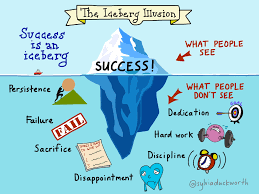
    Success varies from person to person.  My view on success is having the ability to navigate a situation or task where the outcome exceeds the level of expectations.  Success is defined as having the mental capacity to adapt, think and build on past experiences to navigate the situation or task.

    I gained success by using the “where, what, when” concept daily in all interactions.

    • Examples: supervision, mentoring, speaking engagements, volunteering.

    In each of these examples, being where I’m supposed to be, doing what I’m supposed to be doing, when I’m supposed to be doing it has led to successful outcomes.

    My last view on ‘my’ success is tied to the people (branches) I work with.  I feel successful when I watch and hear how well others are doing in their professional and personal lives.  My success is a direct reflection of their success—the more successful they are the more successful I will become.  Kind of a large circle of success!

    So, what does success look like for you the reader?  Curious for your thoughts—thanks!

    “Success is liking yourself, liking what you do, and liking how you do it”.

    (Maya Angelou)

    Success3


  • Change–Make it work for you!

    Change2

    ‘In any given moment we have two options: to step forward into growth or step back into safety.’

     (Abraham Maslow)

    Let’s go ahead and acknowledge a simple concept, change happens daily.  It can be in your personal or professional life but either way, change has a place in your life.  How you respond is completely up to you.

    There have been times when the concept of change (personal or professional) was frightening.  I can’t say change is my favorite aspect in life, but it can be leveraged to help Walk Into the Future.

    Maslow’s quote above provides two options to utilize when faced with change.  Stepping forward into the change process can provide a level of growth needed to accomplish the task at hand. Trusting yourself and understanding you have the tools to handle change will provide the foundation needed for growth.  Adopting the change mindset can be a good thing and is an excellent way to overcome the potential fears normally associated with change.  Look to leverage the positives when confronted with a change opportunity.  There may be times when the prospect of a change can be viewed as a gift.  Remember, Maslow identifies the possibility to grow with change.    This growth mindset is the foundation needed to see the benefits change can bring.

    Maslow provides an alternative to embracing change and it is to step back info safety.  Playing it safe and not engaging the change opportunity can feel like the easier of the two options.  Please note, this level of retreat may feel good now, but it will hinder growth (personal, professional, etc.).  There are times human nature will make you hesitate when faced with change.  You may want to retreat and not face the steps needed to implement change.  This may appear to put off the prospect of a change action, but it does not. Change happens especially in the workplace, so why not look at the full change prospect and leveraging the positive (growth) aspects available.

    I am an avid reader and a book recommended to me years ago was ‘Who Moved My Cheese’.  Very interesting and quick read but the lessons extracted from this book can help generate a plan for growth when faced with change:

    • Change happens
    • Anticipate Change
    • Monitor Change
    • Adapt to Change Quickly
    • Change (simple enough)
    • Enjoy Change
    • Be Ready to Change Quickly and Enjoy it Again

    Change Cheese section

    ‘Only I can change my life. No one can do it for me.’ (Carol Burnett)

    I embraced the concept of change before embarking on my current Walk into The Future.  There were times I talked myself out of ‘Moving my Cheese’ but embraced the growth aspects of change and started a new journey.  I make daily adjustments on my walk but embraced the positives—no safety mindset for me!

    ‘Stop being afraid of what could go wrong and start being excited about what could go right.’ (Tony Robbins)

    How do you view change?  What steps can you take to embrace change and leverage it for growth?

    References

    Johnson, Spencer. (© 2002; 1998) Who moved my cheese? : An amazing way to deal with change in your work and in your life New York : Putnam.

    Change3


  • What Inspires Me?

    ‘Don’t chase the paper (money), chase the dream.’

    (The Notorious BIG)

    I conducted a leadership and goal-setting workshop with staff from the Seminole Tribe of Florida’s Center for Student Success and Services (CSSS) in January.  Extremely engaged group of professionals who were very aware of their goals and vision for success.  My work allowed them to fine tune their organizational efforts towards creating empowered leaders who lead from the front.

    During my time with the group we touched on the concept of inspiration and who they inspire through daily interactions.  This was a very good way to get staff to engage and identify how they impact the organization in a positive way.  While listening to their responses it was easy to see the passion they have for what they do and the clients (students, parents, leaders, peers) they interact with daily.

    I formulated a question for myself on my drive back from conducting the workshop for CSSS staff members:  What Inspires Me?  Please note, this concept is something I have already identified but wanted to expand as part of my continued Walk into The Future.

    Why

    Months ago, a friend asked me ‘what’s your why?’.  My response was:  to impact people in a positive way to leave them better than when I found them.  Simple enough, right?  But to look deeper, my why and interactions with others is what inspires me daily.  This process seems to generate a complete circle because the more I help others the more inspired I become.  Understanding your ‘why’ can provide the blueprint for what you should be doing.

    Inspiration with Why

    Who

    I work with multiple people I’ve met over the years; some from my time in the Air Force, others from my work at multiple university Career Centers.  My speaking engagements have allowed me to reach a larger audience from diverse work environments and backgrounds.

    My interactions with branches on my tree drive my desire to help them succeed in their professional and personal lives.  My branches determine the level of interaction needed during our check-in sessions.  Some just need a little ‘encouragement’ while others need a full session to energize their efforts on their Walk into Future.  Either way, my work with branches on my tree inspires me probably more than it does them.  The stronger the branches grow, the stronger the tree becomes.  Let’s inject the complete circle metaphor here again for visual impact. 😊

    Inspiration Circle

    When

    Spend time with me and I will probably have some level of advice for you.  It comes naturally for me since I have a background in Psychology and Career Services arenas.  I never force information on anyone but when asked I will give an honest answer.  There will be times my responses require a branch to conduct homework (research, reflection, goal formation, etc.) and then we can get to work on mapping out a path for success.  I agree to partner and help find the success needed to move forward.  The ownership remains with the branch to finalize the process.

    So, what truly inspires me?  Having a formulated ‘why’ and interactions with branches (who) as determined by their needs (when).  Simple enough, huh?

    Thanks to my branches for inspiring me daily!  Well done!

    What inspires you daily?  Who inspires you?  Curious, thanks!

  • Balanced Leadership

    balancedleadership

    “Leadership is a potent combination of strategy and character.  But if you must be without one, be without the strategy”.

    (Norman Schwarzkopf)

    I try to leverage things I’ve learned over time from diverse leadership principles daily.  This quote signals leaders are concerned with positive outcomes not who should receive the credit.  How many times have you heard a leader exclaim what ‘they’ did but maybe not provide full credit to the team who helped along the way.

    Balanced processing is an Authentic Leadership variable that encourages leaders to seek the ‘big’ picture within the work environment before making decisions.  This concept provides a ‘full view’ of the current situation and solicits input to ensure decision making is done with sound information.  Leaders can leverage balanced processing to build trust, encourage professional growth for direct reports and provide the organization with reliable decision-making techniques.

    How can leaders initiate balanced processing in the work environment?

    • Look at both sides of a situation
      • Positive and negative
    • Show the ability and willingness to gather multiple viewpoints
      • Not just what you want to hear
    • Actively seek different views and professional opinions
    • Eliminate a defensive or negative position when receiving information

    balancedleadership3

    Work place impact of balanced processing

    Leaders who leverage balanced processing actively seek information from others (direct reports, colleagues, etc.) then make decisions based on collected information.  This decision- making model highlights the importance of feedback to direct reports and encourages them to seek feedback for themselves.  Balanced processing helps build trust in the work environment—it emphasizes ‘all’ opinions are valued and expected.  The concept also eliminates personal bias from the decision-making process, everyone in the organization has input prior to the final decision.   Finally, balanced processing allows for the development of objective action plans in decision making.

    Balanced processing encourages direct reports to be engaged in the work place.  Leaders are viewed as approachable, trusted and influential because they want and seek feedback in the decision-making process.

    *Leaders should also explain they value input from all but the decision made must be the best for the organization. *

    My Authentic Leadership research identified balanced processing as the variable that best explains job satisfaction for direct reports.  They want to be involved!

    How can you leverage balanced processing in the work environment?  What impact would a leader who displays balanced processing have on your daily outcomes?  Curious, thanks!

    balancedleadershipchess

    (Play chess, not checkers!)

  • Leaders Build People

    encouragement 3

    How often do you make the time to encourage others?  What benefits can a kind word from you have on the daily outcomes for someone you know?  How do leaders build direct reports into valuable team members and future leaders?

    Encourage them and watch them grow!

    I look for ways to reach out and help my tree continue to grow daily.  Some days it’s just a simple text to say hello and other days jumping on a phone call may be a better option to be a people builder.

    A simple ‘check-in’ can be the catalyst to help someone experiencing a difficult challenge in their day.  This approval process can be what they have been craving but didn’t know they needed.

    Leaders can bring this concept into the work environment by having a complete understanding of their staff members. Knowledge of strengths and weaknesses can enhance this process.  Look for ways to emphasize and cultivate the strengths of your team to unlock hidden potential.  Also look for opportunities to encourage team members to stretch their skills for additional growth.  Leaders who encourage their people to test their limits and provide a foundation for growth are ‘people builders’.

    I make it a point to tell direct reports, “I don’t care if you make a mistake, just don’t make the same mistake twice”.   This statement is my way to let people know they are encouraged and should explore additional ways to get things accomplished in the work environment.  We constantly hear about work place diversity but at times hinder the process of diverse thoughts, ideas and concepts.

    ‘Never let your ego get so close to your position that when your position goes, your ego goes with it’. (Colin Powell)

    Everyone wants to be valued—plant the seeds today and watch the people around you grow.  Show an authentic belief in them and their overall success.  This concept can be utilized in the work environment and with daily interaction with family, friends and others you cross paths with.  Take the time to showcase the ‘positive’ when communicating throughout the day.  Go ahead and give that vote of confidence to someone who is considering making a big change in their professional or personal life.  Your encouragement may be the thing they need to move forward.

    You become a ‘people builder’ when you provide the nudge, advice or encouragement needed to help them Walk into The Future.

    Who can you build up today?

  • Running Traveler

    traveler 2019

    2018 allowed me to develop a robust running program as part of my Walk into the Future.  I set an aggressive (for me) goal to increase the number of Half Marathons I would run in 2018.  This newfound aggressive scheduling allowed me to travel to multiple locations and experience 13.1-mile courses in fun and culturally significant places.

    Running a race allows you to experience a location in a more intimate manner than simply driving around.  Running provides opportunities to fully engage the city since you don’t have to worry about cars, traffic or obeying signs.  The course gives you the freedom to look around, admire architecture or even stop to take a picture of landmarks.  My goal is to run as fast as possible, but 13.1 miles provides a lot of sightseeing time.

    New Orleans, LA. (March 2018)

    My first 2018 race was the Humana Rock ‘N’ Roll New Orleans Half Marathon.  I’ve been to New Orleans multiple times, but this was my first time running a race in the city.  Running friends identified this as a fun race and a fast course since New Orleans is relatively flat.  The race and the course really lived up to the prerace hype.  Everything about New Orleans is festive and the course sponsors, volunteers and cheering crowd made sure all runners enjoyed their time in New Orleans.  New Orleans is known for Mardi Gras and having a good time.  A lot of runners use this race as an extended opportunity to get dressed up in costume.  You see all sorts of outfits for this race and beads are everywhere.

    The race starts downtown and winds throughout the city.  We spent a lot of time on tree lined St. Charles Avenue.  Residents, business owners, spectators and brass bands lined the street to cheer runners.  There are a few ‘beer stands’ available even though it’s 7:30 am—of course you have to get a beer in New Orleans.  The rest of the race winds through the Garden District, the French Quarter and finishes at the Fairgrounds.  The race after party is held at the Fairgrounds with music, food, beer, snacks and hanging out with runners from around the world.

    New Orleans is a great city and I’m happy to have experienced it as a runner.  Got to see the city from different angles and have a deeper appreciation for the culture there.

    Recommend visiting River Walk New Orleans (shopping), Mulate’s (Cajun Restaurant) and Bourbon Street (music) while in New Orleans.

    Nashville, TN. (April 2018)

    Nashville is one of my favorite places to visit because I love live music and some of the best music is generated there.  The St. Jude Rock ‘N’ Roll Nashville Half Marathon is one of the largest races in the series.  The Nashville entertainment draws a lot of runners from around the world to ‘Nash Vegas’.  The food, music and shopping in Nashville provides a convenient backdrop for runners to meet up and enjoy the city.

    A real treat for runners during this race is a different musical act EVERY mile.  Most of the acts are local talent (singers, musicians, bands) who are all very good.  The course starts downtown Nashville and winds through college campuses and residential neighborhoods before ending at Nissan Stadium.  A unique feature happens right at mile marker #6.

    Mile marker #6 is the entrance to the Westgrove neighborhood.  The unique and special feature of this part of the running course is the people who live in the neighborhood provide the entertainment to include sound stage, costumes and refreshments.  The entire neighborhood gets involved during the race and they have FUN.  My first encounter with this neighborhood came in my first Nashville Half Marathon in 2017.  I stopped running to soak in the entertainment and the energy from the people there.  Truly amazing experience to see so many people want to help entertain and energize runners.  This is my favorite spot on the Nashville course every time I run there.  I didn’t stop in 2018 since I’m use to the experience now.

    Running in downtown Nashville is a true treat!  The history, entertainment and music venues there make for a unique visual experience.  I always discover new things to view every time I run the city.

    Recommend visiting the Wild Horse Saloon (food, live music, line dancing), Crazy Town (live music), Tequila Cowboy (live music, food, cold beer), Jack’s BBQ, Opryland USA and The Hermitage (Museum).  There’s a lot more there, Nashville is a great place to Walk into the Future.

    Boston, GA. (October 2018)

    The Boston Mini-Marathon is a local race the town of Boston, Georgia uses to invite people to visit over the weekend.  Festivities include the Mini-Marathon (Half), Parade, Ms. Boston pageant, a Boston Butt BBQ competition and local vendors.

    This race had the smallest number of runners for my 4 races but was the friendliest place I’ve ever run.  Everyone in town seemed to enjoy the event and the runners who descended on their town.  The course was very flat and with the cool October weather provided an opportunity to run fast.  I signed up for this one as a ‘training’ run but ran my fastest half marathon ever.  Believe the cool weather and flat course were instrumental to my fast (for me) time.

    boston mini

    Amelia Island, FL. (December 2018)

    Decided to take a flyer and run the Reindeer Half Marathon on Amelia Island.  I had never been to Amelia Island and thought this would be a great way to see the beach and downtown areas.  The course was described as flat and fast and it lived up to the billing.  The run starts and ends right on the beach.  In between it winds through nature preserves, neighborhoods, downtown and the Fort Clinch state park.  Unfortunately, the weekend weather was not great, so I didn’t get to explore as much as I wanted.  I spent a lot of time at SLIDERS which has a great menu and ice-cold beers. Was able to venture out on the beach the day after the race before the rain started again.  Will look to make it back to Amelia Island to get a better feel for the area.

    2019

    Looking to add a few additional cities to my Running Traveler program.  Will run the Philadelphia Rock ‘N’ Roll Half Marathon in September—never been to Philly.  Also looking at running the Orlando Utility Commission (OUC) Half Marathon again in December after taking a year away from this race.  May add a few others to round out my running schedule for 2019.

    Currently committed to run:

    • Gulf Winds Track Club 15k (January)
    • New Orleans Rock ‘N’ Roll Half (February)
    • Winter Park 10k (March)
    • Nashville Rock ‘N’ Roll Half (April)
    • Philadelphia Rock ‘N’ Roll Half (September)

    Looking forward to catching up with friends and drinking beer at all these races!  See YA’LL soon!

  • Goal Setting—A Reverse View

     “Do or do not.  There is no try.”  Yoda

    Goal setting has been a major factor in my personal and professional life for as long as I can remember.  I stopped generating New Year’s resolutions since the concept of SMART goals provides a different level of self-accountability.  My self-accountability is increased by sharing yearly goals with trusted mentors who conduct ‘check-ins’ to see how much progress has been made throughout the year.

    goal setting1

    One of my most adventurous 2018 goals was to:  Run 4 Half Marathons.  I say this was an adventurous goal for me since the most half marathons I had ever run in a year was two (2017 Nashville Rock and Roll Half Marathon and 2017 Orlando Utility Commission (OUC) Half Marathon).  Neither of these races produced a finish time that would awe other runners.  In fact, my times from these races were considerably slower than times I’ve run before.  So much for getting better with repetition.

    My fix to improve my running times and training routine was to challenge myself to run more races which would lead to more training sessions.

    Again, my written goal was to run ‘4 Half Marathons’.  I didn’t initially write down specific races, cities or dates where I would accomplish this goal.  I utilized the concept of ‘4 Half Marathons’ as my base goal and then worked my way in reverse to identify when and where I would run these races.

    Things I considered when selecting the specific races were:

    • Travel distance
      • Drive or fly
    • Weather
    • Course conditions (hills, pavement, gravel, bridges, etc.)
    • Registration costs
    • Hotel proximity to event
    • Things to do after the race

    These factors helped me identify races I could train for and reach in a reasonable amount of time (fly or drive).  I also used these factors to pick races that gave me some down time from training without feeling guilty.  Spacing these out allowed for full recovery from one race to the next and provided time away from running to recharge mentally and physically.

    My reverse goal process allowed me to select, register, train and complete the following half marathons in 2018:

    • 2018 New Orleans Rock and Roll Half Marathon (February)
    • 2018 Nashville Rock and Roll Half Marathon (April)
    • 2018 Boston, GA. Mini-Marathon (October)
      • Personal best time: 2:13 (2 hours, 13 minutes)
    • 2018 Amelia Island, FL. Reindeer Half Marathon (December)

    I stayed away from summer races because of heat and humidity.  I still trained over the summer but didn’t feel any pressure to work on speed, just logged miles early in the morning to beat the heat.  The races earlier in the year allowed me to gain my running focus while also enjoying two cities with cultural and entertainment districts.  A benefit of running larger races is the music, food and beer you get to enjoy once you cross the finish line.  Hanging out on Bourbon Street in New Orleans and line dancing at the Wild Horse Saloon in Nashville was my reward for completing those races.

    The Boston, GA Mini-Marathon was close by and I heard great things about the course (flat and fast).  It lived up to the billing of a fast course since I was able to run my fastest half marathon time EVER during this race.  The funny thing is I was using this race as a training session—cool weather and a flat course provided me with a perfect opportunity to push myself.  It didn’t hurt that my training program had increased my weekly miles and endurance leading up to this race.

    The Amelia Island Reindeer Half Marathon was selected simply because of a flat running surface and I had never been there before.  Running races allows me to travel and explore, so this was the perfect last race to meet my stated goal of 4 Half Marathons.

    I was able to meet this 2018 goal by challenging myself with an increased race load (for me) and then working in reverse to identify/select/train/complete the races needed.  This was a major upgrade in my running program since I finally put a different level of accountability on myself.

    Benefits of meeting this goal:

    • Satisfaction of meeting a written goal
    • Increased speed
    • Increased endurance
    • More travel
    • Hanging out with friends
    • Lost 7 pounds!

    Working on my 2019 goals right now—thinking about 6 Half Marathons in 2019.  Will leverage my reverse goal process to determine the races needed to meet this goal.

    How can working backwards (reverse) help with your 2019 goal setting process?  How much progress have you made on your 2019 goals?

    FYI–I finalized my goals this week!

    goal setting2

  • Happy New Year

    Happy New Year 2019

    ‘None of us can change our yesterdays but all of us can change our tomorrows’ (Colin Powell)

    2018 was a great year and looking forward to having a great 2019 as well!

    I’m sure you will hear Happy New Year for the next few weeks, so I decided to get my version in via a blog post.  Positive thoughts lead to positive actions so let’s use the New Year vibe to create a road map for your personal and professional success.

    I’ve never been a huge fan of New Year’s resolutions because the construct behind these resolutions have an air of whimsy.   Most resolutions are stated with an almost ‘either/or’ prospect without the foundation for future growth or success.

    I sit down each January and generate a list of goals I will accomplish in the New Year.  These goals range from travel locations, fitness targets, professional pursuits, community involvement and reading plans for the year.  Generating SMART (Specific, Measurable, Achievable, Relevant and Time Based) goals provides a template to determine progress towards meeting a specific goal.  The ability to gauge progress towards stated goals provide a level of satisfaction and accountability to meet or exceed a goal.  I also leverage an accountability partner who receives a copy of my goals and checks on progress throughout the year.


    smart goals 2019

    I routinely advise direct reports and mentees to generate 3 SMART goals in the following areas:  professional and personal.  This process has helped them set goals to ensure the new year will bring the success they seek.  Please note:  3 SMART goals are the minimum I request from my tree; most create a robust number of goals in these areas and others depending on their professional and personal needs.

    Use the early days of 2019 to get organized and create goals that will enhance your entire 2019!  Don’t wait, get moving towards the productive year and outcomes you want to see!

    Let’s energize your Walk into the Future!

    What goals do you have for the New Year?   

  • The Humble Leader

    close up photography of a cellphone
    Photo by Prateek Katyal on Pexels.com

    The concept of the humble leader sounds contradictory to what most people envision in the workplace.  The traditional leadership view (real or perceived) cast leaders as hard charging, take no prisoner and only out for themselves.

    Humility: the quality or condition of being humble; modest opinion or estimate of one’s importance, rank, etc. (Dictionary.com)

    A true leader understands you lead people and manage programs.  Not the other way around.

    A humble leader displays a level of self-awareness within the workplace to ensure growth for everyone.  A humble leader does not seek or need the spotlight to highlight the great work of the team.  The humble leader can inspire better team cohesion, eagerness to learn and a better performance outcome for their teams.

    The process of leading by example and a leader with a humble approach when working with individuals and teams is an excellent example of this concept.  This consistent approach provides a template for others to follow and allows the team to perform knowing the true nature of their leader.

    Humble leaders:

    • Build relationships
    • Listen
    • Enable trust in the workplace
    • Show appreciation
    • Reflect
    • Display authenticity

    A humble leader puts the needs of others before themselves.  This could be a simple process of ensuring direct reports have the tools needed to perform their duties.  Sounds simple but how many times are work assignments delegated with deadlines, but instructions/tools needed to perform are not provided.  The humble leader looks to provide tools needed to ensure overall team success.  They are also not afraid to ask questions to ensure the assignment is fully understood.  Asking follow-up questions does not show weakness but shows the leader cares and wants to optimize time spent on a specific project.

    Being a humble leader does not imply weakness.  Humble leaders are always looking to improve themselves and focus on larger, organizational goals—not just their individual goals.

    A leader is best when people hardly know that they exist. (Lao Tzu)

    What impact does humility have within your current work environment?  How would this concept enhance overall productivity in the work environment?


  • Networking

    “Opportunities? They are all around us. There is power lying latent everywhere waiting for the observant eye to discover it.” – (Orison Swett Marden)

    Networking

    Who’s in your network?  No, really, what connections do you have to facilitate continued personal and professional growth?

    Most people hear the term ‘Networking’ and immediately think of a stuffy, formal business event.  My view of networking allows you almost unlimited possibilities if you open your eyes and ears to the people and possibilities around you.  Networking opportunities are available in multiple forms, we must be open and ready for them.

    Networking can provide a springboard to enhance goals, make contacts and potential employment.  People you meet provide a chance for you to network and share your story.  They may not be the direct person to change your world but can help introduce you to a friend, colleague or family member who may be able to help you Walk into the Future.

    Networking 4

    One of my mentor’s always says, “You’re networking even when you don’t know it”.  Strive to make a good impression on everyone you meet since this can be a critical component on how much or if they are willing to help.

    Make a list of professional contacts, professors, mentors and friends who may be able to help with your networking goals.  Ask them out for coffee or lunch to discuss your situation and seek their guidance.  Networking in this way allows you to maximize your visibility and viability to others.

    Networking can be done face to face or via technology.  The time you spend in the gym, at a coffee shop, or a formal networking event is a prime time for you to branch out and communicate with others.  My preferred on-line networking method is to utilize LinkedIn.  This platform allows you to ‘target’ search based on your desired outcomes.  You can search for contacts by name, by organization and by location.  There are other filters available, so find the best filter combination for your needs.

    When working with students towards their employment goals, I always show them how to search for LinkedIn contacts at their preferred organization (Examples:  Google, General Motors, Proctor and Gamble).  We discuss the best way to introduce themselves to contacts and how to ask for the order (what do they want).    Creating an introduction script makes this portion easier (who are you, what are your credentials and what you want to discuss with the contact).  Remember, networking is more than what you can get from someone; convey how this interaction can benefit you both.

    Local Rotary Clubs, Chamber of Commerce and other professional organizations provide avenues to network face to face.  Leverage the ability to meet and speak with locals in these networking rich environments.

    Don’t forget to ‘listen’ to what others have to say.  Networking is not just you talking; allow other attendees to provide you with additional content to keep the conversations moving.  Again, an introduction script may enhance your ability to weave into and out of conversations.  Request business cards or other contact information to follow-up (thank you, informational interviews, mentoring) with individuals who may be able to enhance your current situation.  Remember to be respectful of others time but always look to ask for what you need from people in a networking environment.

    Practice makes perfect and the process of networking becomes easier the more you get out there–make it happen.

    What other networking techniques have you used?  How can networking help you advance in your field?

    Networking 3