Tag: Truth

  • Quotable Leadership philosophy!

    FAU Leadership quote August 2019

    “A leader is a dealer of hope”.

    (Napoleon Bonaparte)

    Always wonder if my leadership and mentor quotes travel well.

    Received the image above a couple weeks ago from a Career Center friend in South Florida.  The Career Center had Graduate Assistants (GAs) present to leadership how they would incorporate National Association of Colleges and Employers (NACE) competencies into daily interactions with students and alumni.

    One of their GAs researched the NACE site and found an Authentic Leadership article done with me and leveraged my words to make her point on how a leader truly inspires an organization.  I was happy to see my words helping the next generation of college students and future leaders.

    You can find the full NACE article here:  https://www.naceweb.org/career-development/organizational-structure/authentic-leadership-hinges-on-listening/

    • So, yes, proud to say people are listening and putting these words into action! 😊

    I continue to promote Authentic Leadership as a platform to enhance organizational success. The four variables are easy to understand and apply in daily interactions within the work environment.  True leaders need to be visible and available to engage direct reports to ensure everyone has input in how the organization operates.  Top down leadership may be needed in isolated situations, but your people want to be engaged.  The only way to accomplish this is to engage them—simple concept.

    Leverage Napoleon’s words above and become a dealer of hope.

    What’s your favorite leadership quote?  How does the quote impact your daily interactions?  I welcome your thoughts, thanks!

    “As we look ahead into the next century, leaders will be those who empower others”.

    (Bill Gates)

    photo of assorted letter board quote hanged on wall
    Photo by Mikechie Esparagoza on Pexels.com
  • Set the Standard with your Core Truth

    close up photography of a cellphone
    Photo by Prateek Katyal on Pexels.com

    “If I didn’t define myself for myself, I would be crunched into other people’s fantasies for me and eaten alive”.

    (Audre Lorde)

    I was introduced to Audre Lorde’s work through the 1999 movie, The Best Man.  The two characters in the scene were trying to decide how to proceed with their relationship when the quote above was introduced.  It provided a moment of clarity and highlighted commonality the characters unknowingly had with each other—they both used this quote in their daily lives.

    The quote has been with me ever since because it resonates a strong sense of self that leads to empowerment.  I leverage the quote to highlight doing things differently than others is okay—everyone has a different path to walk daily.

    My presentation and writing styles are uniquely me.  There are times people will ask how I generate presentation materials and then look at me like I’m an alien when I explain it.  Again, I stay true to me and my preferred methods because they work for me.  When I try to generate content in a manner that doesn’t fit me, I struggle, so decided not to go down that road anymore.

    Had to explain this process when presented with a potential speaking role that would have taken me out of ‘character’ for who I am.  The opportunity was very appealing from a surface level but would have required me to present in a style that is not really me.  Could I have faked it?  Probably, but I wouldn’t have been happy with me and I’m sure this fact would have bled into the actual presentation of material.  Decided a long time ago to stay true to my core truth to avoid being eaten alive.

    “Being the best for yourself is how you can be the best for others”.

    (Jennifer Mergen)

    coin operated tower viewer on rooftop during sunset
    Photo by Saeid Anvar on Pexels.com

    Discovering your core truth can be used in other areas of life.  I recommend once you discover your core truth then stick with it.  I described the BIG GULP phenomenon in an earlier post—this concept is incorporated within my core truth—I never do business or move forward with a project that makes me take a big gulp.  This concept has saved me on multiple occasions and kept me from doing something I would regret.

    I’m not saying people cannot evolve over time.  Continued learning and growing are integral parts to personal and professional success.  The core truths you define for yourself provide an actual road map to how you view and deal with others.  Don’t let outside influences ‘eat you alive’.

    Had an interesting conversation yesterday about defining a core truth leadership style.  Believe this provides a foundation that will allow a leader to adjust and help direct reports grow.  My leadership core truth is authentic leadership but I’m well-versed in other leadership styles if/when authentic leadership principles are not effective for the current situation.  I’ve never yelled or cursed to prove I’m a leader.  People who do are poor leaders—my opinion.

    What things do you consider when defining your core truth?  What areas in your professional life can establishing a core truth enhance your work environment?  Interested in your thoughts—thanks!

    “None but ourselves can free our minds”.

    (Bob Marley)


  • Emulate great leaders ‘and’ learn from bad bosses

    “Never step on enthusiasm.”

    (Colin Powell)
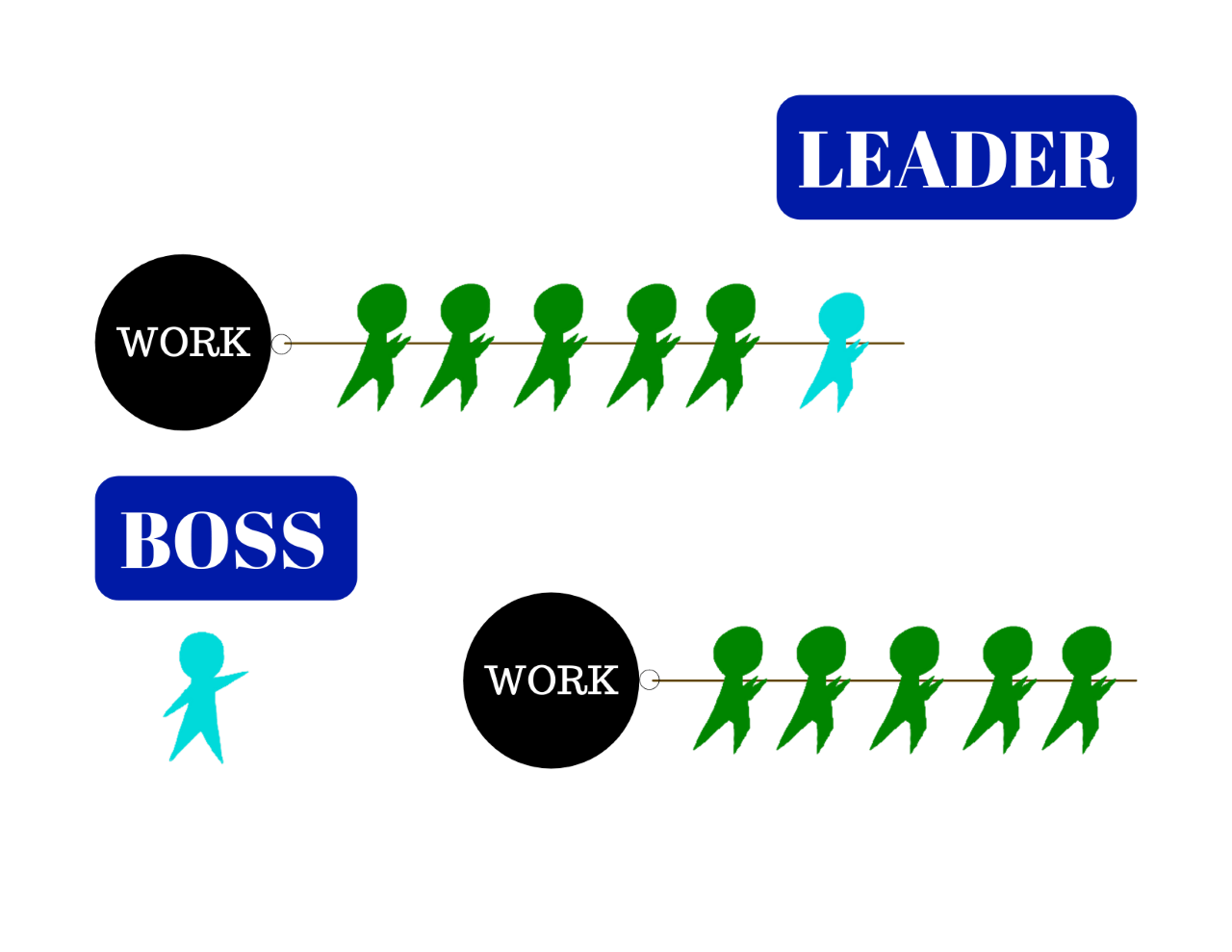
    thumbnail_Leader

    (Image by Jackie Zamora)

    I love the image above for the simple message it sends.  True leaders are not afraid to engage to ensure team success.  Leaders display a level of humility when they show direct reports they are a part of the overall team, not just the person demanding results.

    Contrast the two examples in the image.  Who would you want to work for?  The leader or the boss?  Why?

    I have been lucky to work for some truly great leaders in multiple work environments.  They all shared a vision of what success looks like and made sure everyone was working toward the same goals.  These great leaders always led by example and made professional development/learning a priority in the workplace.  This enhanced direct report engagement and made everyone want to get more accomplished.  Regardless of style (authentic, transformational, democratic, etc.), great leaders provide positive interactions and examples we can emulate and utilize within our own leadership practice.

    Luckily, I have not experienced too many of the boss examples in the image above, but I have made a point to learn from these people as well.  Don’t be so quick to write off the lessons you gained from a boss:

    • How did your boss make you feel daily?
    • How easy was it to bring them problems?
    • Did they explain tasks or just say go get things done?
    • How competent were they getting the job done?
    • How invested were they in your professional development?
    • How much fun were they to be around?
    • How much staff turnover did your office have?

    I could add more things to this boss check list but believe you see my pattern now.  So, what lessons can you learn from a boss?  I’ve learned to never repeat a boss trait I viewed as a negative.

    Getting up from behind a desk or closed door to engage with people daily is an easy task for everyone.  Never get so comfortable with a position you forget your responsibility to the people you serve.  Servant leadership is centered on the idea the leader serves their people.  Take the time to explain the WHY of a task not just the WHAT needs to be done.  Leverage the strengths of everyone on the team.  This requires the leader to know the strengths and weaknesses of each team member.

    It’s okay to have fun at work!  No, really, fun and work can go together.  Look at some of the most successful organizations and the culture they build in the work environment.  Work still gets done but fun happens daily—may be a coincidence but these type organizations are able to retain their staff members.

    Consider implementing a stay interview process.  Stay interviews allow great leaders to engage staff to see what they need in the work environment.  The stay interview builds a dialogue to enable both sides to enhance relationships and create a productive culture.  The leader does not have to promise anything they can’t back up and allows them to explain these things directly to staff members.

    Note:  Had a great conversation during a virtual networking event last week in Orlando about the term stay interview.  Some organizations/leaders do not like this term.  That’s fine, call it ‘professional development interview, career development orientation, etc.’ but look for ways to engage staff on their professional needs.

    So, continue to emulate the great leaders you have had in your work life but don’t miss the valuable lessons the bosses have provided.

    What leadership traits do you emulate daily?  What have you learned from a boss (no names needed)?

    “I’ve learned that people will forget what you said, people will forget what you did, but people will never forget how you made them feel.”

    (Maya Angelou)

    war chess

    Photo by Gladson Xavier on Pexels.com

    “Play chess, not checkers.”

    (Dr. Calvin Williams)

  • The Voice of a Leader

    orange and and brown chess pieces

    Photo by Markus Spiske temporausch.com on Pexels.com

    “True leadership stems from individuality that is honestly and sometimes imperfectly expressed—Leaders should strive for authenticity over perfection”.

    (Sheryl Sandberg)

    Had a great lunch meeting and chat with one of my Orlando tree branches at the end of May.  We were able to catch up before my scheduled guest speaking role on the Intern Pursuit podcast.  Always love catching up with my tree branches in-person and jumped at the chance to hear the great things she was doing in Orlando with her small business marketing firm.

    We were able to share professional and life updates during this visit and got into the concept of leadership in the workplace.  Just general stuff but I’m a big believer in leadership development and the impact ‘good’ leadership can have on the work environment.

    Most people have heard numerous leadership styles mentioned:  transactional, transformational, authoritative, authentic, etc.  I recommend new leaders have a good understanding of multiple leadership styles and then work to find their inner voice within the work environment.

    What’s your inner voice?  This concept can be used to determine your true leadership style and then put things into place to ensure your work environment and people can grow.  I tell anyone who listens I’m a huge believer in the authentic leadership style.  Guess what, authentic leadership takes some of the best aspects of other leadership styles and packages them into a concise, four variable approach to leadership.  The variables of self-awareness, relational transparency, internalized moral perspective and balanced processing are used by authentic leaders to develop their inner leadership voice.  An authentic leader needs to ensure these variables are on display and utilized daily to truly be an authentic leader.

    Please note, all leadership styles have variables of some level.  Transformational leaders are called ‘quiet leaders’ because they are described as leading by example.  Transactional leaders can be viewed as reactive and ‘may’ be more beneficial within large corporation settings.

    So, as you can see, there are a lot of leadership styles available to new and experienced leaders.

    “It can be done.  Leaders make things happen.  If one approach doesn’t work, find another”.

    (Colin Powell)

    The key to finding your leadership inner voice is assessment of your work environment and flexibility.  I can say I practice authentic leadership, but this style may not be practical for every direct report.  A direct report who is not performing to standards may need daily transactional interactions whereas the rest of the staff thrive with the authentic leadership environment created.  Knowing the needs of your staff is something that comes with experience, lots of reading and training.  The ability to adapt to changing work situations and needs of direct reports allows a leader to impact the work environment in a positive manner.

    It’s okay to take a personal interest in direct reports and things they are interested in.  You may be able to adjust work assignments to keep them engaged based on strengths and interests.  It’s also okay if you can’t accommodate everything your staff would like to do in the work environment.  Example:  staff may want to work from home but if that model does not fit the mission then it’s up to the leader to say so.  Saying no in this situation is not a personal attack, it’s just the way the organization must operate.

    A lot goes into being a leader.  Understanding leadership styles, your strengths and weaknesses as well as continual learning will help as you develop your inner leadership voice.

    “Outstanding leaders go out of the way to boost the self-esteem of their staff.  If people believe in themselves, it’s amazing what they can accomplish”.

    (Sam Walton)

    blank paper with pen and coffee cup on wood table
    Photo by Kaboompics .com on Pexels.com
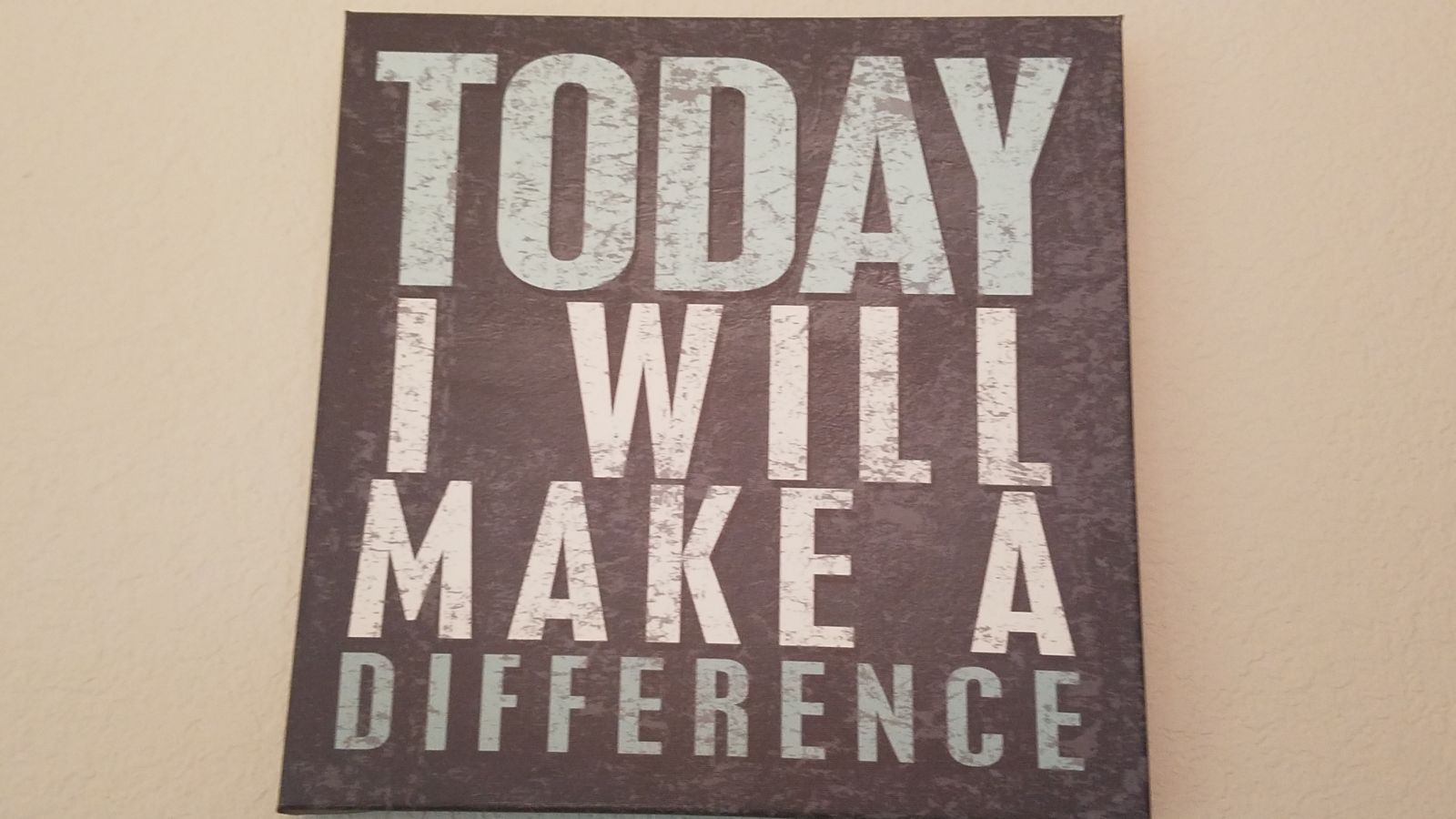
  • Making a Difference (Daily)

    Make a Difference May 2019

    I start each day with the purpose of making a difference.  Changing the entire world continues to prove to be beyond my ‘super powers’ so I focus on the small victories in life.

    The picture above hangs next to my front door, so I must pass it on my way out into the world.  It is a simple reminder to ensure my focus remains on the small victories in life that can make a difference to someone.

    My psychology educational background was selected because of a desire to understand others better.  My thought process has always been to understand what makes people do or think what they do.  Psychology provided me with the foundation to understand the importance of helping others.  Please note, helping someone can be as simple as asking them how their day is going.  Doesn’t have to get super deep to impact someone you cross paths with regularly.

    I’ve written about the benefits of volunteering in the local community.  This small step can be a huge difference maker for your local community and especially someone who benefits from the organization you volunteer with.  Volunteer multiple times with an organization and you will begin to put smiles on the faces of people within the organization.

    Mentoring others has always been a huge part of my daily routine.  My current Walk into the Future allows me additional time to reach out to my tree branches and put focus on topics they want to explore.  We always did this but now my availability enhances how often we get to check in.  I enjoy catching up with my tree branches and hearing the great things ‘they’ are doing in the world.  Following their progress and seeing how they make a difference is a highlight for me.

    I’m able to expand my reach beyond my current tree branches because of my availability.  Students and organizations I was not engaged with prior are reaching out for me to help them move forward.  Some of the students knew me at FSU in passing or had a friend work with me and recommended they reach out.   I find this ‘underground referral’ process a bit flattering and it shows I’ve made enough of a difference for someone to put their friend in touch with me.  I never turn down these requests—the students have shown a tremendous amount of ambition by reaching out and requesting assistance.  Selfishly, I view this whole process as growing my tree—these new branches know they must help someone else move forward.

    Working with organizations is an area I would like to expand in 2019.  I currently do some professional development/leadership consulting with the Seminole Tribe of Florida.  We have several workshops planned and looking to add more to help them grow as a group.  Coordinating with a few local groups to highlight the Authentic Leadership principles for them to incorporate within their leadership development programs.  This process would expand my reach and provide a larger group to ensure I’m making a difference.

    So, until I gain additional ‘super powers’, making a difference daily is how I plan to conquer the world! 😊

    What can you do to make a difference today?  Who would benefit from hearing from you?  Don’t make them wait—reach out and make a difference!

    Make a Difference 2 May 2019

  • The Big Gulp: How do you handle it?

    “I never do business with anyone where I have to take a big gulp to move forward”.

    (9 Things You Simply Must do to succeed in Love and Life)

    The quote above comes from a book written by one of my favorite authors, Dr. Henry Cloud.  It is a piece of advice he received from a mentor when faced with a big business decision.  This concept can be used in multiple situations and has been a big part of my life.

    I was able to leverage this quote with one of my most positive ‘tree branches’ last week to help with a decision she was facing.  I’m encouraged with my ability to shape this quote to help my tree branch and others when faced with tough choices.

    I was introduced to the written works of Dr. Henry Cloud during a career development course while finishing my masters program in Counseling/Human Relations.  The book was so influential it was the first college text book I decided to keep for my personal library.  Most days you will find this book on me as I refer to it constantly for additional insight.

    The Big Gulp can be defined as the apprehension you may feel prior to making a commitment.  The commitment could be business related, personal or a combination of both.  How you handle life’s Big Gulp moments can increase your level of happiness as you move forward on your Walk into the Future.

    My personal Walk into the Future has been defined by leveraging Big Gulp moments to my advantage.  I never accept deals, offers or partnerships with anyone I would have to take a Big Gulp before moving forward.  I didn’t heed this concept a few times and moved forward and regretted every minute of the partnership.  It took me a few times to experience this before I became a firm believer in this process:  when offered something I would have to take a Big Gulp before moving forward, I do not accept it.

    The opportunity may seem like the best thing ever, but the Big Gulp reaction should identify additional research is needed.  The Big Gulp reaction comes from past experiences where things didn’t seem quite right or the person offering you the deal has done things in the past to make you cautious.  Trust your instincts when faced with these situations.  Better yet, run the situation by your mentors for additional insight.  I recommend you share your apprehensions with your mentors so they can provide advice to cover all angles of the decision.  The ultimate decision belongs to you but remember the Big Gulp came from somewhere.

    Can you isolate the Big Gulp to something tangible?  Can you trust the person offering you the opportunity?  There are other things to consider, but these are a few to help jump start the process.

    Have you ever experienced a Big Gulp moment and still moved ahead?  How did that experience work out for you?

    How can you leverage the Big Gulp moving forward?  I welcome your thoughts—thanks!

    References

    Cloud, Henry. (2004) 9 Thing you simply must do to succeed in love and life. Brentwood, TN: Integrity.

  • Happy New Year

    Happy New Year 2019

    ‘None of us can change our yesterdays but all of us can change our tomorrows’ (Colin Powell)

    2018 was a great year and looking forward to having a great 2019 as well!

    I’m sure you will hear Happy New Year for the next few weeks, so I decided to get my version in via a blog post.  Positive thoughts lead to positive actions so let’s use the New Year vibe to create a road map for your personal and professional success.

    I’ve never been a huge fan of New Year’s resolutions because the construct behind these resolutions have an air of whimsy.   Most resolutions are stated with an almost ‘either/or’ prospect without the foundation for future growth or success.

    I sit down each January and generate a list of goals I will accomplish in the New Year.  These goals range from travel locations, fitness targets, professional pursuits, community involvement and reading plans for the year.  Generating SMART (Specific, Measurable, Achievable, Relevant and Time Based) goals provides a template to determine progress towards meeting a specific goal.  The ability to gauge progress towards stated goals provide a level of satisfaction and accountability to meet or exceed a goal.  I also leverage an accountability partner who receives a copy of my goals and checks on progress throughout the year.


    smart goals 2019

    I routinely advise direct reports and mentees to generate 3 SMART goals in the following areas:  professional and personal.  This process has helped them set goals to ensure the new year will bring the success they seek.  Please note:  3 SMART goals are the minimum I request from my tree; most create a robust number of goals in these areas and others depending on their professional and personal needs.

    Use the early days of 2019 to get organized and create goals that will enhance your entire 2019!  Don’t wait, get moving towards the productive year and outcomes you want to see!

    Let’s energize your Walk into the Future!

    What goals do you have for the New Year?