Category: Leadership

Articles that discuss leadership trends.

  • Strong tree branches keep me moving forward

    two brown trees
    Photo by Johannes Plenio on Pexels.com

    “If you want to go fast, go alone.  If you want to go far, go together”.

    (African Proverb)

    My collective tree branches continue to amaze me daily!

    I enjoy watching the great things they are doing in their respective areas of higher education, mentoring, volunteering, speaking, podcasting, recruiting, leadership development and fitness to name a ‘few’ areas these outstanding folks are making a difference.

    The one area that stands out to me today as I write this is the teamwork they constantly display.  My Walk into the Future has led me away from a physical office space—as noted, I primarily work out of coffee shops with Lucky Goat being first choice.  My previous work life allowed me to be surrounded by direct reports and colleagues every day.  There was always someone available to me whenever I had a question, concern or marketing idea I needed to hash out.

    “If everyone is moving forward together, then success takes care of itself”.

    (Henry Ford)

    My current walk provides me unlimited freedoms to decide what I work on and when.  The one limiting factor is I don’t have ‘my’ team right down the hallway to bounce things off.

    A great aspect of having so many tree branches is they are only a text message, email or phone call away when I need help.  Today was a perfect example of how great my tree branches are.  Needed some help generating a Presentation Value Proposition for a conference proposal I was working on.

    I had no trouble describing my proposed presentation, highlighting learning outcomes and generating an overall summary.  Couldn’t generate the Value Proposition for the presentation for some odd reason—just couldn’t make it pop or even sound interesting.

    Reached out to two of my most creative tree branches and described my dilemma.  Provided them with what I needed to do and my attempt to generate the Value Proposition.  They both jumped into teammate mode and sent me back appealing options for the Value Proposition that made the presentation sound exciting.  The point being is even without us being in the same cities, my team still has my back and we make each other better daily.

    The ability to stress the importance of teamwork is something I’m proud to bring to every organization I’ve worked with.  It’s great to see my tree branches continue to embrace team concepts and help others grow.  Well done tree branches—keep up the great things you do daily!  Very proud of your efforts!

    Thanks to my tree branches who return my texts, emails, phone calls and LinkedIn shout outs!  You’re fueling this journey one step at a time—Irie!

    What are the most important team concepts you display daily?  How can you enhance the team experience in your work environment?  Thanks!

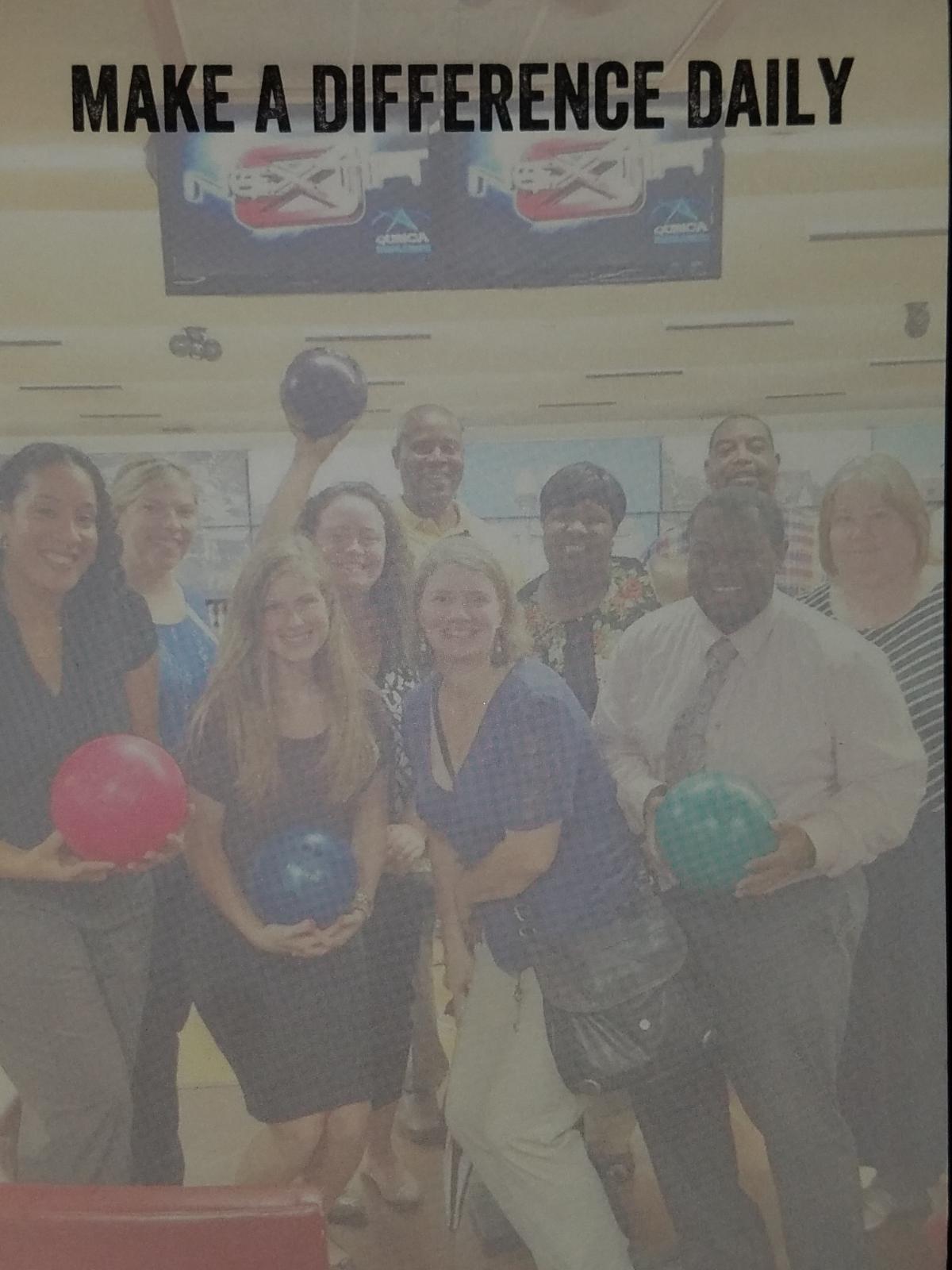
    Respect Melissa and V’Rhaniku!

    ER 2016

    (2016 team bowling outing)

    “If you want to lift yourself up, lift up someone else”.

    (Booker T. Washington)

  • Leverage a growth mindset to maximize your success


    “You have to apply yourself each day to becoming a little better. By becoming a little better every day, over a period of time, you will become a lot better”.

    (John Wooden)

    Growth mindset has been defined as people believe their most basic abilities can be developed through dedication and hard work—brains and talent are just the starting point (Carol Dweck).

    Fixed mindset

    A fixed mindset puts undue parameters in place.  An individual who believes they are only good at certain things will most likely only be good at those things.  You can talk yourself into or out of anything.  A fixed mindset can hinder progress because of the avoidance of anything that may challenge you.  This process causes individuals to give up when tasks get hard or unfamiliar.

    A fixed mindset limits individual growth because of sticking to what you know only—attempts to try or learn new things are avoided at all costs.  A sad aspect of this mindset is when people believe potential is predetermined.

    “Whether you think you can or think you can’t—you’re right”.

    (Henry Ford)

    white cup with saucer
    Photo by Jonathan Borba on Pexels.com

    Growth mindset

    Contrasting the fixed mindset with growth mindset highlights the importance of positive thinking and actions.  People with a growth mindset view failure as an opportunity, not something to shy away from.  Functioning as a lifelong learner is another aspect of the growth mindset—the foundational principle is to never stop learning new things and tasks.

    Positive effort and attitude are thought to be determining factors toward individual abilities.  This concept helps eliminate being defeated even before starting a task.  The success of others leads to inspiration for someone with a growth mindset.

    The great things my tree branches accomplish daily inspire me to continue to grow and make a difference.

    A hidden aspect of the growth mindset is the freedom it provides to practitioners.

    Growth mindset is based on not limiting yourself (thoughts or actions) so you approach each day as a gift.  You seek new challenges because you have the tools to accomplish them.  You’re willing to try new things because you never want to stop learning and improving your knowledge and abilities.  Setbacks are your opportunity to learn, reset and then try another approach to the challenge you face.

    Lessons are everywhere when you embrace the growth mindset.

    “Whatever the mind of man can conceive and believe, it can achieve.”

    (Napoleon Hill)

    Growth mindset key factors:

    • You can learn anything needed for success
    • Displaying the right attitude makes learning possible
    • Challenges are viewed with excitement
    • Failure is not the end
    • Positive words, thoughts and actions daily

    “It does not matter how slowly you go so long as you don’t stop”.

    (Confucius)

    How can a growth mindset impact your daily interactions?  What things do you need to change to adopt a growth mindset?  Thanks!

    Reference

    TED Speaker, Carol Dweck. (n.d.) Retrieved July 22, 2019, from https://www.ted.com/speakers/carol_dweck. 

    abundance agricultural agriculture arm
    Photo by icon0.com on Pexels.com
  • It’s all GOOD – Networking in Orlando

    white laptop
    Photo by Christina Morillo on Pexels.com

    “You have to motivate yourself with challenges.  That’s how you know you’re still alive”.

    (Jerry Seinfeld)

    I’m always looking for ways to expand my knowledge base to help me with my Walk into the Future.

    Networking and partnering with individuals and organizations has been fruitful in 2019.  The Greater Orlando Organizational Development (GOOD) network was recommended to me by a tree branch as an organization with consultants/practitioners with similar interests as me.

    The GOOD network has been great so far especially with networking platforms they currently promote.  They have monthly professional development workshops to bring members together to share and learn from others.  This process enabled me to get involved with organizations to see what they do, learn from veterans in the career field and share my knowledge and experiences with them.  Felt good (no pun intended) to share my authentic leadership platform research with practitioners who were looking for ways to engage leaders in their respective organizations with evidence-based research.

    Made several professional contacts with aspirations to leverage into additional research and application of authentic leadership in business environments.  My initial research was done within a university setting but believe we can easily translate the four variables (self-awareness, relational transparency, internalized moral perspective and balanced processing) into multiple work environments to enhance leadership development and job satisfaction for direct reports.

    Currently working on a proposal to present at the First Annual Organizational Development (OD) Conference, Ignite Your Future:  Innovation in Action in February 2020.  Plan to bring my authentic leadership research to the conference to enhance audience understanding on the leadership platform and how it can be used to provide leaders with tools to enhance their work environment.  Excited for the opportunity to stand in front of movers and shakers of some of the largest organizations in Orlando and show them the value of authentic leadership.

    Excited and scared at the same time but my walk continues to move forward!

    This process may provide me with additional tree branches as I continue my quest to enlarge my tree.  Wish me luck!

    What have you done lately to move from your comfort zone?  How do you challenge yourself to try new things professionally?  I welcome your thoughts—thanks!

    “The key to life is accepting challenges”.

    (Betty Davis)

    jigsaw puzzle
    Photo by Magda Ehlers on Pexels.com
  • Quotable Leadership philosophy!

    FAU Leadership quote August 2019

    “A leader is a dealer of hope”.

    (Napoleon Bonaparte)

    Always wonder if my leadership and mentor quotes travel well.

    Received the image above a couple weeks ago from a Career Center friend in South Florida.  The Career Center had Graduate Assistants (GAs) present to leadership how they would incorporate National Association of Colleges and Employers (NACE) competencies into daily interactions with students and alumni.

    One of their GAs researched the NACE site and found an Authentic Leadership article done with me and leveraged my words to make her point on how a leader truly inspires an organization.  I was happy to see my words helping the next generation of college students and future leaders.

    You can find the full NACE article here:  https://www.naceweb.org/career-development/organizational-structure/authentic-leadership-hinges-on-listening/

    • So, yes, proud to say people are listening and putting these words into action! 😊

    I continue to promote Authentic Leadership as a platform to enhance organizational success. The four variables are easy to understand and apply in daily interactions within the work environment.  True leaders need to be visible and available to engage direct reports to ensure everyone has input in how the organization operates.  Top down leadership may be needed in isolated situations, but your people want to be engaged.  The only way to accomplish this is to engage them—simple concept.

    Leverage Napoleon’s words above and become a dealer of hope.

    What’s your favorite leadership quote?  How does the quote impact your daily interactions?  I welcome your thoughts, thanks!

    “As we look ahead into the next century, leaders will be those who empower others”.

    (Bill Gates)

    photo of assorted letter board quote hanged on wall
    Photo by Mikechie Esparagoza on Pexels.com
  • Team communication strategies to build a strong organization

    adventure backlit dawn dusk
    Photo by Pixabay on Pexels.com

    ‘Good teams incorporate teamwork into their culture, creating the building blocks for success.’

    (Ted Sundquist)

    The 1992 United States men’s Olympic basketball team was nicknamed the Dream Team because of the collection of NBA superstars who made up the team’s roster.  The roster included Michael Jordan, Scottie Pippen, Larry Bird, Magic Johnson and Charles Barkley to name a few players.  Every member of the Dream Team was considered the top player(s) on their respective NBA team—the best of the best.

    So, with a collection of overwhelming talent available on the Dream Team, this roster is considered the greatest basketball talent ever assembled on one team.  With that in mind, do you know what their ‘overall’ record was?  Most people will say the Dream Team was undefeated in their run towards Olympic gold in 1992.  The Dream Team’s overall record was:  8 – 1.  That’s right, the greatest collection of individual basketball talent lost a game in their quest for Olympic gold.

    Head coach Chuck Daly assembled a collection of college basketball stars to scrimmage the Dream Team to help prepare for the style of play they would encounter in the Olympics.  College stars Grant Hill, Penny Hardaway, Chris Webber and others were invited to training camp to match up with their basketball idols.  The Dream Team lost to their understudies on June 24, 1992, 62-54 because they assumed, they would roll through the college kids.

    The Dream Team hadn’t completely bought into the ‘team’ concept because they were all great individual players and thought they would overwhelm any team put in front of them.  To be fair, coach Chuck Daly limited Michael Jordan’s minutes and didn’t utilize his players to optimize their playing time.  This strategy was taken to get the pros to focus and understand they could be beaten without ideal situations.  The next time the Dream Team played the same collection of college players, they beat them soundly.

    The Dream Team provides an excellent example of how team building enhances organizational success.  Simply hiring people and then telling them they are a team does not work.  Understanding team members’ strength, weaknesses and communication styles are a few things needed to build and enhance team dynamics.

    Myers-Briggs Type Indicator (MBTI)

    The MBTI is a self-report tool that provides and makes psychological types as described by C. G. Jung understandable and useful (MBTI).  Organizations use the MBTI for various in-house needs.  One area I have found useful for the MBTI is for team communication.  I have direct reports complete the MBTI and then create an organizational chart we share with the team, so everyone knows the MBTI for their teammates.  We create desktop placards or MBTI heads to display in individual offices as a quick reminder of everyone’s MBTI.

    Examples of MBTI heads:  https://eu.themyersbriggs.com/en/Using%20Type/Head%20Type%20table

    I leverage this knowledge when assigning tasks to team members.  There are MBTIs who crave fast-paced and deadline filled assignments and others who view these type things as torture.  The key is balancing assignments to maximize the team and help individuals grow.  So, I’m not saying an introvert never has to do presentations but understanding team members helps with the overall health of an organization.

    Understanding MBTIs within a team construct has led team members to appreciate each other more.  My MBTI is ISTJ and if you view the MBTI head associated with me you discover things like analytical, organized, and calm.  This knowledge helps everyone on my team understand why a perceived crisis does not impact me the same way it would someone who is an ENFP.  No MBTI is perfect but understanding other indicators provides a team with a foundation to grow.  This growth is a starting point for open communication and a successful team.

    CliftonStrengths

    I was introduced to CliftonStrengths (formerly StrengthFinders) during my time at the University of Central Florida Career Center.  We were looking for ways to maximize our team and contracted to have someone come in to facilitate a workshop for the organization.  This was an eye-opening experience for staff.  I discovered my Talents were:   Analytical, Relator, Learner, Deliberative and Strategic. 

    Domain examples here:  https://www.gallupstrengthscenter.com/home/en-us/cliftonstrengths-themes-domains

    This knowledge will allow leaders and teams to build on current talents in the organization.  I can leverage my identified talents with someone who has more talent in another area to ensure the team can complete a task.  This can only be done ‘if’ talents are identified in advance.

    There are other tools available to help leaders build teamwork and communication strategies for an organization.  The MBTI and CliftonStrengths are two I have used and provided multiple organizations with outstanding results.

    6 steps to build a strong team:

    • Focus on roles
    • Value each role
    • Communicate
    • Set goals
    • Celebrate successes and failures
    • Know each other
      • (Entrepreneur.com, 2016)
    administration adults agreement black and white
    Photo by Christina Morillo on Pexels.com

    What strategies do you use to enhance team communication?  What tools have been most effective?  Thanks!

    ‘Coming together is a beginning. Keeping together is progress.  Working together is success.’

    (Henry Ford)

    References

    Johnson, C. (2016, May 23). 6 Steps to Build a Strong Team. Entrepreneur.

    The Myers & Briggs Foundation. (n.d.) Retrieved May 24, 2019, from https://www.myersbriggs.org/my-mbti-personality-type/mbti-basics/home.htm?bhcp=1


  • Set the Standard with your Core Truth

    close up photography of a cellphone
    Photo by Prateek Katyal on Pexels.com

    “If I didn’t define myself for myself, I would be crunched into other people’s fantasies for me and eaten alive”.

    (Audre Lorde)

    I was introduced to Audre Lorde’s work through the 1999 movie, The Best Man.  The two characters in the scene were trying to decide how to proceed with their relationship when the quote above was introduced.  It provided a moment of clarity and highlighted commonality the characters unknowingly had with each other—they both used this quote in their daily lives.

    The quote has been with me ever since because it resonates a strong sense of self that leads to empowerment.  I leverage the quote to highlight doing things differently than others is okay—everyone has a different path to walk daily.

    My presentation and writing styles are uniquely me.  There are times people will ask how I generate presentation materials and then look at me like I’m an alien when I explain it.  Again, I stay true to me and my preferred methods because they work for me.  When I try to generate content in a manner that doesn’t fit me, I struggle, so decided not to go down that road anymore.

    Had to explain this process when presented with a potential speaking role that would have taken me out of ‘character’ for who I am.  The opportunity was very appealing from a surface level but would have required me to present in a style that is not really me.  Could I have faked it?  Probably, but I wouldn’t have been happy with me and I’m sure this fact would have bled into the actual presentation of material.  Decided a long time ago to stay true to my core truth to avoid being eaten alive.

    “Being the best for yourself is how you can be the best for others”.

    (Jennifer Mergen)

    coin operated tower viewer on rooftop during sunset
    Photo by Saeid Anvar on Pexels.com

    Discovering your core truth can be used in other areas of life.  I recommend once you discover your core truth then stick with it.  I described the BIG GULP phenomenon in an earlier post—this concept is incorporated within my core truth—I never do business or move forward with a project that makes me take a big gulp.  This concept has saved me on multiple occasions and kept me from doing something I would regret.

    I’m not saying people cannot evolve over time.  Continued learning and growing are integral parts to personal and professional success.  The core truths you define for yourself provide an actual road map to how you view and deal with others.  Don’t let outside influences ‘eat you alive’.

    Had an interesting conversation yesterday about defining a core truth leadership style.  Believe this provides a foundation that will allow a leader to adjust and help direct reports grow.  My leadership core truth is authentic leadership but I’m well-versed in other leadership styles if/when authentic leadership principles are not effective for the current situation.  I’ve never yelled or cursed to prove I’m a leader.  People who do are poor leaders—my opinion.

    What things do you consider when defining your core truth?  What areas in your professional life can establishing a core truth enhance your work environment?  Interested in your thoughts—thanks!

    “None but ourselves can free our minds”.

    (Bob Marley)


  • The search for unicorns: Leverage the first-round interview

    horse chest piece on chess board

    Photo by schach100 on Pexels.com

    ‘Take risks:  if you win, you will be happy; if you lose, you will be wise.’

    (Unknown)

    Organizations looking to hire the next unicorn to join their team utilize multiple tools to get the desired results.

    The first-round interview is an avenue to further screen candidates who meet the baseline qualifications listed in a job description.  Organizations make a concerted effort to attract and hire the best possible candidate for their openings.  The preferred method to conduct a first-round interview will vary by organization and industry.  Some folks will swear by the telephone interview while others leverage technology and bring a video element to the first-round interview process.  Enhancing this process may allow organizations to spot and hire their next unicorn.

    selective focus photography of black rotary phone
    Photo by Pixabay on Pexels.com

    Telephone interviews:

    Yes, there still are organizations that leverage this method to screen candidates.  It allows candidates the ‘convenience’ of selecting a location to chat with interviewers.  This method also provides the opportunity to have documents (resume/cover letter/notes) readily available to refer to during the actual interview.  Candidates do not have to dress professionally for this type process, but it is recommended to get them into the right frame of mind.  Some do and some don’t; this may hinder a unicorn’s performance during the interview.  This type interview does not allow the organization seeking talent to get a full ‘view’ of the candidate.  Emotion, passion, desire and professionalism may not translate for everyone via a phone call.

    dell laptop computer on tablePhoto by Lisa Fotios on Pexels.com

    Video interviews:

    Google video interviewing software and you get results for a large amount of available options.  Recommend organizations research the software tools to fit their unique needs.

    Two familiar options are:  Skype and HireVue.

    Skype:

    Skype has been my go-to tool for conducting first-round interviews in previous roles.  The flexibility of Skype interviews allows for scheduling ease when hosting panel interviews.  This process provides a search committee with an opportunity to meet a candidate via a live feed to see their interactions with other committee members.  The candidate can also meet the committee via the live feed and engage them like a face to face meeting.  Facial expressions (good or bad), eye contact, and communication ability can all be ‘viewed’ on both sides of the video feed.  These real interactions can help when deciding if the candidate progresses to the next round in the interview process.  This is also a quick and easy way to gauge a candidate’s ability to utilize technology.  Creating a Skype account and using the software is not a highly complicated process.  This may highlight limited technology skills for the candidate (important if your organization values technology skills).

    HireVue:

    HireVue is a software package that provides organizations the ability to search a deeper pool of candidates.  Organizations can create the structure needed to ensure each candidate’s interview experience is consistent.  This concept can help to eliminate perceived or real bias in the interview process. Candidates receive a HireVue interview request via email with a link to select with a deadline to complete the video interview.  Instructions on computer, camera and microphone capabilities are provided to test run prior to conducting the interview.

    HireVue also enables candidates to try ‘practice questions’ and record themselves with real playback as many times as needed to get comfortable. All candidates are presented with the same written interview questions/situations in exact order.  They are provided time to gather their thoughts and notes with a countdown clock.  Candidates then provide their video recorded response to each question with a scheduled pause between questions.  The recorded responses are compiled at the end and provided directly to the hiring organization (committee) for review and final assessment.  Successful candidates are then provided instructions for the next round of the interview.

    HireVue is another quick and easy way to determine a candidate’s technology capabilities.

    Again, there are a lot of ways to look for and hire a unicorn.  Recommend organizations find a method that provides multiple ‘touch points’ to ensure they are using a platform to bring out the very best of each candidate.  You don’t want to miss the unicorn and bring in a candidate who had a great ‘phone’ voice but nothing more once you meet them for the first time.

    How does your organization find and hire unicorns?  What things can your organization improve in the first-round interview process?  Curious and eager to learn more—thanks!

    marketing school business idea
    Photo by Gerd Altmann on Pexels.com
  • Emulate great leaders ‘and’ learn from bad bosses

    “Never step on enthusiasm.”

    (Colin Powell)

    thumbnail_Leader

    (Image by Jackie Zamora)

    I love the image above for the simple message it sends.  True leaders are not afraid to engage to ensure team success.  Leaders display a level of humility when they show direct reports they are a part of the overall team, not just the person demanding results.

    Contrast the two examples in the image.  Who would you want to work for?  The leader or the boss?  Why?

    I have been lucky to work for some truly great leaders in multiple work environments.  They all shared a vision of what success looks like and made sure everyone was working toward the same goals.  These great leaders always led by example and made professional development/learning a priority in the workplace.  This enhanced direct report engagement and made everyone want to get more accomplished.  Regardless of style (authentic, transformational, democratic, etc.), great leaders provide positive interactions and examples we can emulate and utilize within our own leadership practice.

    Luckily, I have not experienced too many of the boss examples in the image above, but I have made a point to learn from these people as well.  Don’t be so quick to write off the lessons you gained from a boss:

    • How did your boss make you feel daily?
    • How easy was it to bring them problems?
    • Did they explain tasks or just say go get things done?
    • How competent were they getting the job done?
    • How invested were they in your professional development?
    • How much fun were they to be around?
    • How much staff turnover did your office have?

    I could add more things to this boss check list but believe you see my pattern now.  So, what lessons can you learn from a boss?  I’ve learned to never repeat a boss trait I viewed as a negative.

    Getting up from behind a desk or closed door to engage with people daily is an easy task for everyone.  Never get so comfortable with a position you forget your responsibility to the people you serve.  Servant leadership is centered on the idea the leader serves their people.  Take the time to explain the WHY of a task not just the WHAT needs to be done.  Leverage the strengths of everyone on the team.  This requires the leader to know the strengths and weaknesses of each team member.

    It’s okay to have fun at work!  No, really, fun and work can go together.  Look at some of the most successful organizations and the culture they build in the work environment.  Work still gets done but fun happens daily—may be a coincidence but these type organizations are able to retain their staff members.

    Consider implementing a stay interview process.  Stay interviews allow great leaders to engage staff to see what they need in the work environment.  The stay interview builds a dialogue to enable both sides to enhance relationships and create a productive culture.  The leader does not have to promise anything they can’t back up and allows them to explain these things directly to staff members.

    Note:  Had a great conversation during a virtual networking event last week in Orlando about the term stay interview.  Some organizations/leaders do not like this term.  That’s fine, call it ‘professional development interview, career development orientation, etc.’ but look for ways to engage staff on their professional needs.

    So, continue to emulate the great leaders you have had in your work life but don’t miss the valuable lessons the bosses have provided.

    What leadership traits do you emulate daily?  What have you learned from a boss (no names needed)?

    “I’ve learned that people will forget what you said, people will forget what you did, but people will never forget how you made them feel.”

    (Maya Angelou)

    war chess

    Photo by Gladson Xavier on Pexels.com

    “Play chess, not checkers.”

    (Dr. Calvin Williams)

  • The Voice of a Leader

    orange and and brown chess pieces

    Photo by Markus Spiske temporausch.com on Pexels.com

    “True leadership stems from individuality that is honestly and sometimes imperfectly expressed—Leaders should strive for authenticity over perfection”.

    (Sheryl Sandberg)

    Had a great lunch meeting and chat with one of my Orlando tree branches at the end of May.  We were able to catch up before my scheduled guest speaking role on the Intern Pursuit podcast.  Always love catching up with my tree branches in-person and jumped at the chance to hear the great things she was doing in Orlando with her small business marketing firm.

    We were able to share professional and life updates during this visit and got into the concept of leadership in the workplace.  Just general stuff but I’m a big believer in leadership development and the impact ‘good’ leadership can have on the work environment.

    Most people have heard numerous leadership styles mentioned:  transactional, transformational, authoritative, authentic, etc.  I recommend new leaders have a good understanding of multiple leadership styles and then work to find their inner voice within the work environment.

    What’s your inner voice?  This concept can be used to determine your true leadership style and then put things into place to ensure your work environment and people can grow.  I tell anyone who listens I’m a huge believer in the authentic leadership style.  Guess what, authentic leadership takes some of the best aspects of other leadership styles and packages them into a concise, four variable approach to leadership.  The variables of self-awareness, relational transparency, internalized moral perspective and balanced processing are used by authentic leaders to develop their inner leadership voice.  An authentic leader needs to ensure these variables are on display and utilized daily to truly be an authentic leader.

    Please note, all leadership styles have variables of some level.  Transformational leaders are called ‘quiet leaders’ because they are described as leading by example.  Transactional leaders can be viewed as reactive and ‘may’ be more beneficial within large corporation settings.

    So, as you can see, there are a lot of leadership styles available to new and experienced leaders.

    “It can be done.  Leaders make things happen.  If one approach doesn’t work, find another”.

    (Colin Powell)

    The key to finding your leadership inner voice is assessment of your work environment and flexibility.  I can say I practice authentic leadership, but this style may not be practical for every direct report.  A direct report who is not performing to standards may need daily transactional interactions whereas the rest of the staff thrive with the authentic leadership environment created.  Knowing the needs of your staff is something that comes with experience, lots of reading and training.  The ability to adapt to changing work situations and needs of direct reports allows a leader to impact the work environment in a positive manner.

    It’s okay to take a personal interest in direct reports and things they are interested in.  You may be able to adjust work assignments to keep them engaged based on strengths and interests.  It’s also okay if you can’t accommodate everything your staff would like to do in the work environment.  Example:  staff may want to work from home but if that model does not fit the mission then it’s up to the leader to say so.  Saying no in this situation is not a personal attack, it’s just the way the organization must operate.

    A lot goes into being a leader.  Understanding leadership styles, your strengths and weaknesses as well as continual learning will help as you develop your inner leadership voice.

    “Outstanding leaders go out of the way to boost the self-esteem of their staff.  If people believe in themselves, it’s amazing what they can accomplish”.

    (Sam Walton)

    blank paper with pen and coffee cup on wood table
    Photo by Kaboompics .com on Pexels.com
  • Planting trees–Who gave you a chance?

    ‘I feel that luck is preparation meeting opportunity.’

    (Oprah Winfrey)

    I continue to express the benefits of building effective partnerships and how networking can enhance this process.

    My current Walk into the Future provides multiple opportunities for partnering and networking to continue to make a difference in the world.  Current relationships (mentors, tree branches, etc.) can be instrumental for the development of new opportunities.

    I was virtually introduced to Isabella Johnston from Intern Pursuit through a mutual friend.  We connected via LinkedIn and then followed up with a phone call to learn more about how we could partner (if possible) in the future.  Happy to say Isabella’s role with Intern Pursuit and other projects she has in the Central Florida area are making a difference daily.  Enjoyed learning about the exciting things she is working on and will roll out later this year.

    We discussed the possibility of me coming down to participate as a guest speaker for her Intern Whisperer Podcast.  Participating on the podcast seemed like a perfect partnership so I was happy to accept the offer to continue to work with Isabella and her staff.

    What a great experience to meet Isabella, her staff and recording the podcast!  Very engaging format with questions designed to allow me to provide professional and leadership advice to listeners of the podcast.  Had a blast with the entire process and looking forward to continuing this newly formed partnership.

    An interesting aspect to my trip down to Orlando was I had lunch with a ‘tree branch’ prior to recording the podcast.  I had breakfast the next morning with another ‘tree branch’—tried to get a lot accomplished in minimal time.  The interesting part of my connecting with my Orlando tree branches is they both know (know of) Isabella and her work and she is familiar with their work.  They are all master networkers, so I’m not surprised these folks all know each other—looks like I was the last one to the party! 😊

    Who gave you a chance?

    One question that was presented to me during the podcast was ‘Who gave you a chance’?

    You can hear my full answer by listening to the podcast.  I’ve had a lot of great people mentor me over the years but my answer to this question is Ann Loyd.  Ann allowed me to transition from the Air Force into a role within the Macon State College Career Center.  Nothing in my professional background directly translated to career services but Ann took the chance my dedication and passion to help others would translate.  Happy to say it did—I’m still making a difference because Ann saw something in me and helped me shape my world view on helping students succeed.  My Walk into the Future started with the chance she gave me.

     ‘It is the responsibility of leadership to provide opportunity, and the responsibility of individuals to contribute.’

    (William Pollard)

    So, I pose the same question to you–Who gave you a chance?  Who will you give a chance to?  Interested in your thoughts—thanks!

    Intern Pursuit May 2019