Category: Leadership

  • Change–Make it work for you!

    Change2

    ‘In any given moment we have two options: to step forward into growth or step back into safety.’

     (Abraham Maslow)

    Let’s go ahead and acknowledge a simple concept, change happens daily.  It can be in your personal or professional life but either way, change has a place in your life.  How you respond is completely up to you.

    There have been times when the concept of change (personal or professional) was frightening.  I can’t say change is my favorite aspect in life, but it can be leveraged to help Walk Into the Future.

    Maslow’s quote above provides two options to utilize when faced with change.  Stepping forward into the change process can provide a level of growth needed to accomplish the task at hand. Trusting yourself and understanding you have the tools to handle change will provide the foundation needed for growth.  Adopting the change mindset can be a good thing and is an excellent way to overcome the potential fears normally associated with change.  Look to leverage the positives when confronted with a change opportunity.  There may be times when the prospect of a change can be viewed as a gift.  Remember, Maslow identifies the possibility to grow with change.    This growth mindset is the foundation needed to see the benefits change can bring.

    Maslow provides an alternative to embracing change and it is to step back info safety.  Playing it safe and not engaging the change opportunity can feel like the easier of the two options.  Please note, this level of retreat may feel good now, but it will hinder growth (personal, professional, etc.).  There are times human nature will make you hesitate when faced with change.  You may want to retreat and not face the steps needed to implement change.  This may appear to put off the prospect of a change action, but it does not. Change happens especially in the workplace, so why not look at the full change prospect and leveraging the positive (growth) aspects available.

    I am an avid reader and a book recommended to me years ago was ‘Who Moved My Cheese’.  Very interesting and quick read but the lessons extracted from this book can help generate a plan for growth when faced with change:

    • Change happens
    • Anticipate Change
    • Monitor Change
    • Adapt to Change Quickly
    • Change (simple enough)
    • Enjoy Change
    • Be Ready to Change Quickly and Enjoy it Again

    Change Cheese section

    ‘Only I can change my life. No one can do it for me.’ (Carol Burnett)

    I embraced the concept of change before embarking on my current Walk into The Future.  There were times I talked myself out of ‘Moving my Cheese’ but embraced the growth aspects of change and started a new journey.  I make daily adjustments on my walk but embraced the positives—no safety mindset for me!

    ‘Stop being afraid of what could go wrong and start being excited about what could go right.’ (Tony Robbins)

    How do you view change?  What steps can you take to embrace change and leverage it for growth?

    References

    Johnson, Spencer. (© 2002; 1998) Who moved my cheese? : An amazing way to deal with change in your work and in your life New York : Putnam.

    Change3


  • What Inspires Me?

    ‘Don’t chase the paper (money), chase the dream.’

    (The Notorious BIG)

    I conducted a leadership and goal-setting workshop with staff from the Seminole Tribe of Florida’s Center for Student Success and Services (CSSS) in January.  Extremely engaged group of professionals who were very aware of their goals and vision for success.  My work allowed them to fine tune their organizational efforts towards creating empowered leaders who lead from the front.

    During my time with the group we touched on the concept of inspiration and who they inspire through daily interactions.  This was a very good way to get staff to engage and identify how they impact the organization in a positive way.  While listening to their responses it was easy to see the passion they have for what they do and the clients (students, parents, leaders, peers) they interact with daily.

    I formulated a question for myself on my drive back from conducting the workshop for CSSS staff members:  What Inspires Me?  Please note, this concept is something I have already identified but wanted to expand as part of my continued Walk into The Future.

    Why

    Months ago, a friend asked me ‘what’s your why?’.  My response was:  to impact people in a positive way to leave them better than when I found them.  Simple enough, right?  But to look deeper, my why and interactions with others is what inspires me daily.  This process seems to generate a complete circle because the more I help others the more inspired I become.  Understanding your ‘why’ can provide the blueprint for what you should be doing.

    Inspiration with Why

    Who

    I work with multiple people I’ve met over the years; some from my time in the Air Force, others from my work at multiple university Career Centers.  My speaking engagements have allowed me to reach a larger audience from diverse work environments and backgrounds.

    My interactions with branches on my tree drive my desire to help them succeed in their professional and personal lives.  My branches determine the level of interaction needed during our check-in sessions.  Some just need a little ‘encouragement’ while others need a full session to energize their efforts on their Walk into Future.  Either way, my work with branches on my tree inspires me probably more than it does them.  The stronger the branches grow, the stronger the tree becomes.  Let’s inject the complete circle metaphor here again for visual impact. 😊

    Inspiration Circle

    When

    Spend time with me and I will probably have some level of advice for you.  It comes naturally for me since I have a background in Psychology and Career Services arenas.  I never force information on anyone but when asked I will give an honest answer.  There will be times my responses require a branch to conduct homework (research, reflection, goal formation, etc.) and then we can get to work on mapping out a path for success.  I agree to partner and help find the success needed to move forward.  The ownership remains with the branch to finalize the process.

    So, what truly inspires me?  Having a formulated ‘why’ and interactions with branches (who) as determined by their needs (when).  Simple enough, huh?

    Thanks to my branches for inspiring me daily!  Well done!

    What inspires you daily?  Who inspires you?  Curious, thanks!

  • Balanced Leadership

    balancedleadership

    “Leadership is a potent combination of strategy and character.  But if you must be without one, be without the strategy”.

    (Norman Schwarzkopf)

    I try to leverage things I’ve learned over time from diverse leadership principles daily.  This quote signals leaders are concerned with positive outcomes not who should receive the credit.  How many times have you heard a leader exclaim what ‘they’ did but maybe not provide full credit to the team who helped along the way.

    Balanced processing is an Authentic Leadership variable that encourages leaders to seek the ‘big’ picture within the work environment before making decisions.  This concept provides a ‘full view’ of the current situation and solicits input to ensure decision making is done with sound information.  Leaders can leverage balanced processing to build trust, encourage professional growth for direct reports and provide the organization with reliable decision-making techniques.

    How can leaders initiate balanced processing in the work environment?

    • Look at both sides of a situation
      • Positive and negative
    • Show the ability and willingness to gather multiple viewpoints
      • Not just what you want to hear
    • Actively seek different views and professional opinions
    • Eliminate a defensive or negative position when receiving information

    balancedleadership3

    Work place impact of balanced processing

    Leaders who leverage balanced processing actively seek information from others (direct reports, colleagues, etc.) then make decisions based on collected information.  This decision- making model highlights the importance of feedback to direct reports and encourages them to seek feedback for themselves.  Balanced processing helps build trust in the work environment—it emphasizes ‘all’ opinions are valued and expected.  The concept also eliminates personal bias from the decision-making process, everyone in the organization has input prior to the final decision.   Finally, balanced processing allows for the development of objective action plans in decision making.

    Balanced processing encourages direct reports to be engaged in the work place.  Leaders are viewed as approachable, trusted and influential because they want and seek feedback in the decision-making process.

    *Leaders should also explain they value input from all but the decision made must be the best for the organization. *

    My Authentic Leadership research identified balanced processing as the variable that best explains job satisfaction for direct reports.  They want to be involved!

    How can you leverage balanced processing in the work environment?  What impact would a leader who displays balanced processing have on your daily outcomes?  Curious, thanks!

    balancedleadershipchess

    (Play chess, not checkers!)

  • Leaders Build People

    encouragement 3

    How often do you make the time to encourage others?  What benefits can a kind word from you have on the daily outcomes for someone you know?  How do leaders build direct reports into valuable team members and future leaders?

    Encourage them and watch them grow!

    I look for ways to reach out and help my tree continue to grow daily.  Some days it’s just a simple text to say hello and other days jumping on a phone call may be a better option to be a people builder.

    A simple ‘check-in’ can be the catalyst to help someone experiencing a difficult challenge in their day.  This approval process can be what they have been craving but didn’t know they needed.

    Leaders can bring this concept into the work environment by having a complete understanding of their staff members. Knowledge of strengths and weaknesses can enhance this process.  Look for ways to emphasize and cultivate the strengths of your team to unlock hidden potential.  Also look for opportunities to encourage team members to stretch their skills for additional growth.  Leaders who encourage their people to test their limits and provide a foundation for growth are ‘people builders’.

    I make it a point to tell direct reports, “I don’t care if you make a mistake, just don’t make the same mistake twice”.   This statement is my way to let people know they are encouraged and should explore additional ways to get things accomplished in the work environment.  We constantly hear about work place diversity but at times hinder the process of diverse thoughts, ideas and concepts.

    ‘Never let your ego get so close to your position that when your position goes, your ego goes with it’. (Colin Powell)

    Everyone wants to be valued—plant the seeds today and watch the people around you grow.  Show an authentic belief in them and their overall success.  This concept can be utilized in the work environment and with daily interaction with family, friends and others you cross paths with.  Take the time to showcase the ‘positive’ when communicating throughout the day.  Go ahead and give that vote of confidence to someone who is considering making a big change in their professional or personal life.  Your encouragement may be the thing they need to move forward.

    You become a ‘people builder’ when you provide the nudge, advice or encouragement needed to help them Walk into The Future.

    Who can you build up today?

  • Goal Setting—A Reverse View

     “Do or do not.  There is no try.”  Yoda

    Goal setting has been a major factor in my personal and professional life for as long as I can remember.  I stopped generating New Year’s resolutions since the concept of SMART goals provides a different level of self-accountability.  My self-accountability is increased by sharing yearly goals with trusted mentors who conduct ‘check-ins’ to see how much progress has been made throughout the year.

    goal setting1

    One of my most adventurous 2018 goals was to:  Run 4 Half Marathons.  I say this was an adventurous goal for me since the most half marathons I had ever run in a year was two (2017 Nashville Rock and Roll Half Marathon and 2017 Orlando Utility Commission (OUC) Half Marathon).  Neither of these races produced a finish time that would awe other runners.  In fact, my times from these races were considerably slower than times I’ve run before.  So much for getting better with repetition.

    My fix to improve my running times and training routine was to challenge myself to run more races which would lead to more training sessions.

    Again, my written goal was to run ‘4 Half Marathons’.  I didn’t initially write down specific races, cities or dates where I would accomplish this goal.  I utilized the concept of ‘4 Half Marathons’ as my base goal and then worked my way in reverse to identify when and where I would run these races.

    Things I considered when selecting the specific races were:

    • Travel distance
      • Drive or fly
    • Weather
    • Course conditions (hills, pavement, gravel, bridges, etc.)
    • Registration costs
    • Hotel proximity to event
    • Things to do after the race

    These factors helped me identify races I could train for and reach in a reasonable amount of time (fly or drive).  I also used these factors to pick races that gave me some down time from training without feeling guilty.  Spacing these out allowed for full recovery from one race to the next and provided time away from running to recharge mentally and physically.

    My reverse goal process allowed me to select, register, train and complete the following half marathons in 2018:

    • 2018 New Orleans Rock and Roll Half Marathon (February)
    • 2018 Nashville Rock and Roll Half Marathon (April)
    • 2018 Boston, GA. Mini-Marathon (October)
      • Personal best time: 2:13 (2 hours, 13 minutes)
    • 2018 Amelia Island, FL. Reindeer Half Marathon (December)

    I stayed away from summer races because of heat and humidity.  I still trained over the summer but didn’t feel any pressure to work on speed, just logged miles early in the morning to beat the heat.  The races earlier in the year allowed me to gain my running focus while also enjoying two cities with cultural and entertainment districts.  A benefit of running larger races is the music, food and beer you get to enjoy once you cross the finish line.  Hanging out on Bourbon Street in New Orleans and line dancing at the Wild Horse Saloon in Nashville was my reward for completing those races.

    The Boston, GA Mini-Marathon was close by and I heard great things about the course (flat and fast).  It lived up to the billing of a fast course since I was able to run my fastest half marathon time EVER during this race.  The funny thing is I was using this race as a training session—cool weather and a flat course provided me with a perfect opportunity to push myself.  It didn’t hurt that my training program had increased my weekly miles and endurance leading up to this race.

    The Amelia Island Reindeer Half Marathon was selected simply because of a flat running surface and I had never been there before.  Running races allows me to travel and explore, so this was the perfect last race to meet my stated goal of 4 Half Marathons.

    I was able to meet this 2018 goal by challenging myself with an increased race load (for me) and then working in reverse to identify/select/train/complete the races needed.  This was a major upgrade in my running program since I finally put a different level of accountability on myself.

    Benefits of meeting this goal:

    • Satisfaction of meeting a written goal
    • Increased speed
    • Increased endurance
    • More travel
    • Hanging out with friends
    • Lost 7 pounds!

    Working on my 2019 goals right now—thinking about 6 Half Marathons in 2019.  Will leverage my reverse goal process to determine the races needed to meet this goal.

    How can working backwards (reverse) help with your 2019 goal setting process?  How much progress have you made on your 2019 goals?

    FYI–I finalized my goals this week!

    goal setting2

  • Happy New Year

    Happy New Year 2019

    ‘None of us can change our yesterdays but all of us can change our tomorrows’ (Colin Powell)

    2018 was a great year and looking forward to having a great 2019 as well!

    I’m sure you will hear Happy New Year for the next few weeks, so I decided to get my version in via a blog post.  Positive thoughts lead to positive actions so let’s use the New Year vibe to create a road map for your personal and professional success.

    I’ve never been a huge fan of New Year’s resolutions because the construct behind these resolutions have an air of whimsy.   Most resolutions are stated with an almost ‘either/or’ prospect without the foundation for future growth or success.

    I sit down each January and generate a list of goals I will accomplish in the New Year.  These goals range from travel locations, fitness targets, professional pursuits, community involvement and reading plans for the year.  Generating SMART (Specific, Measurable, Achievable, Relevant and Time Based) goals provides a template to determine progress towards meeting a specific goal.  The ability to gauge progress towards stated goals provide a level of satisfaction and accountability to meet or exceed a goal.  I also leverage an accountability partner who receives a copy of my goals and checks on progress throughout the year.


    smart goals 2019

    I routinely advise direct reports and mentees to generate 3 SMART goals in the following areas:  professional and personal.  This process has helped them set goals to ensure the new year will bring the success they seek.  Please note:  3 SMART goals are the minimum I request from my tree; most create a robust number of goals in these areas and others depending on their professional and personal needs.

    Use the early days of 2019 to get organized and create goals that will enhance your entire 2019!  Don’t wait, get moving towards the productive year and outcomes you want to see!

    Let’s energize your Walk into the Future!

    What goals do you have for the New Year?   

  • The Humble Leader

    close up photography of a cellphone
    Photo by Prateek Katyal on Pexels.com

    The concept of the humble leader sounds contradictory to what most people envision in the workplace.  The traditional leadership view (real or perceived) cast leaders as hard charging, take no prisoner and only out for themselves.

    Humility: the quality or condition of being humble; modest opinion or estimate of one’s importance, rank, etc. (Dictionary.com)

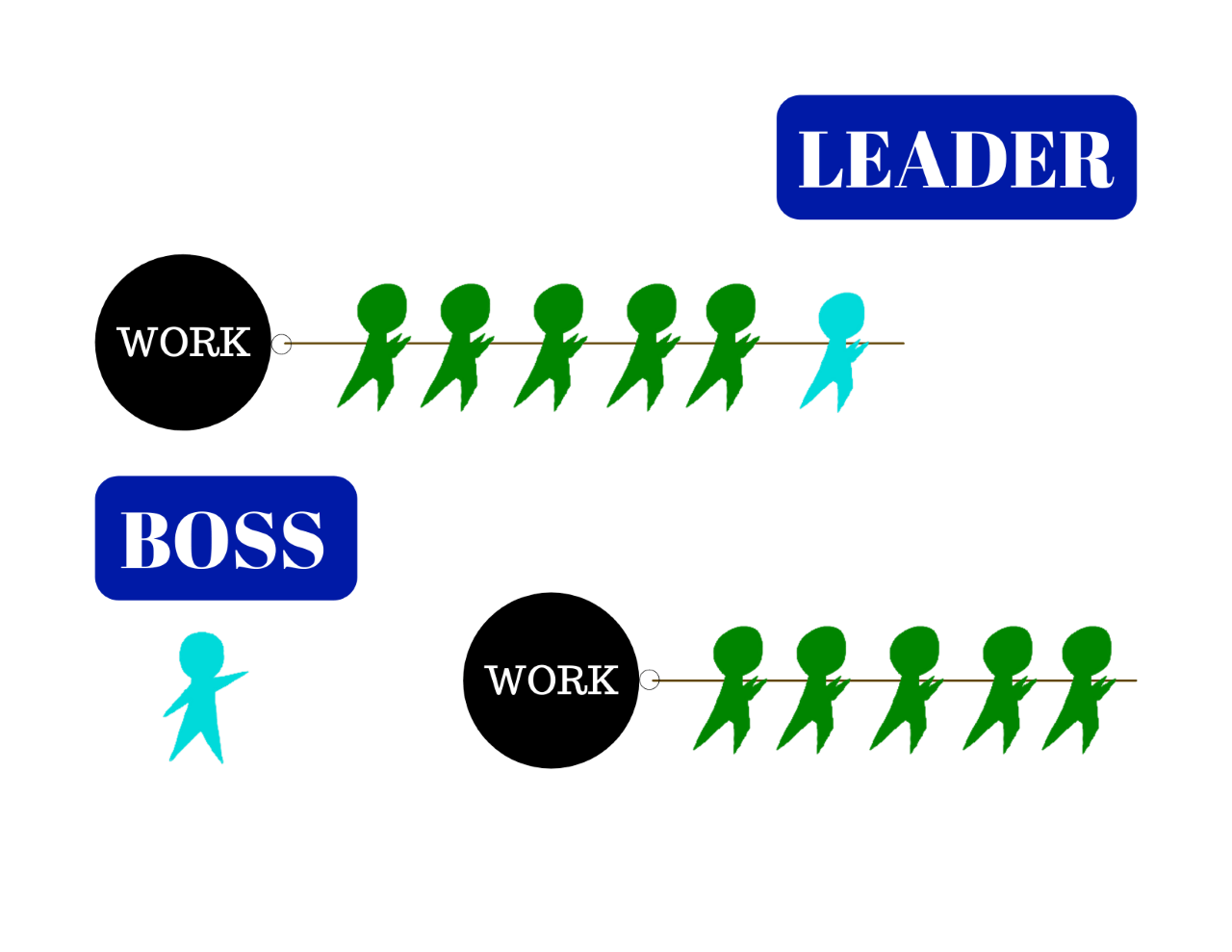
    A true leader understands you lead people and manage programs.  Not the other way around.

    A humble leader displays a level of self-awareness within the workplace to ensure growth for everyone.  A humble leader does not seek or need the spotlight to highlight the great work of the team.  The humble leader can inspire better team cohesion, eagerness to learn and a better performance outcome for their teams.

    The process of leading by example and a leader with a humble approach when working with individuals and teams is an excellent example of this concept.  This consistent approach provides a template for others to follow and allows the team to perform knowing the true nature of their leader.

    Humble leaders:

    • Build relationships
    • Listen
    • Enable trust in the workplace
    • Show appreciation
    • Reflect
    • Display authenticity

    A humble leader puts the needs of others before themselves.  This could be a simple process of ensuring direct reports have the tools needed to perform their duties.  Sounds simple but how many times are work assignments delegated with deadlines, but instructions/tools needed to perform are not provided.  The humble leader looks to provide tools needed to ensure overall team success.  They are also not afraid to ask questions to ensure the assignment is fully understood.  Asking follow-up questions does not show weakness but shows the leader cares and wants to optimize time spent on a specific project.

    Being a humble leader does not imply weakness.  Humble leaders are always looking to improve themselves and focus on larger, organizational goals—not just their individual goals.

    A leader is best when people hardly know that they exist. (Lao Tzu)

    What impact does humility have within your current work environment?  How would this concept enhance overall productivity in the work environment?


  • Motivated or Inspired?

    • Motivation—the general desire or willingness of someone to do something. It is the set of psychological forces that compel you to act.  (Dictionary.com)

    Motivation2.jpg

    • Inspiration—the process of being mentally stimulated to do or feel something, especially to do something creative. (Dictionary.com)

    Inspiration

    Most people use the words motivation and inspiration as interchangeable concepts when trying to express something to the outside world.

    Looking at the definition of motivation identifies it as something that comes from within.

    You have to ‘act’ upon what’s motivating you for it to become manifested and seen by others.  There are many times when I see the words ‘motivational speaker’ and wonder exactly what that truly means.  It implies someone can provide a series of words that will suddenly motivate others.  Sure, hearing someone speak can generate a spark, idea or urge to go do something great.  But did that motivational speech give you motivation?  I’m sure in the short-term you may find a way to act on the concepts you hear.  The internal motivation must already be there for you to sustain this level of action.

    Now, contrast the definition of inspiration as being mentally stimulated to do or feel something.

    This identifies the concept of inspiration can be ‘provided’ directly to another person if they are ready to receive and have the internal motivation to act.  Again, contrast the motivational speaker versus the inspirational speaker.  The inspirational speaker can provide a level of mental stimulation on a subject (leadership, mentoring, goal-setting, etc.) and then walk away from their audience knowing the seeds have been planted.  It’s now up to the individuals who heard the inspirational speaker to decide to act or not.

    Why contrast these two terms?  Well, I view myself from the inspirational concept.  Blog topics, emails, direct conversations with me are designed to provide inspiration to everyone I contact.  I cannot give anyone the internal motivation to act but can provide a platform to generate the inspiration needed to create an action plan to walk into the future.  I view my workshops, podcast contributions and conversations as inspiration to others.  Some branches of my tree will act on these things and others may not—totally up to them but I’ve done my part.

    The biggest thing I want to do daily is make a difference in the world.  I do this by continuing to inspire my tree to grow daily and then reach back and help others.

    So, what did you decided?  Are you motivated or inspired?  Curious to hear your thoughts!

    Motivation_Inspiration combo

  • The Self-Aware Leader

    Self Awareness2

    “If we agree on everything, one of us is redundant”

    (Colin Powell)

    This is one of my favorite leadership quotes from Colin Powell.  This statement identifies true leaders want and encourage feedback from their direct reports.

    This concept provides the leader with information needed to make sound decisions to help organizational growth.  New and ineffective leaders miss the opportunity to engage with direct reports on decision making for multiple reasons.  Some can be attributed to inexperience, lack of trust, and lack of self-awareness.  All can be overcome with concerted efforts to develop as a leader and engage within the work environment.  Leaders who are self-aware can begin to mitigate the inexperience and lack of trust mentioned earlier.

    How do you become a self-aware leader?

    • Look inside and become introspective
    • Identify your strengths, weaknesses, values and how others view you
    • Understand how your self-view impacts others and the work environment
    • Knowledge of how your interactions (positive or negative) influence direct reports
    • Ensure actions and decisions are based in an authentic framework
    • Strive to build authentic relationships with everyone within the organization
    • Adjust based on interactions and feedback from others
    • Advocate for a continuous learning work environment

    Work place impact of the Self-Aware Leader

    The self-aware leader improves the work environment by modeling the attributes of self-awareness.  This modeling allows direct reports to see and understand the importance of self-awareness.  The leader actively acknowledges strengths and weaknesses.  This provides a framework to enhance staff members’ development within the work environment by catering to staff strengths and working to mitigate weaknesses.

    The self-aware leader provides direct reports an engaging work environment where they know they are valued and input is encouraged.  This attribute showcases a leader who fully understands how they are viewed within the work environment.

    Finally, the self-aware leader provides an organizational foundation for success by creating additional self-aware leaders.

    How can you model self-awareness in your daily interactions?  What benefits would self-awareness bring to your work environment?

    Self Awareness

  • Walk-up Music

    Walkup music image

    Major League Baseball (MLB) players leverage music to help in their in-game preparations.  The concept of hearing music at MLB games is not new but today’s modern players have really stepped up their games and insert their personalities and thoughts into their ‘Walk-up’ music selection.  Walk-up music is what you hear as a hitter steps up to the plate for an at-bat or a pitcher enters the game.  The music is normally picked by the hitter or pitcher and played over the stadium speakers to energize the crowd and the specific player.

    View a list of 2017 Walk-up music here:  https://ftw.usatoday.com/2017/04/mlb-walk-up-songs-list-best-nelly

    As you can see, the players select a wide range of music to represent them and to hype them up.

    So, why are we discussing Walk-up music as part of your Walk into the Future?

    Excellent question!  How do you get ready to tackle your day?  What actions do you take before giving a big presentation at work?  What impact would your personal Walk-up music have on your daily interactions?

    Incorporating Walk-up music or some semblance into your daily interactions can provide the inspiration needed to accomplish your task.  Not saying you will have music blasting over a stadium PA system, but you can find your inspiration in music to generate the mindset needed for success.

    As an introvert I still need an extra push prior to any speaking engagement I have.  My speaking engagements range from on-campus workshops, Chamber of Commerce presentations, Economic Vitality Council recruiting events and Keynote speaker responsibilities.  Most people who have seen me in front of a crowd assume I don’t experience nerves or anxiety before I take the stage.  Well, truth be told even with the amount of speaking I have done, I still need that extra push to get me prepared to speak and deliver the content needed.

    I have leveraged Walk-up music my entire professional career like MLB players are doing.

    Big presentation for me and I go directly to an 80’s Hip Hop classic by Eric B and Rakim:  Move the Crowd.  This song reminds me the main reason I’m speaking is to connect with my audience and provide them with content they can use.  It reminds me to lock in and focus on what I’m saying, how it’s said and why it’s needed.  I play this music in the car, on the computer or on my phone prior to my presentation.

    I switch up my Walk-up music and where it’s played when I do Keynote speaking.  I have a love for Reggae music and the ‘Irie’ vibe it provides.  I like to play Bob Marley music for my audience prior to my introduction.  The Reggae sounds helps relax and focus me and seems to put the audience members into a great mood to receive my message.  I always play the song Jammin’ right before I’m ready to take the stage and impart my words of wisdom on the audience.  Again, the concept of Walk-up music is designed to get me and the audience ready in these situations.

    So, I ask again:

    • How do you get ready to tackle your day?
    • What actions do you take before giving a big presentation at work?
    • What impact would your personal Walk-up music have on your daily interactions?

    Look to generate your own Walk-up music ideas to help you during the day.  Leverage this concept to help mentally prepare for that big presentation you have coming up.  Find the music needed to help you thrive and enjoy the process.

    Let me know your final selections for your Walk-up music!  Thanks!

    Walkup music stats