Category: Leadership

  • Building Resiliency

    Resilience Bottom

    Resilience is that affable quality that allows some people to be knocked down by life and come back stronger than ever (Psychology Today).

    Building resiliency can provide a new window towards stated goals and help adjust your mental outlook.  There will still be days where you will face challenges, but resiliency helps adapt to the challenges and come out stronger.

    There are multiple techniques to use to build resiliency.  The American Psychological Association (APA) list the following:

    • Make connections
    • Avoid seeing crisis as insurmountable
    • Accept change
    • Move towards your goals
    • Take decisive actions
    • Look for opportunities for self-discovery
    • Nurture a positive view of yourself
    • Keeps things in perspective
    • Maintain a hopeful outlook
    • Take care of yourself

    These are great reminders to add to your toolkit to help your personal and professional growth.

    Two stand out to me:  Move towards your goals and nurture a positive view of yourself.

    Goal Setting

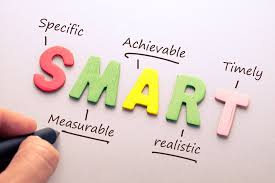
    Setting SMART (Specific, Measurable, Attainable, Results-focused, time based) goals can enhance your journey towards resiliency. The SMART goal process will create a platform to view progress and adjust as needed.  SMART goal formation shows if you are truly moving towards your goals and highlights growth.

    Nurture a positive view of yourself

    This trait comes back to self-awareness and the ability to foster positive self-talk.  We can be our own worst critic in life, but it doesn’t have to be that way.  Look for ways to give yourself credit for your progress (SMART goals) and generate positive thoughts (Irie) needed to enjoy the day.  There will be bumps in the road, but resiliency helps you navigate the tough times and come out on the other side better than before.  Continue to practice positive self-talk as you interact throughout the day.

    Building resiliency is an on-going process.  Practice resiliency daily and adjust as needed.  It will be well worth it as resiliency will help you power through your day.

    References

    The Road to Resilience. (n.d.). Retrieved September 24, 2018, from http://www.apa.org/helpcenter/road-resilience.aspx

    Resilience

  • Partnering

    Partner–A person who shares or is associated with another in some action or endeavor

    (Dictionary.com)

    Partnership2

    I leverage the Walk into the Future blog to highlight some of my travel, adventures and thoughts on multiple subjects (personal and professional).  There are times when I create blog content to help one of my ‘branches’ when they are experiencing different things in their professional and personal environments.  This is one of my ways to continue to keep my tree growing and to help others in a different way.  The content you read is generated once I get a ‘theme’ or ‘idea’ I believe I can develop into something I hope others would enjoy reading.  My goal is to always have two months’ worth of content I can select from when it’s time for me to post on Thursdays.

    I was extremely happy and honored when one of my former UCF students, mentee and friend, Daniel Botero asked me to partner with him on his extremely successful podcast, Mastering College.  Daniel decided to use his voice and create a platform to give back and help students, parents and faculty/staff understand ways current and future college students can maximize their time in college.

    I am proud to say Daniel and I spent numerous hours in my office when he was a UCF student and I worked in the Career Center discussing/creating his plan of action for his life after graduation.  He has done a fantastic job translating his knowledge and bringing in experts to create substantive content to help the next generation understand ‘Best Practices’ on the Mastering College podcast and maximizing efforts to become a successful student with a job after graduation.

    You can listen to Daniel’s podcast here:   https://linktr.ee/thedanielbotero

    Podcast episodes #10 and #11 are the episodes I partnered with Daniel while in Orlando in September.

    Please share the podcast with anyone you believe would benefit from this excellent resource.

    You can also follow Daniel via LinkedIn:  https://www.linkedin.com/in/thedanielbotero/

    Enjoy!

    Please note: I’m always looking for partnership ideas so reach out and let me know how I can partner with you or your organization.

    Partnership

  • Authentic Leadership – Part 2 / The Interview

    Authentic Leadership and the four variables (self-awareness, internalized moral perspective, balanced processing and relational transparency) were introduced in Part 1.

    This posting will highlight an interview conducted by Danielle Sebranek who was an Employer Relations Graduate Assistant (GA) at the Florida State University (FSU) Career Center during my time there.

    Danielle wanted a better understanding of Authentic Leadership and we agreed to partner on this interview project in the Spring 2018 semester, so she could ask questions to get a better Authentic Leadership understanding and how to integrate this leadership style into daily interactions with direct reports.

    Danielle provided her approval to post her questions and overall summary below.  My direct responses follow her questions:

    • What first introduced you to the concept of authentic leadership? Is this something you sought out or did you naturally possess many of the qualities of a good authentic leader?
      • I stumbled across authentic leadership.  I wanted to complete my dissertation on the ‘1st Year Experience’ course but my advisor identified there was not enough Industrial/Organizational (I/O) Psychology involved with this subject.  My dissertation mentor introduced me to Authentic Leadership.  I liked the idea because I could relate to this leadership style.  After doing additional research, Authentic Leadership was selected as my preferred leadership style.
    • What are some ways you seek to create a positive work environment for your team?
      • I use daily interactions, adjusted for each person. Some team members I high five, some get a fist bump or elbow, etc.  Others, I just say good morning.  Establishing this daily routine and having personal conversations helps them know you are there for them.  I also take their input into consideration.  It is not my style to only talk to my team when I need something from them.
    • Who/What inspired these practices? In your work history, have you had a positive work environment stand out to you?
      • Honestly, I look back on two of my worst supervisors. I made a vow to not do things I didn’t like about their supervisory style.  My years at Macon State College standout because my supervisor (now mentor) gave our team the freedom to find our niche and conduct outreach to students as we saw fit.  I played volleyball with students on-campus as part of my outreach program.  The students saw me as a person and approachable.  Overall, my supervisor was willing to see things differently.  Colin Powell’s leadership approach also influences me daily.
    • What experiences have shaped your self-awareness?
      • Becoming a leader in the Air Force was the start of being self-aware because I couldn’t assume everyone learns the same and knows what I mean without explanation. The National Association of Colleges and Employers (NACE) Management Leadership Institute (MLI) feedback program was also important because I heard what past colleagues had to say about my work and I learned how others viewed me.  I learned you always need to check yourself and you need to be self-aware every day.  I approach my team on purpose; they don’t need to come to my office to approach me.
    • Is there someone in your past work experiences who showed relational transparency?
      • My mentor at Macon State College showed relational transparency. She took the time to explain processes.  My last Air Force supervisor was also good at pushing the team out to do things to understand the big picture.
    • How do you demonstrate relational transparency with your team?
      • I never sit on a high horse and say I’m the boss. I always listen to my team.  If something can’t be done, I make sure to explain the limitations.
    • What past experiences have helped you develop a strong internalized moral perspective?
      • I’ll share a conversation that has stuck with me and feels like it just happened yesterday. When I was a young Air Force instructor, a more veteran administrator observed my work and pulled me to the side for a quick chat.  He praised my work and asked me out of the blue if I wanted to know how to be successful in life.  He gifted me with this knowledge, “Be where you’re supposed to be, doing what you’re supposed to be doing, when you’re supposed to do it”.  Never compromise yourself and not be able to look yourself in the mirror.
    • Using balanced processing and welcoming feedback from your team is something you practice on a regular basis. Is this something you received training on or did you learn from experience?
      • I learned from experience and through reading Colin Powell’s book on leadership principles. If you don’t get up and walk around, it gives the perception you don’t care.  That’s why I go to my people.  I realized this concept (walking around) was tied to authentic leadership after conducting additional research.
    • How has your leadership style changed from each industry you’ve worked in? Have some environments been easier or more difficult to lead with authenticity?
      • Yes, I have grown as a leader. In the Air Force, leadership was based on rank.  People can complain but ultimately you can order people to do things.  Leadership is adaptable, and I have grown to be adaptable by learning how different people on my team work.  I talk with Gen X team members differently than Millennials. I’m comfortable enough to understand conversations with team members will all be different.  I know when certain team members ask ‘why’, they aren’t questioning authority but looking to understand.  Overall, authentic leadership works with and helps balance a team with multiple generations present.

    Danielle’s Summary:

    My conversation with Dr. Williams provided valuable insight into how to both grow as a leader and adopt authentic leadership in the workplace.  Leaders are not born overnight; it takes conscious reflection and communication with others to develop the necessary self-awareness.  Practicing authentic leadership foremost entails establishing approachability with your direct reports.  Daily interactions, visiting your team in their space, taking the time to learn about their individual personalities and backgrounds, and valuing their voices and opinions all help to show you care.  Adaptability is also an essential component of authentic leadership.  Recognizing team members think and behave differently allows you to cater your interactions in a way that is relatable to them.  Lastly, Dr. Williams stressed the importance of mentorship and learning from example.  Find someone you look up to in your workplace and sit down with them to hear their story and how they implement leadership in their role.


    Authentic Leadership

  • Authentic Leadership

    “Be yourself.  Everyone else is already taken”.

    (Oscar Wilde)

    Authentic Fish

    Authentic Leadership is rooted in positive psychology and can lead to greater self-awareness and regulated behavior of leaders.  This leadership style continues to grow and can be applied to multiple organizations and work settings.

    Authentic Leadership can be used to create positive work outcomes and improve organizational performance.  Authentic leaders are true to themselves, to others and are trusted by all levels.  Authentic leaders seek continued growth and can align thoughts, feelings and actions.  They are humble and consistent; this can be a positive predictor of direct report satisfaction.

    The four components or variables of Authentic Leadership are:  self-awareness, internalized moral perspective, balanced processing and relational transparency.

    • Self-awareness: the authentic leader has a full understanding of their strengths, values, weaknesses and how others view their leadership
    • Relational Transparency: the authentic leader presents authentic self to build trust.  They are consistent with words, thoughts and actions.
    • Internalized Moral Perspective: ability to integrate personal morals with self-perspective.  The leader must be self-aware to understand how their internal morals influence their actions.
    • Balanced Processing: the authentic leader can view both sides of an issue (positive and negative) before deciding.  This encourages the leader to seek multiple views and opinions and eliminates taking a defensive position when information is received.
      • My research shows direct report job satisfaction is best explained when leaders display balanced processing.

    Authentic Leadership implications for the work place

    • Interventions are received better
    • Work place efficiency improves
    • Encourages direct reports engagement
    • The leader is approachable, trusted, influential and displays relational interactions with direct reports

    How can you leverage Authentic Leadership in your work environment?  How would an Authentic leader impact your current work place?

    Authentic Leadership Part 2


  • Mentoring

    A mentor is someone who allows you to see the hope inside yourself.” 

    (Oprah Winfrey)

    Having a mentor is an excellent way to walk into the future.  A mentor can help with your personal and professional growth.  I recommend having multiple mentors who can give you different perspectives and maximize your efforts to walk into the future.

    Identify someone who has expertise in an area you are interested in.  Use your current network to help identify a mentor if you don’t have direct connections with the right person.

    Reach out to a potential mentor and let them know your needs and gauge their ability to serve as your mentor.  Remember, this person will be ‘giving’ their time to help you grow so make sure the fit works for you both.

    You should be responsible for setting the agenda whenever you meet with your mentor.  Provide them with regular updates so they can be prepared to sit with you.  This ensures your time together is productive.

    I let my mentees identify the day, time and agenda for our regular meetings.  This helps them take charge of their meeting and helps keep us on track to meet their stated goals.  I find myself learning and growing during my sessions as much as my mentees.  This is another form of networking and I enjoy being a mentor.

    I have multiple mentors and see my personal and professional growth expanding due to mentors who have ‘reached back’ to help me.  I continue to have my eyes open for new mentors to help my walk into the future.

    How can you leverage a mentor/mentee relationship for growth?  Who can you mentor to help them move forward?

    Note:  Received text messages from two of my mentees on the same day—they both accepted offers for new positions—well done!

    For by wise counsel you will wage your own war.  And in a multitude of counselors there is safety. (Proverbs 24:6)

    Make it a great day!

    Mentor

  • What’s your Why?

    Had a fascinating text message conversation with one of my favorite people and friend.  She identifies on her LinkedIn profile as a ‘Destiny Activator’.  This means she is very adept helping people discover their true calling in life or more specifically their ‘Why’.

    She was working on a keynote speech for a large conference and decided to include a little about me in her speech.  She was the first person I mentioned the concept ‘Walk into the Future’ to and she wanted to gauge my progress on the project.

    She asked me the following questions:

    • What is your why? The purpose why you show up every day for what you do
    • How does your purpose keep you going during the difficult seasons?

    It took me a little time to fully understand her questions and then formulate a response she could use in her keynote address.

    My ‘why’ is to impact people in a positive way to leave them better than when I found them.  This includes normal conversations, consulting sessions, mentoring opportunities or just when they have questions or concerns.  Making a positive difference has always been my mantra and now I can say this is my purpose why I show up every day for what I do.

    I review who I have helped in the past and see them giving back to someone else.  This is how my purpose keeps me moving forward during the difficult seasons.  I view people I have helped as ‘roots or branches’ to my tree of life.

    Don’t think I would have formulated this concept without my friend asking me these pointed questions.  I am happy she asked me, and very excited she wanted to highlight me during her keynote address.  Looks like my ‘why’ is still going strong!

    What is your why?  How does your purpose keep you going during the difficult seasons?

    Keynote Speech 2018 FloridaACE (2)

  • Motivation

    What motivates you?

    I would guess things quite different from what motivates me

    The drive I seek comes from things I have seen

    Some good, some bad

    Some fair, some foul

    The secret here is to use them all

    Never let the opinion of others sway your desire

    To reach the pinnacle you aspire

    Continue to work to meet and exceed your goals

    Remind the doubters you are in control

    Dreams will become reality soon enough

    Got to keep working because life can be rough

    Find your motivation, live your dreams

    A motivated life is a wonderful sight to be seen

    What motivates/inspires you?  How can you leverage this daily to walk into the future?

    Who can you inspire today to do great things?  Reach out and share this power to make the world better!

  • Why Walk into the Future?

    Walk into the Future signifies the ability to understand tomorrow is coming and you should not be afraid to move forward.  The way you decide to walk into the future will be your own unique journey.  Chart your course and then work to navigate your way towards the life goals you decide to create.  Use your time to explore and find what makes you happy on this new journey.  Examples include:

    • Take that vacation you have been putting off
    • Decide to create your own blog to document your walk into the future
    • Make time for family and friends (again)
    • Discover new talents you may have or wanted to explore
    • Live life the way you want to

    The specifics of these examples can be worked out in more detail but leverage this concept to guide your journey.

    My first ‘walk’ was to head down to Negril, Jamaica to enjoy the food, sun and culture.  This experience was a way to unwind and recharge my mental focus.  I was able to catch up on some long overdue reading for personal enjoyment.  The ability to consume works by my favorite authors brings me a lot of joy, so this was an added benefit of walking into the future via my trip to Negril.  Time for naps was readily available and enjoyed during this phase as well.  What’s a trip to Negril, Jamaica without a trip to Rick’s Café to watch people (tourists and locals) take turns cliff diving.  The reggae is awesome, and the sunsets are great at Rick’s Café.  Being there enjoying the irie vibe is a tremendous way to unwind and enjoy the island.

    This recharge will be used to launch several 2018 projects to bring me closer to who I want to be (professional and personal) and to bring a new level of good to my community.  The charge is to make a difference daily!

    Enjoy the process!  Walk—don’t run!