Category: Mentoring

  • Planting seeds in Orlando to grow new trees!

    Planting seeds at UCF

    (Image by Free-Photos from Pixabay)

    “To move forward, you have to give back”.

    (Oprah Winfrey)

    My Walk into the Future provides me with flexibility to work on projects in multiple locations.  I consider myself a running tourist but can also travel and work in different locations with others when needed.

    I’ve worked on projects for the Seminole Tribe of Florida (Immokalee), Intern Pursuit podcasts (Orlando), Salvation Army (Tallahassee), Mastering College to Career podcasts (Orlando), individual clients (Tallahassee, Jacksonville, Orlando and DC), Tallahassee Community College (Tallahassee), MLK event Keynote (Jasper) and the University of Central Florida (Orlando).

    Each project had a different audience and expected outcomes which is exciting to me.  Picking these projects allow me to hone my skills and continue to grow as I extend my reach and grow new tree branches.

    “Your greatness is not what you have, it’s what you give”.

    (Unknown)

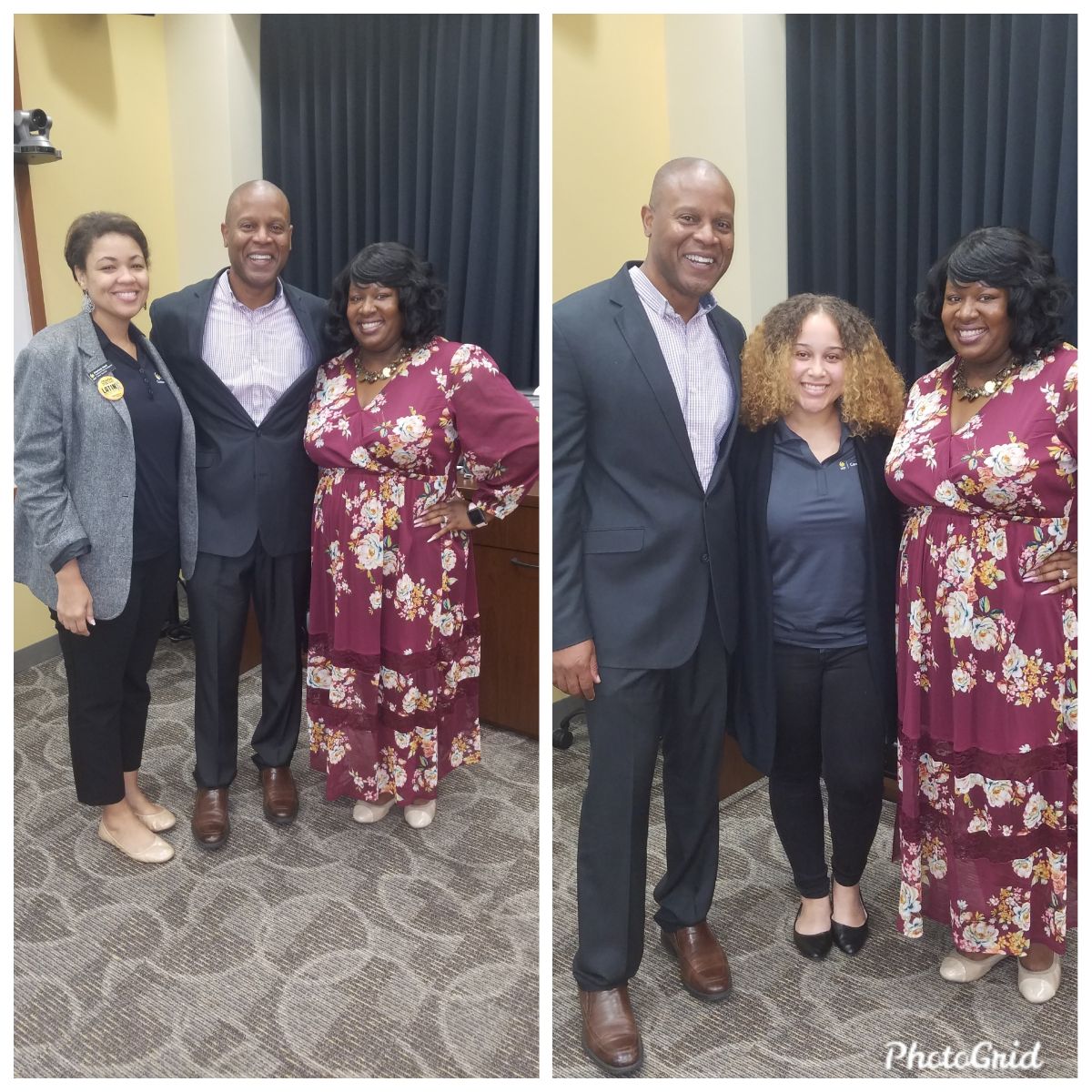
    My project with UCF was especially rewarding because I was invited to train a group of student workers by an active tree branch.  We have worked together for the past 10 years—first at UCF, then at FSU and now again at UCF.  Full disclosure, this tree branch worked directly for me at FSU.

    I conducted team building training for her student workers at FSU and she wanted to bring the same training to UCF as a part of their enhanced student professional development program.  An extra bonus for me conducting the UCF training is my niece, Jayla, is a current student worker in the UCF Career Center and would be a participant.  This was her first time to see me working with students instead of hearing about my work.  Think she came away proud of her uncle! 😊

    These opportunities allow me to give back and help the next generation Walk into the Future.  Love the energy I get when standing in front of motivated college students.  Believe the energy they put out helps me find another gear when presenting material to them.  They inspire me to get better daily.

    This workshop was designed to help the student workers understand the importance of working within the team environment.  We also touched on how they can still be individuals but can’t let this hinder the overall function of the team.  Example, someone who is naturally quiet will still have to speak publicly in a customer service environment.  We explored understanding differences and how to find strengths in others to ensure work is being accomplished in a proper manner.

    We were also able to leverage communication styles and techniques to enhance workplace interactions.  The students were well versed in how their personalities can impact interactions with peers, faculty and staff.  We utilized their knowledge to build team dynamics and translate this information directly to their respective roles in the Career Center.

    Team building is not a formal course of study and takes time to implement.  Believe getting students engaged in understanding team building dynamics early will translate directly to their work and life experiences after college.  It also creates a strong foundation they can utilize while in school—group projects, presentations, fraternity/sorority life, student government, etc.

    We can all sharpen our team building skills—this workshop is my way to keep this important workplace tool growing.  I was able to plant seeds during this presentation and look forward to watching the new trees grow in the future.  Several students have reached out via LinkedIn and I’m actively mentoring them to help reach their respective goals.  One of the students that reached out works for another tree branch in Orlando—small world!

    What are your favorite team building tools?  How does your organization ensure team building is a strong component for growth?  (Respond in the comments section—thanks!)

    Thanks for walking with me!

    “As you grow older, you will discover you have two hands – one for helping yourself and the other for helping others”.

    (Audrey Hepburn)

    UCF Training

  • Where do leaders come from?

    Leadership image

    (Image by Pete Linforth from Pixabay)

    “I’m a leader not a follower.  Unless it’s a dark place, then you are going first”.

    (Unknown)

    Got invited back down to Orlando in October for my recurring speaking role on the Intern Whisperer podcast.

    Season 2, Episode 92 featured me discussing all things leadership to include earliest memories of venturing into leadership roles.

    The quote above makes me laugh because I know people who perform in their leadership role in a similar manner.  No worries when things are going well but no support, help or empathy when things get tough.  These so-called leaders also seek the spotlight in good times and hide out during the bad.

    Back to the podcast and why I’m discussing leadership in this blog post.  The students who produce the Intern Whisperer podcast are extremely sharp and asked great questions from start to finish.  One question that really stood out to me was, “What was your earliest memory of taking on a leadership role and how did it make you feel”?

    Seems like a straightforward question but I had to think about it for a bit.  I have always been an athlete and grew up playing multiple sports; football, basketball, baseball and track (high jump).  Never considered being active in sports as leadership, just a way to pass the time and hang out with friends.  Yes, I know leadership and teamwork are integral in a team environment, but I was just having fun during this time frame.  My interviewers seemed to think my sports background would have been where my leadership foundation started.

    My earliest memory of taking on an active leadership role and embracing everything involved was when I became a Master Instructor at Keesler Air Force Base, Mississippi (Biloxi).

    I served at multiple Air Force installations as a Personnel Systems Manager (HR Data Analyst) and got an opportunity to train analysts Air Force wide based on my work performance and knowledge.  So, I went for writing computer code for one Air Force base to training every data analyst in my career field—worldwide.  Pretty heady stuff for someone from Jasper, Florida!

    This role stands out as my earliest leadership memory because I had to expand my personal and professional goals and understand the importance of ensuring my students got a world class education.  Everything they needed to be successful in the career field came directly from me.  I couldn’t have a bad day in class because my lack of preparation, patience or knowledge would hinder their abilities to perform; in class and when they returned to their respective organizations around the world.

    I went from being responsible for myself to leading a group of 25 students on a six-week educational journey.  We routinely graduated 10 classes every fiscal year—I spent 4 years as an Air Force instructor at Keesler Air Force Base before moving back into my career field at Kadena Air Base, Japan (Okinawa).

    The Air Force Technical School environment is the incubator that taught me leaders must be able to adjust leadership style, inspirational tactics and provide tough love when needed.  The students needed different things to successfully complete our course.  My ability to lead was needed daily.

    It was the most challenging thing I’ve ever done but it laid the foundation for my current leadership and life philosophy:  Make a difference daily!

    Leadership article

    (Instructor of the Year Presentation)

    What are your earliest leadership memories?  How do these memories impact you today? (Respond in the comments section—thanks!) 

    Thanks for walking with me!

    “Be a LEADER, not a boss”.

    (Calvin Williams)

  • Master the art of public speaking

    auditorium benches chairs class
    Photo by Pixabay on Pexels.com

    “According to most studies, people’s number one fear is public speaking.  Number two is death. Death is number two.  Does that sound right? This means to the average person, if you go to a funeral, you’re better off in the casket than doing the eulogy”.

    (Jerry Seinfeld)

    Public speaking is difficult, public speaking is scary, public speaking is not my strong skill.

    I hear these and similar things daily when talking with people about public speaking. I’m sure I had similar thoughts when I started my journey standing in front of people to speak.  The good thing about the fear of public speaking is all your fears can be overcome.  Trust me, if I can get over the fear of standing in front of people and talking, everyone can.

    My first exposure to public speaking came as part of my instructor role when I was in the Air Force.  My actual job knowledge (data analyst) was needed to train the next generation of Air Force data analyst.  I was forced to come out of my natural introvert shell and learn how to engage a room full of students who depended on me to help them grow professionally.  No pressure, huh?

    “Best way to conquer stage fright is to know what you’re talking about”.

    (Michael H. Mescon)

    I learned the more I practice the less nervous I am when I stand in front of groups.  Decided to always err on the side of overpreparation as oppose to being underprepared for speaking engagements.  I constantly review notes, transitions and potential questions I may receive during every speaking engagement.

    I view anticipating questions, lulls and technical difficulties as war games.  I find it easier to overcome these things by acknowledging they can pop up at any point.  This additional groundwork helps me get comfortable before and during my speaking engagement.  I still get nervous but know I can handle the task because of my preparation.

    Researching the organization and people you’re speaking to helps you learn more about the audience so a tailored approach can be taken.  This helps when incorporating examples and stories into a speech.  Knowledge of the organization and audience helps generate talking points that fit so you can connect with them.  I also target specific audience members based on my research.  A quick LinkedIn search can provide an inside nugget I can use to connect with an audience member and seems to put others at ease because I took the time to learn more about them.  This simple rapport building technique can be leveraged to help alleviate anxiety as well.

    The ability to read the room is another critical component for public speakers.  There will be times when you will need to adjust to match the emotions, reactions and body language of your audience.  I go into every speaking engagement with a plan of action but because of practice, anticipation and knowledge of the group, I’m able to adjust on the fly (if needed).

    I don’t put a lot of written content on slides to avoid limiting myself without a way to pivot if needed.  I started incorporating key words and pictures into my presentations to focus attention back to me—the presenter.  This always provides me with a pivot channel since I’m not tied to slide verbiage.  The key words and/or pictures are used to guide me through the presentation.  Practice provides the foundation to make this process work when standing in front of an audience.

    Nonverbal communication can make or break your presentation.  I make a point not to carry anything in my hands (pen/paper/etc.) except the audiovisual clicker.  I try to put the clicker down until I need it to transition to the next slide.  Carrying objects can distract your audience and I’ve seen these things distract the presenter as well.

    Eye contact with audience members helps convey confidence and credibility as a subject matter expert.  Speaking rate, pitch and effective use of pauses can help keep the audience members engaged and wanting to hear more from the speaker.  I learned the benefits of audience engagement during my speaking roles in the Air Force and continue to add more tools to my speaking toolkit daily.  Don’t be afraid to move around when speaking—this really conveys confidence but should be done with purpose.  Too much moving looks like you’re trying to get away from them. 😊

    These are a few things I’ve used to help eliminate speaking anxiety.  Please note, I still get nervous, but I use my nerves to help fuel my public speaking.  The one thing I ensure happens when speaking is to have fun.  Might as well enjoy myself while I’m standing in front of a group—having fun seems to counteract anxiety and I’m able to press forward.  Try it the next time you must speak in public!

      • FYI: Don’t forget the impact Walk up Music can have on public speaking:

    https://walkintothefuture.blog/2018/11/22/walk-up-music

    What techniques do you use to overcome speaking anxiety?  How do you prepare for big speaking roles in your work environment?

    Thanks for walking with me!

    “Speech is power:  speech is to persuade, to convert, to compel”.

    (Ralph Waldo Emerson)

    TCC presentation

  • Walk into the Future deep dive

    blog icon information internet
    Photo by Pixabay on Pexels.com

    “I blog because I’m not a good rapper”.

    (Anonymous)

    Why I blog

    Being a lifelong learner is a badge of honor I wear proudly!

    I’m always looking for ways to improve myself (mentally and physically) and have a passion for reading.  I realize podcasts present a popular medium for people to receive information and learn.  I listen to a few, mostly sports related but still gravitate to blogs to expand my world view and learn from others.

    I started the Walk into the Future blog on May 21, 2018 as a creative outlet for myself and to share my views, adventures and expertise with anyone willing to read my words.

    The Walk into the Future title is my way to embrace the future and showcase the courage to move forward in life.  Didn’t know who or how many people would be interested in me chronicling my adventures or sharing my views but I’m pleasantly surprised to keep growing a small following via the Word Press platform.  I smile every time I receive a comment or like on my posts—lets me know people are reading my work and I’m connecting with them.

    I focus blog posts on things I see, do, have interest/knowledge and topics from tree branches.

    Started requesting input from tree branches because I’m walking with them daily and want to capture topics of interests to help them as well.  This process keeps me energized as I research topics and learn in order to write a blog article.  Please keep sending me ideas and I will work to incorporate your inputs into the blog rotation—thanks!

    Note:  if you haven’t seen your topic published it’s because I’m still working/researching for content—it’s coming!

    When I blog

    My research on blogs identified the most successful bloggers maintain a consistent posting schedule.  Some bloggers post multiple times a day, once a day, once or twice a week, monthly, etc.  Everyone agrees the key is consistency so readers know when articles will be posted.  Adjustments can be made (holidays, vacation, etc.) but it helps to set a schedule and stick to it.

    I decided to post once per week on Thursdays.  Believe I’ve only missed two Thursdays since I started—was having fun in Jamaica and Christmas week 2019! 😊  Thursdays give me additional editing time during the week so I can fine tune articles prior to publishing.  I’ve contemplated posting multiple times per week but decided against it—hope my followers look forward to a weekly article without bombarding their inbox multiple times each week.  Also, this gives me more time to research and write content without feeling pressure from a self-imposed deadline.

    “Don’t let the fear of striking out hold you back”.

    (Babe Ruth)

    How I blog

    My goal is to always have two months’ worth of articles in my Walk into the Future vault.  Most of these articles are not fully developed but provide a shell I can go back to and edit over time.

    I normally post the articles in the order of creation but allow myself flexibility to move things around especially after I travel—I don’t like posting about an actual event (vacation, half marathon, etc.) months later so I move those articles up in the rotation.  Soapbox moments or topics can get moved up in the rotation depending on how hot it is to me.

    I write about things that pique my interest, travel locations, leadership topics and ask tree branches for things they would like to read about.  I maintain a growing list of potential topics alongside the two months’ worth of written articles in my vault.  I currently have 37 potential topics I still must research, vet and then develop into a published Walk into the Future article.

    Thanks to everyone that provided me with topics you’re interested in.

    Blog articles start with a potential topic.  I then look for quotes and images to help generate inspiration for what I want to write about.  The next step is to research the topic to make sure I can bring a personal approach to the article.  The last step is for me to sit down and write the article.  When inspired I normally write an article (draft) in one sitting and then go back to check content and edit.  (FYI, this article was started on 11/5/19.) I adjust the title and make final edits the week the article gets published.  Don’t know how others produce and publish content but this process works for me. 😊

    Updated blog stats:

    Here’s a snapshot of what has been happening behind the scene for the Walk into the Future blog:

    Walk into the future blog stats

    Excited to enter my second full year as a blogger!  Look forward to continuing to develop content others want to read and engage with me.  This platform helps me on my journey to Walk into the Future.

    Thanks for walking with me!

    What is your favorite Walk into the Future blog topic so far?  How has the Walk into the Future blog impacted your daily interactions?  Curious!

    Looking to incorporate guest bloggers in 2020!  More information to follow—thinking about Guest Blogger Fridays.

    “The currency of blogging is authenticity and trust”.

    (Jason Calacanis)

    happy-new-year-2020

  • We all win with diverse work environments!

    brand trademark cobblestones community denim pants
    Photo by Ingo Joseph on Pexels.com

    “Diversity may be the hardest thing for a society to live with, and perhaps the most dangerous thing for a society to be without”.

    (William Sloan Coffee, Jr.)

    Merriam-Webster defines diversity as the condition of having or being composed of differing elements.  Clear as mud, right?

    Organizations with diversity initiatives need to ensure they fully understand what diversity means.  Simply making a statement does not ensure diversity in the work environment will happen.  Diversity must be examined in order to identify how it can be fully implemented and embraced in the work environment.

    Some organizations define diversity on very short-sighted components i.e., men, women, race.  These components are all intertwined when discussing diversity but there should be more components included in a truly diverse work environment.

    Leveraging background dynamics, educational and life experiences as well as demographic components will help generate a new level of diversity for organizations who truly seek this in the work environment.  There are some organizations who say they want diversity but continue to hire clones of the staff currently working there.  This is the opposite of the Merriam-Webster’s diversity definition.

    “We need diversity of thought in the world to face the new challenges”.

    (Tim Berners-Lee)

    Diverse work environments value different perspectives. This includes skills, experiences, backgrounds and education.  This concept brings a variety of ways to get things done.  Bringing diversity into the work environment allows the organization to grow and avoid the groupthink mentally that stifles new thoughts.

    New thoughts in the work environment leads to increased creativity when facing a problem, change or new procedure.  True diversity brings together people who will see the same problem from different perspectives and sharpens everyone because of this exposure.  The creative impact on the organization increases because staff hear, see, feel, think differently and exposes others to different ways to get things done.  This creativity process may also impact innovation within the organization.

    Decision making and problem solving are other areas a diverse work environment can enhance.  Again, a diverse work force brings new thoughts, ideas and ways to get things done to the workplace.  Leadership receives diverse solutions to organizational problems and has multiple options to select from.  This leads to faster problem solving and allows the organization to tackle new challenges.

    A caution, leadership must be willing to accept the diverse solutions and not revert to business as usual.  The worse thing that can happen is for leadership to say “we always do it this way OR that will not change as long as I’m here”—the quickest way to deflate staff and eliminate their voice in the work environment.

    A diverse work environment can also help retain staff members.  A diverse and empowered work environment helps staff members feel accepted and valued.  This creates a happier work force and may lead to staff staying with the organization longer.

    So, let’s examine the Merriam-Webster diversity definition again:

    • The condition of having or being composed of differing elements.

    A few elements to consider for workplace diversity:

    • Race
    • Gender / Identity
    • Education / Educational Institutions
    • Geographic region
    • Age
    • Experience

    A final thought on diversity is it impacts your clients as well.  A more diverse work force can enhance an organization’s ability to attract diverse clients.  Example:  an office with diverse staff will be able to attract diverse clients because they see someone similar.  Don’t overlook the importance of how diversity impacts your clients.

    What does your organization do to ensure a diverse work environment?  How can diversity be improved?

    “Diversity is being invited to the party; inclusion is being asked to dance”.

    (Verna Myers)

    Thanks for walking with me!

    neon signage
    Photo by Ivan Bertolazzi on Pexels.com
  • Mentors provide valuable lessons for us to share

    man and woman discussing and sharing ideas
    Photo by The Coach Space on Pexels.com

    “Our chief want in life is somebody who will make us do what we can”.

     (Ralph Waldo Emerson)

    We all need someone to mentor and guide us on our journey.  I have had some great people step into my life and provide guidance needed for successful outcomes.  I reach out and thank them as much as possible because their lessons walk with me every day.

    I purposefully relay those same messages to my tree branches when needed.  So, the tree started with my mentors, and my goal is to keep it growing with new branches who will grow additional branches.

    Had an interesting conversation with one of my closest branches.  She mentioned she met with former students at their request and realized these students were branches from her tree.  I hope to continue to hear about additional tree branches sprouting in other areas.  How many branches have you added to the tree?

    Greatest lesson learned

    The greatest lesson I learned from my mentor is patience with others.  The pace of the world continues to accelerate but patient leaders provide direct reports the space to learn, make mistakes and grow.  Leaders who display patience in the work environment provide a space for reflection and active coaching when needed.  The exact lesson my mentor gifted me I call:  3 check-ins.  Sounds like a weird game for the work environment but I’ve seen it work and leverage it to this day.

    So, how does 3 check-ins work?  Great question!

    Example:

    You assign a work project to one of your direct reports with a specific due date.  Instructions are provided but you allow the direct report freedom to get the project completed prior to the due date.  The assigned project will have 3 check-in points built in where the leader comes back to the direct report to:

    • Make sure the assignment was understood (reflection)
    • Answer outstanding questions (learn)
    • Offer support/guidance if needed (coaching)
    • Adjust goals (as needed)

    The 3 check-ins are spaced out to allow for adjustments to the project if needed but keeps the direct report focused on positive outcomes.  Creating organized check points for the project shows the leader is a willing partner and seeks growth for team members.  This also eliminates the direct report from feeling like they are alone on the project.  We want them to take initiative but not feel they have no support.

    The 3 check-ins approach is not designed as a fancy way to micromanage a team.  It provides a support system to enhance professional growth and ensure successful outcomes for the entire team.  Also, the approach allows the leader to serve their team and maximize individual talents.

    How do you provide support when assigning projects to your team?  How can the 3 check-in approach enhance your operation?  (Please respond in the comments section below—thanks!)

    “The best teachers are those who tell you where to look—but don’t tell you what to see”.

     (Alexander K. Trenfor) 

    silver bitcoin
    Photo by Worldspectrum on Pexels.com

    “Play chess not checkers in the work environment.”

    (Calvin Williams)

    Thanks for walking with me!

  • Leverage individual communication styles to enhance team operations

    top view photo of people near wooden table
    Photo by fauxels on Pexels.com

    “In teamwork, silence isn’t golden, it’s deadly”.

    (Mark Sanborn)

    There are no two teams that are exactly alike.  Not the most prophetic thing I’ve ever written in this blog space but worth stating.

    Teams have different dynamics and function based on these things and the people who make up the team.  The most successful teams can leverage the talents of each team member into the overall organizational dynamic to ensure successful outcomes.

    We’ve discussed team communication strategies in previous posts with an angle to strengthen your team.  Individual communication styles and preferences should be reviewed and discussed when you add someone new to your team.  I’m sure everyone strives to hire the best candidate to fill an opening on their team.  How much thought do you put into understanding how to integrate the new team member’s communication style in with others?

    I’m a firm believer that leaders should know direct reports’ communication style and preferred way they want to receive information.  This knowledge allows leaders to seek ways to ensure they communicate in a way to maximize operational needs.  This knowledge has helped me when assigning tasks to team members.

    Example #1:  When faced with a project that has an extremely quick turnaround time, I normally assign this project to my ENFJ (MBTI) staff member.  This type project excites the staff member and I know they will get things done quickly with enough time for review before the deadline.

    Example #2:  When faced with a project due four months from today, I normally assign this project to my ISTJ (MBTI) staff member.  This type project allows the staff member time to plan, strategize and ask all the questions they need to for a successful outcome.

    The examples listed above are two actual scenarios I’ve tackled in the past.  Both had successful outcomes because I knew and understood how to engage staff to maximize their talents.  This in turn produced successful outcomes for the organization.

    Knowledge of individual communication styles also provides a blueprint to help build training plans to help staff members grow.  Introverted staff are not exempt from ever getting a task with a quick turnaround.  The leader needs to provide a more detailed set of instructions and understand they may have to follow-up with the staff member.  This process begins to stretch the staff member and helps their professional growth.  This also provides the leader with another staff member who can handle future quick turnaround projects and not wear out the extroverts.  Also, extroverted staff are not exempt from being assigned long term projects—training applies to all staff members.

    There are multiple ways to engage staff to understand their individual communication style.  MBTI and CliftonStrengths are two tools used in my work environments.  These tools allowed me to get a better understanding of everyone on my team and integrate this knowledge to help teammates understand each other as well.

    What’s the most successful way for me to understand how to communicate with my team?  I sit down with them and ask everyone how they like to receive information.  Simple, huh?  Then I make sure to communicate with everyone in a manner they identify (as much as possible).  Things pop up but I try to remain consistent with the communication process.  Direct reports seem to appreciate this fact and respond in a positive manner.

    A final note, leaders need to ensure their team knows how they like to communicate as well.  The team shouldn’t have to guess how to approach a leader.  This creates undo stress and is not productive.

    How do you account for individual communication styles in the work environment?  Can this knowledge impact your current organization?  (Please respond in the comments section below—thanks!)

    “Wise men speak because they have something to say; Fools because they have to say something”.

    (Plato)

    blackboard business chalkboard concept
    Photo by Pixabay on Pexels.com
  • Superhero work is tough but worth every minute!

    boy child clouds kid
    Photo by Porapak Apichodilok on Pexels.com

    “There is a superhero in all of us, we just need the courage to put on the cape”.

    (Superman)

    Who knew saving the world would be so tough?  Note:  I’m enjoying every minute of it!

    My current Walk into the Future allows me maximum flexibility on projects I decide to tackle.  Leveraging my why daily provides a foundation to ensure I’m getting things done the right way.

    Got a request to help a local high school student find renewed focus and create a schedule to enhance academic success.  I never ventured towards this demographic since my work with college students and experienced professionals fits my areas of interest.  I didn’t accept the request initially because I didn’t see how I could help.  My excuses were:

    • Not familiar with high school curriculum
    • Two parent home provides enough guidance
      • Why would a high school student listen to me and not parents?
    • My personal bias towards education
    • Not invested in this process

    Well, once I got out of my own way and viewed this as another opportunity to help someone succeed regardless of grade level, the obvious choice was to put on my cape and shiny boots and get down to what true superheroes do—save the world! 😊

    Decided to leverage the MBTI with my new tree branch and parents to determine a communication pattern in the household.  The MBTIs were extremely close, and this gave me additional information to begin our meeting.  Discussed the implications of the MBTI results and how we could leverage this information to create an action plan for success.

    Next, we discussed ways to bring a more organized approach to studying and getting assignments completed.  I thought this would have been an area that would create a level of resistance but was pleasantly surprised with the overall buy-in.  I didn’t create the organizational approach but suggested some things I thought would work; consistent study times, area, length and scheduled breaks.  I let the family discuss and recorded highlights so we could follow-up; wanted to ensure the family took responsibility for the learning outcomes with me serving as their resident superhero (guide).

    We were able to create a study schedule with predetermined breaks and a stated commitment from everyone to abide by this schedule.  Adjustments can be made as needed, but we need a consistent team effort to make this work for everyone.  Again, they agreed to the parameters and we moved forward as a unified group.

    The commitment was further verified when they ask me when they should follow-up with me for a progress report.  I wasn’t going to push this aspect but believe this shows a new level of progress and willingness to put the work in for success. We agreed to have follow-up sessions in two-week increments based on assignment due dates.  The follow-up sessions allow us to adjust as needed or provide an opportunity to praise progress.

    “Life doesn’t give us purpose.  We give life purpose”.

    (The Flash)

    Happy to report this process allowed me to stay true to my why:  to impact people in a positive way to leave them better than when I found them.

    Doesn’t really matter if it’s a high school student, experienced professional or a random person on the street.  Superheroes save the world regardless of how hard it may seem.

    spider man on top of building
    Photo by Josh Hild on Pexels.com

    “You don’t need to be strong like a superhero, you just need to be better than yesterday”.

    (Spiderman)

    Okay, enough superhero talk—need to take this cape off and my boots are hurting me feet!  Tomorrow’s another day! 😊

    Who can you be a superhero to today?  What would stop you from helping?

     “Wakanda Forever.”

    (Black Panther) 

  • People are more important than the job description (My soapbox)

    colorful ball float soap bubble
    Photo by Pixabay on Pexels.com

    “Leaders who don’t listen will eventually be surrounded by people who have nothing to say”.

    (Andy Stanley)

    So, need to vent for a minute.

    Continue to see and hear across multiple industries where the boss makes job description modifications (additions/deletions/unit changes) without discussing with the person doing the actual job.  The boss is then surprised when staff decide to find a work environment that views them as more than the job description.

    Please note, I’m not saying changes can’t be made to a specific job description.  Organizational missions change and updating duties, responsibilities and unit structure provides growth needed to move forward.  Leaders need to ensure the people tasked with getting things accomplished remain a part of the overall process.  Imagine the favorite part of your current position is removed and nothing was said to you prior to implementation.  How would you feel?

    I know leaders who make decisions based on how the job description is written and refuse to consider the impact on the person in the position.  Never agreed with this logic and still don’t.  People are more important than the job description!

    The authentic leadership variable balanced processing would help in these situations.  My research identified balanced processing as the variable that best explains job satisfaction for direct reports.  They want to be involved and should be.

    Leaders are encouraged to seek and find the big picture before making decisions.  Simply identifying potential job description changes would allow staff to provide input before the final product is created.  Balanced processing is leveraged to build trust, encourage professional growth for direct reports and provides a foundational and reliable decision-making process.  It also signals all opinions are valued and expected.  The concept eliminates personal bias from the decision-making process, everyone in the organization has input prior to the final decision.  Again, people are more important than the job description!

    I continue to promote the authentic leadership model because it can help create positive workplace outcomes and improve organizational performance.  It may also stop workplace turnover and get me off this overworked soapbox!

    Okay, I’m dropping the microphone and stepping down from my soapbox. 😊

    black microphone
    Photo by Teemu R on Pexels.com

    How does your work environment ensure people are not overlooked?  Does your leadership put job descriptions ahead of the people doing the job?  (Please respond in the comments section below—thanks!)

    “It is trust that transforms a group of people into a team”.

    (Stephen Covey)

  • Don’t fear the unknown–life moves forward

    full frame shot of text on wood
    Photo by Pixabay on Pexels.com

    “On the other side of your maximum fear are all the best things in life”.

    (Will Smith)

    How many times have you talked yourself out of doing something based on perceived fears?  I’m talking about larger life episodes like changing careers, starting your own business, learning a new skill or traveling to an exotic locale.

    Sometimes we fear the unknown simply because it is unknown.  Nothing has happened to instill the fear we live with; we just bring it along into our daily routines.  Don’t let that little voice in your head talk you out of pursuing something you want to accomplish.  Positive thoughts generate positive outcomes!  Tackle life with an Irie mindset!

    Look for ways to embrace your fear and understand the root cause.  Challenges provide opportunities to grow so don’t let a little apprehension stop you from making a move.  Try to place a marker or name on what you fear.  Is it the actual change, lack of confidence, professional requirements or something else?  Understanding the root cause of fear provides a road map to help overcome the thing you fear—sounds simple, right?

    Look for ways to visualize the successful outcome you seek.  Leverage a vision mapping process to walk you through the entire process.  Start with the most basic concepts and then work to put everything into a step-by-step diagram as a road map for success.  Your vision map may show holes in your thought and execution patterns you can counter to help eliminate fear and enable success.  The vision map also allows you to put time frames in-place to accomplish the task you identify.

    Positive people make positive things happen!  I continue to stress having an Irie mindset.  Believe this is vital daily in life.  Expect great things to happen and back up the expectations with proactive research, conversations and efforts needed to get what you want.  Positive thoughts will help build up resiliency so when faced with obstacles you go to the next option but never stop trying to get what you want.

    Be prepared to pivot as needed.  There are times a fundamental change in approach is needed to get what you want.  This is not a failure but a proactive way to work towards outcomes to enhance your current situation.  Do you need to get a specific certification prior to starting a career change?  Do you need to have a business partner to make your small business idea successful?  The willingness to pivot when needed can eliminate a level of fear associated with similar changes.

    “Staying positive does not mean that things will turn out okay. Rather it is knowing that you will be okay no matter how things turn out”.

    (Unknown)

    Accept fear as a natural motivator in life.  Sounds counterproductive but what if you tackle a small fear daily to build up confidence for the larger things in life?  Fear public speaking? Then join Toast Masters to get in front of people to learn how to overcome this fear.  I’m a natural introvert so speaking in front of people was a fear I had.  Discovered the more I speak in front of groups the less fear I have.  The process becomes easier the more I face the fear.

    Mentors can help you when facing your fears.  We should all have multiple mentors to help get through personal and professional scenarios.  Why not enlist a mentor when you must face a fear?  This trusted advisor may have experience in the area and can provide insight to help you move forward.  The mentor can also serve as a sounding board for you to present your thoughts.  This simple concept may allow you to hear what’s holding you back.  Your mentor will be able to provide feedback based on thoughts you present as well.

    Fears are natural to most of us.  Visualize success, leverage positive thoughts, pivot if needed, accept fear to defeat it and engage your mentors.  Simple, huh? 😊

    Remember, everything Irie!

    What tools do you leverage to overcome fear?  What have you thought about doing but let fear hold you back?  (Respond in the comments section—thanks!)


    “Named must your fear be before banish it you can”.

    (Yoda)