Tag: Authentic Leadership

  • The long journey home

    Moving Forward Feb 2020

    (Image by Bluehouse Skis from Pixabay.com)

    “A prophet is not without honor except in his own town and in his own home”.

    (Matthew 13:57)

    There’s an area I’ve had trouble making speaking inroads since I’ve been on my Walk into the Future journey—my hometown.

    Never thought my hometown would be the toughest place for me to engage, mentor and help others but it has proven to be a tough place to get invites.  The passage above is my reminder that I’m not the only one to struggle to get a message to people who know me—better folks have struggled with this same dynamic, so I guess I’m keeping great company!  It would have been easy to just give up and focus my energy into more productive environments but that would have been the simple way for me to proceed.

    Perseverance requires additional tactics to reach life and professional goals—so I decided to persevere and keep moving forward on this pursuit.

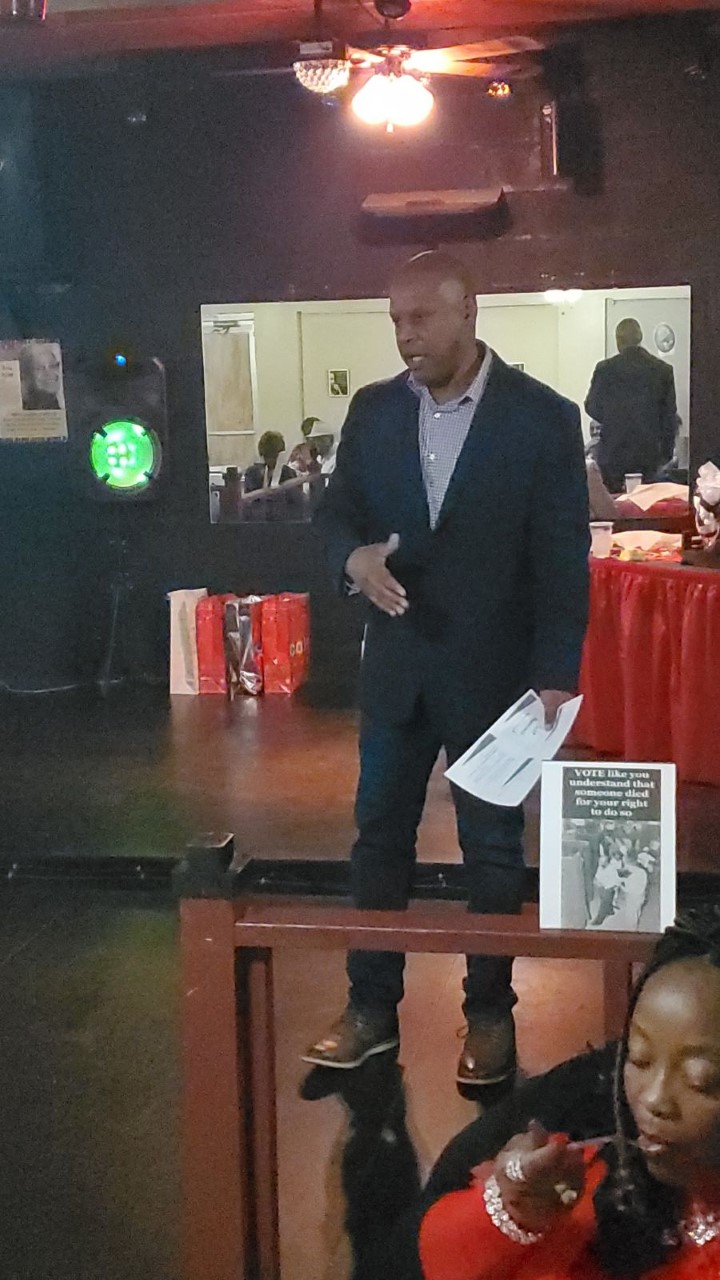
    Finally got the invite to speak during the MLK 2020 weekend at the MLK Banquet as the Keynote Speaker!  So, I went from seeking an opportunity in my hometown to having the honor of delivering an important message at the premier event of the weekend—no pressure! 😊

    My goal when speaking is always to move the crowd.  People want to be entertained, laugh a bit and take something tangible away from these events.  The theme of the weekend was:  Progression not Regression.

    Struggled a bit conducting research for the event since it was open to everyone in the community.  Different demographics, backgrounds, and denominations so I couldn’t go into the Keynote with a complete understanding of who would attend.  This freaked me out for a bit and then I decided to trust my process for building presentations—one slide at a time.

    Looked at previous presentations and blog articles to see if I already had something to fit the theme of the weekend.  Nothing matched completely but I recently completed a blog article centered around positive energy in daily interactions.  Decided to use positive energy as the progression and negative energy as regression during my speech.

    Dr. King’s 1963 I Have a Dream speech was future focused and still relevant in 2020.  Leveraged this information to continue to build the foundation of my presentation.  Didn’t get deep into Dr. King’s speech but wanted to use it to engage the audience since it was an MLK event.

    Introduced the concept of self-awareness to help audience members get a more personal appreciation of progression and regression.  Didn’t launch a deep dive on self-awareness but wanted the audience to understand how everyone can control progression and/or regression in their lives.  Self-awareness helps eliminate roadblocks, generates an Irie (positive) mindset and thoughts to create positive outcomes.

    Dr. King’s dream is still alive and believe everyone in attendance was able to discover how they can enhance progression in the community.  Really wanted them to walk out of my Keynote and seek ways to make a difference.  I left them with three questions to help seal the theme, Progression Not Regression:

    • What can you do?
    • Who can you serve?
    • What’s stopping you?

    The audience response was tremendous during my entire time with them.  I feed off audience energy and participation—they brought their ‘A’ game and I didn’t want to disappoint since I’ve been trying to get on the hometown stage for years.  Extremely happy for the opportunity and proud of the effort to Keynote this amazing event.

    Full disclosure had several aunts, cousins, childhood friends, teachers and my mom in the audience.  Nothing like your mom watching you work a room! 😊  Things happen for a reason and I enjoyed my time with the group.  Feedback has been great so far so hoping I’m going to receive requests to come back and move the crowd again.

    Side note:  our high school librarian (retired) was in attendance.  I made a point to acknowledge her during my Keynote because she allowed me to spend most of my free time in the library with her during my high school years.  I was in there so much she let me check out books to other students like I was an employee.  This is where I gained a love for books and reading which eventually led to me pursuing a PhD in Industrial/Organizational Psychology years later.  Small things lead to big results!  She said all my aggravation was well worth it, now! 😊

    How do you ensure positive energy (progression) in your daily interactions?  What techniques do you use to combat potential negative energy (regression)?

    How will you celebrate Black History month?  Thanks!

    Thanks to the Hamilton County MLK committee for putting me on!

    “Home is where one starts from”.

    (T.S. Eliot)

    MLK 2020

     (MLK 2020 Keynote, Jasper, FL.)


  • Planting seeds in Orlando to grow new trees!

    Planting seeds at UCF

    (Image by Free-Photos from Pixabay)

    “To move forward, you have to give back”.

    (Oprah Winfrey)

    My Walk into the Future provides me with flexibility to work on projects in multiple locations.  I consider myself a running tourist but can also travel and work in different locations with others when needed.

    I’ve worked on projects for the Seminole Tribe of Florida (Immokalee), Intern Pursuit podcasts (Orlando), Salvation Army (Tallahassee), Mastering College to Career podcasts (Orlando), individual clients (Tallahassee, Jacksonville, Orlando and DC), Tallahassee Community College (Tallahassee), MLK event Keynote (Jasper) and the University of Central Florida (Orlando).

    Each project had a different audience and expected outcomes which is exciting to me.  Picking these projects allow me to hone my skills and continue to grow as I extend my reach and grow new tree branches.

    “Your greatness is not what you have, it’s what you give”.

    (Unknown)

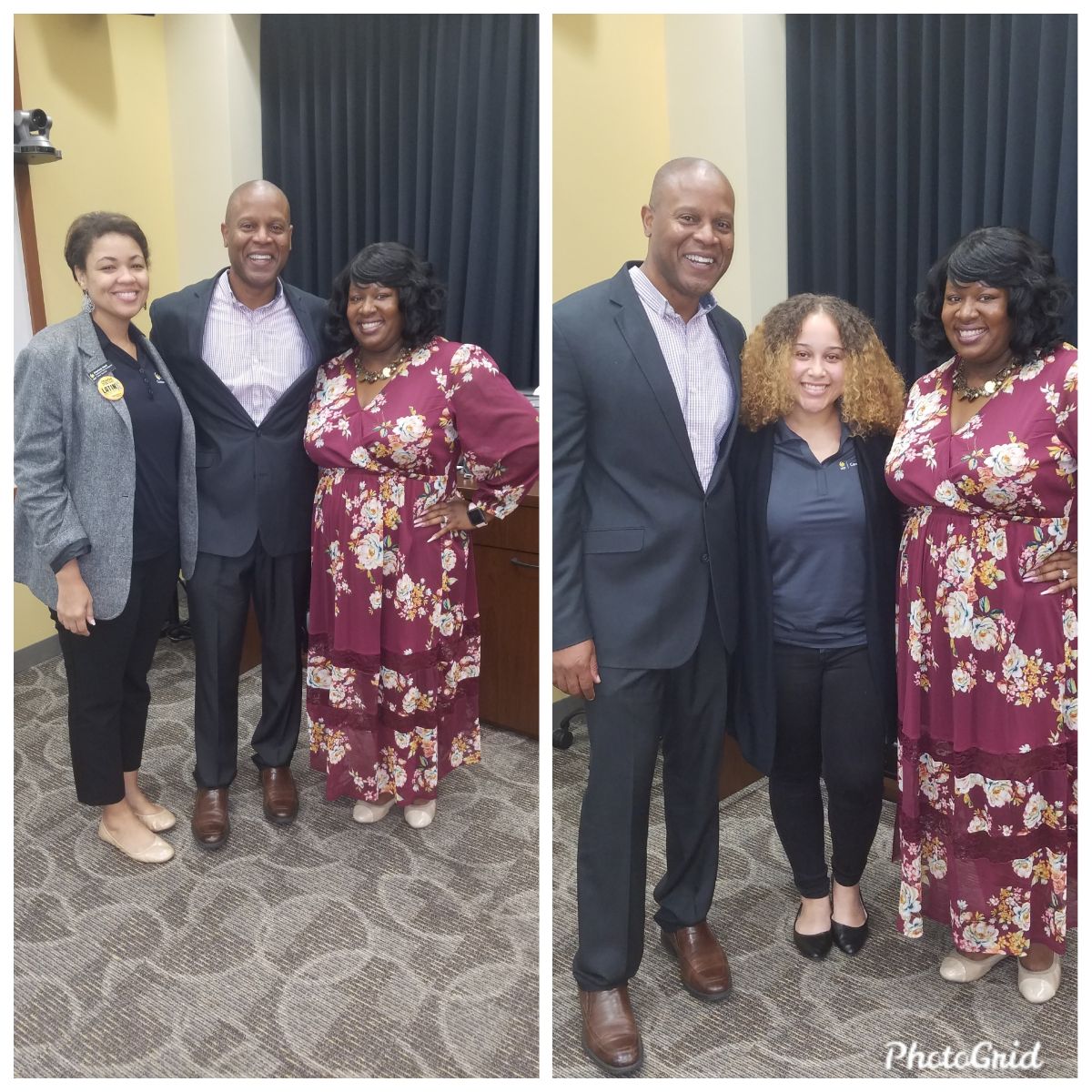
    My project with UCF was especially rewarding because I was invited to train a group of student workers by an active tree branch.  We have worked together for the past 10 years—first at UCF, then at FSU and now again at UCF.  Full disclosure, this tree branch worked directly for me at FSU.

    I conducted team building training for her student workers at FSU and she wanted to bring the same training to UCF as a part of their enhanced student professional development program.  An extra bonus for me conducting the UCF training is my niece, Jayla, is a current student worker in the UCF Career Center and would be a participant.  This was her first time to see me working with students instead of hearing about my work.  Think she came away proud of her uncle! 😊

    These opportunities allow me to give back and help the next generation Walk into the Future.  Love the energy I get when standing in front of motivated college students.  Believe the energy they put out helps me find another gear when presenting material to them.  They inspire me to get better daily.

    This workshop was designed to help the student workers understand the importance of working within the team environment.  We also touched on how they can still be individuals but can’t let this hinder the overall function of the team.  Example, someone who is naturally quiet will still have to speak publicly in a customer service environment.  We explored understanding differences and how to find strengths in others to ensure work is being accomplished in a proper manner.

    We were also able to leverage communication styles and techniques to enhance workplace interactions.  The students were well versed in how their personalities can impact interactions with peers, faculty and staff.  We utilized their knowledge to build team dynamics and translate this information directly to their respective roles in the Career Center.

    Team building is not a formal course of study and takes time to implement.  Believe getting students engaged in understanding team building dynamics early will translate directly to their work and life experiences after college.  It also creates a strong foundation they can utilize while in school—group projects, presentations, fraternity/sorority life, student government, etc.

    We can all sharpen our team building skills—this workshop is my way to keep this important workplace tool growing.  I was able to plant seeds during this presentation and look forward to watching the new trees grow in the future.  Several students have reached out via LinkedIn and I’m actively mentoring them to help reach their respective goals.  One of the students that reached out works for another tree branch in Orlando—small world!

    What are your favorite team building tools?  How does your organization ensure team building is a strong component for growth?  (Respond in the comments section—thanks!)

    Thanks for walking with me!

    “As you grow older, you will discover you have two hands – one for helping yourself and the other for helping others”.

    (Audrey Hepburn)

    UCF Training

  • Master the art of public speaking

    auditorium benches chairs class
    Photo by Pixabay on Pexels.com

    “According to most studies, people’s number one fear is public speaking.  Number two is death. Death is number two.  Does that sound right? This means to the average person, if you go to a funeral, you’re better off in the casket than doing the eulogy”.

    (Jerry Seinfeld)

    Public speaking is difficult, public speaking is scary, public speaking is not my strong skill.

    I hear these and similar things daily when talking with people about public speaking. I’m sure I had similar thoughts when I started my journey standing in front of people to speak.  The good thing about the fear of public speaking is all your fears can be overcome.  Trust me, if I can get over the fear of standing in front of people and talking, everyone can.

    My first exposure to public speaking came as part of my instructor role when I was in the Air Force.  My actual job knowledge (data analyst) was needed to train the next generation of Air Force data analyst.  I was forced to come out of my natural introvert shell and learn how to engage a room full of students who depended on me to help them grow professionally.  No pressure, huh?

    “Best way to conquer stage fright is to know what you’re talking about”.

    (Michael H. Mescon)

    I learned the more I practice the less nervous I am when I stand in front of groups.  Decided to always err on the side of overpreparation as oppose to being underprepared for speaking engagements.  I constantly review notes, transitions and potential questions I may receive during every speaking engagement.

    I view anticipating questions, lulls and technical difficulties as war games.  I find it easier to overcome these things by acknowledging they can pop up at any point.  This additional groundwork helps me get comfortable before and during my speaking engagement.  I still get nervous but know I can handle the task because of my preparation.

    Researching the organization and people you’re speaking to helps you learn more about the audience so a tailored approach can be taken.  This helps when incorporating examples and stories into a speech.  Knowledge of the organization and audience helps generate talking points that fit so you can connect with them.  I also target specific audience members based on my research.  A quick LinkedIn search can provide an inside nugget I can use to connect with an audience member and seems to put others at ease because I took the time to learn more about them.  This simple rapport building technique can be leveraged to help alleviate anxiety as well.

    The ability to read the room is another critical component for public speakers.  There will be times when you will need to adjust to match the emotions, reactions and body language of your audience.  I go into every speaking engagement with a plan of action but because of practice, anticipation and knowledge of the group, I’m able to adjust on the fly (if needed).

    I don’t put a lot of written content on slides to avoid limiting myself without a way to pivot if needed.  I started incorporating key words and pictures into my presentations to focus attention back to me—the presenter.  This always provides me with a pivot channel since I’m not tied to slide verbiage.  The key words and/or pictures are used to guide me through the presentation.  Practice provides the foundation to make this process work when standing in front of an audience.

    Nonverbal communication can make or break your presentation.  I make a point not to carry anything in my hands (pen/paper/etc.) except the audiovisual clicker.  I try to put the clicker down until I need it to transition to the next slide.  Carrying objects can distract your audience and I’ve seen these things distract the presenter as well.

    Eye contact with audience members helps convey confidence and credibility as a subject matter expert.  Speaking rate, pitch and effective use of pauses can help keep the audience members engaged and wanting to hear more from the speaker.  I learned the benefits of audience engagement during my speaking roles in the Air Force and continue to add more tools to my speaking toolkit daily.  Don’t be afraid to move around when speaking—this really conveys confidence but should be done with purpose.  Too much moving looks like you’re trying to get away from them. 😊

    These are a few things I’ve used to help eliminate speaking anxiety.  Please note, I still get nervous, but I use my nerves to help fuel my public speaking.  The one thing I ensure happens when speaking is to have fun.  Might as well enjoy myself while I’m standing in front of a group—having fun seems to counteract anxiety and I’m able to press forward.  Try it the next time you must speak in public!

      • FYI: Don’t forget the impact Walk up Music can have on public speaking:

    https://walkintothefuture.blog/2018/11/22/walk-up-music

    What techniques do you use to overcome speaking anxiety?  How do you prepare for big speaking roles in your work environment?

    Thanks for walking with me!

    “Speech is power:  speech is to persuade, to convert, to compel”.

    (Ralph Waldo Emerson)

    TCC presentation

  • We all win with diverse work environments!

    brand trademark cobblestones community denim pants
    Photo by Ingo Joseph on Pexels.com

    “Diversity may be the hardest thing for a society to live with, and perhaps the most dangerous thing for a society to be without”.

    (William Sloan Coffee, Jr.)

    Merriam-Webster defines diversity as the condition of having or being composed of differing elements.  Clear as mud, right?

    Organizations with diversity initiatives need to ensure they fully understand what diversity means.  Simply making a statement does not ensure diversity in the work environment will happen.  Diversity must be examined in order to identify how it can be fully implemented and embraced in the work environment.

    Some organizations define diversity on very short-sighted components i.e., men, women, race.  These components are all intertwined when discussing diversity but there should be more components included in a truly diverse work environment.

    Leveraging background dynamics, educational and life experiences as well as demographic components will help generate a new level of diversity for organizations who truly seek this in the work environment.  There are some organizations who say they want diversity but continue to hire clones of the staff currently working there.  This is the opposite of the Merriam-Webster’s diversity definition.

    “We need diversity of thought in the world to face the new challenges”.

    (Tim Berners-Lee)

    Diverse work environments value different perspectives. This includes skills, experiences, backgrounds and education.  This concept brings a variety of ways to get things done.  Bringing diversity into the work environment allows the organization to grow and avoid the groupthink mentally that stifles new thoughts.

    New thoughts in the work environment leads to increased creativity when facing a problem, change or new procedure.  True diversity brings together people who will see the same problem from different perspectives and sharpens everyone because of this exposure.  The creative impact on the organization increases because staff hear, see, feel, think differently and exposes others to different ways to get things done.  This creativity process may also impact innovation within the organization.

    Decision making and problem solving are other areas a diverse work environment can enhance.  Again, a diverse work force brings new thoughts, ideas and ways to get things done to the workplace.  Leadership receives diverse solutions to organizational problems and has multiple options to select from.  This leads to faster problem solving and allows the organization to tackle new challenges.

    A caution, leadership must be willing to accept the diverse solutions and not revert to business as usual.  The worse thing that can happen is for leadership to say “we always do it this way OR that will not change as long as I’m here”—the quickest way to deflate staff and eliminate their voice in the work environment.

    A diverse work environment can also help retain staff members.  A diverse and empowered work environment helps staff members feel accepted and valued.  This creates a happier work force and may lead to staff staying with the organization longer.

    So, let’s examine the Merriam-Webster diversity definition again:

    • The condition of having or being composed of differing elements.

    A few elements to consider for workplace diversity:

    • Race
    • Gender / Identity
    • Education / Educational Institutions
    • Geographic region
    • Age
    • Experience

    A final thought on diversity is it impacts your clients as well.  A more diverse work force can enhance an organization’s ability to attract diverse clients.  Example:  an office with diverse staff will be able to attract diverse clients because they see someone similar.  Don’t overlook the importance of how diversity impacts your clients.

    What does your organization do to ensure a diverse work environment?  How can diversity be improved?

    “Diversity is being invited to the party; inclusion is being asked to dance”.

    (Verna Myers)

    Thanks for walking with me!

    neon signage
    Photo by Ivan Bertolazzi on Pexels.com
  • Set the Standard with your Core Truth

    close up photography of a cellphone
    Photo by Prateek Katyal on Pexels.com

    “If I didn’t define myself for myself, I would be crunched into other people’s fantasies for me and eaten alive”.

    (Audre Lorde)

    I was introduced to Audre Lorde’s work through the 1999 movie, The Best Man.  The two characters in the scene were trying to decide how to proceed with their relationship when the quote above was introduced.  It provided a moment of clarity and highlighted commonality the characters unknowingly had with each other—they both used this quote in their daily lives.

    The quote has been with me ever since because it resonates a strong sense of self that leads to empowerment.  I leverage the quote to highlight doing things differently than others is okay—everyone has a different path to walk daily.

    My presentation and writing styles are uniquely me.  There are times people will ask how I generate presentation materials and then look at me like I’m an alien when I explain it.  Again, I stay true to me and my preferred methods because they work for me.  When I try to generate content in a manner that doesn’t fit me, I struggle, so decided not to go down that road anymore.

    Had to explain this process when presented with a potential speaking role that would have taken me out of ‘character’ for who I am.  The opportunity was very appealing from a surface level but would have required me to present in a style that is not really me.  Could I have faked it?  Probably, but I wouldn’t have been happy with me and I’m sure this fact would have bled into the actual presentation of material.  Decided a long time ago to stay true to my core truth to avoid being eaten alive.

    “Being the best for yourself is how you can be the best for others”.

    (Jennifer Mergen)

    coin operated tower viewer on rooftop during sunset
    Photo by Saeid Anvar on Pexels.com

    Discovering your core truth can be used in other areas of life.  I recommend once you discover your core truth then stick with it.  I described the BIG GULP phenomenon in an earlier post—this concept is incorporated within my core truth—I never do business or move forward with a project that makes me take a big gulp.  This concept has saved me on multiple occasions and kept me from doing something I would regret.

    I’m not saying people cannot evolve over time.  Continued learning and growing are integral parts to personal and professional success.  The core truths you define for yourself provide an actual road map to how you view and deal with others.  Don’t let outside influences ‘eat you alive’.

    Had an interesting conversation yesterday about defining a core truth leadership style.  Believe this provides a foundation that will allow a leader to adjust and help direct reports grow.  My leadership core truth is authentic leadership but I’m well-versed in other leadership styles if/when authentic leadership principles are not effective for the current situation.  I’ve never yelled or cursed to prove I’m a leader.  People who do are poor leaders—my opinion.

    What things do you consider when defining your core truth?  What areas in your professional life can establishing a core truth enhance your work environment?  Interested in your thoughts—thanks!

    “None but ourselves can free our minds”.

    (Bob Marley)


  • Emulate great leaders ‘and’ learn from bad bosses

    “Never step on enthusiasm.”

    (Colin Powell)

    thumbnail_Leader

    (Image by Jackie Zamora)

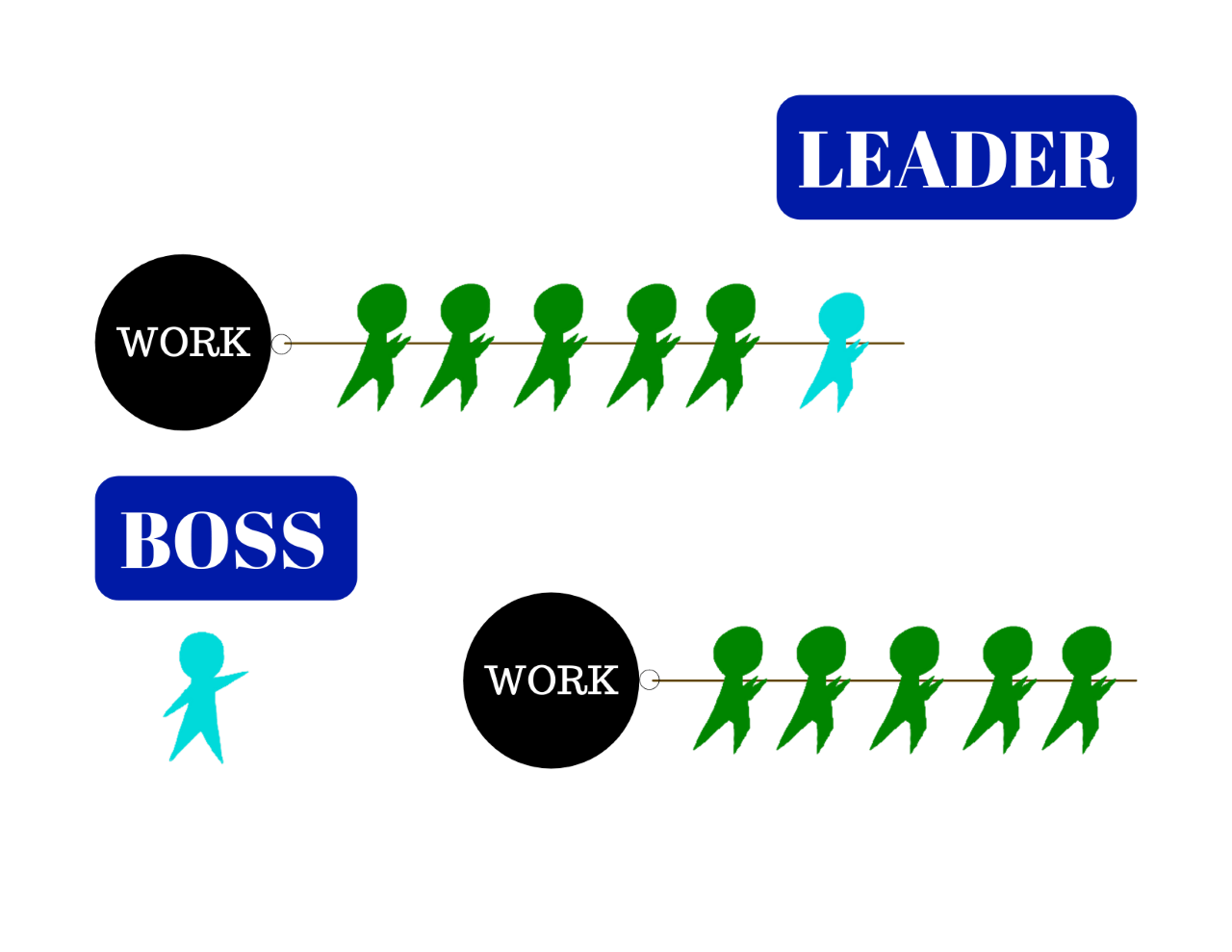
    I love the image above for the simple message it sends.  True leaders are not afraid to engage to ensure team success.  Leaders display a level of humility when they show direct reports they are a part of the overall team, not just the person demanding results.

    Contrast the two examples in the image.  Who would you want to work for?  The leader or the boss?  Why?

    I have been lucky to work for some truly great leaders in multiple work environments.  They all shared a vision of what success looks like and made sure everyone was working toward the same goals.  These great leaders always led by example and made professional development/learning a priority in the workplace.  This enhanced direct report engagement and made everyone want to get more accomplished.  Regardless of style (authentic, transformational, democratic, etc.), great leaders provide positive interactions and examples we can emulate and utilize within our own leadership practice.

    Luckily, I have not experienced too many of the boss examples in the image above, but I have made a point to learn from these people as well.  Don’t be so quick to write off the lessons you gained from a boss:

    • How did your boss make you feel daily?
    • How easy was it to bring them problems?
    • Did they explain tasks or just say go get things done?
    • How competent were they getting the job done?
    • How invested were they in your professional development?
    • How much fun were they to be around?
    • How much staff turnover did your office have?

    I could add more things to this boss check list but believe you see my pattern now.  So, what lessons can you learn from a boss?  I’ve learned to never repeat a boss trait I viewed as a negative.

    Getting up from behind a desk or closed door to engage with people daily is an easy task for everyone.  Never get so comfortable with a position you forget your responsibility to the people you serve.  Servant leadership is centered on the idea the leader serves their people.  Take the time to explain the WHY of a task not just the WHAT needs to be done.  Leverage the strengths of everyone on the team.  This requires the leader to know the strengths and weaknesses of each team member.

    It’s okay to have fun at work!  No, really, fun and work can go together.  Look at some of the most successful organizations and the culture they build in the work environment.  Work still gets done but fun happens daily—may be a coincidence but these type organizations are able to retain their staff members.

    Consider implementing a stay interview process.  Stay interviews allow great leaders to engage staff to see what they need in the work environment.  The stay interview builds a dialogue to enable both sides to enhance relationships and create a productive culture.  The leader does not have to promise anything they can’t back up and allows them to explain these things directly to staff members.

    Note:  Had a great conversation during a virtual networking event last week in Orlando about the term stay interview.  Some organizations/leaders do not like this term.  That’s fine, call it ‘professional development interview, career development orientation, etc.’ but look for ways to engage staff on their professional needs.

    So, continue to emulate the great leaders you have had in your work life but don’t miss the valuable lessons the bosses have provided.

    What leadership traits do you emulate daily?  What have you learned from a boss (no names needed)?

    “I’ve learned that people will forget what you said, people will forget what you did, but people will never forget how you made them feel.”

    (Maya Angelou)

    war chess

    Photo by Gladson Xavier on Pexels.com

    “Play chess, not checkers.”

    (Dr. Calvin Williams)

  • Making a Difference (Daily)

    Make a Difference May 2019

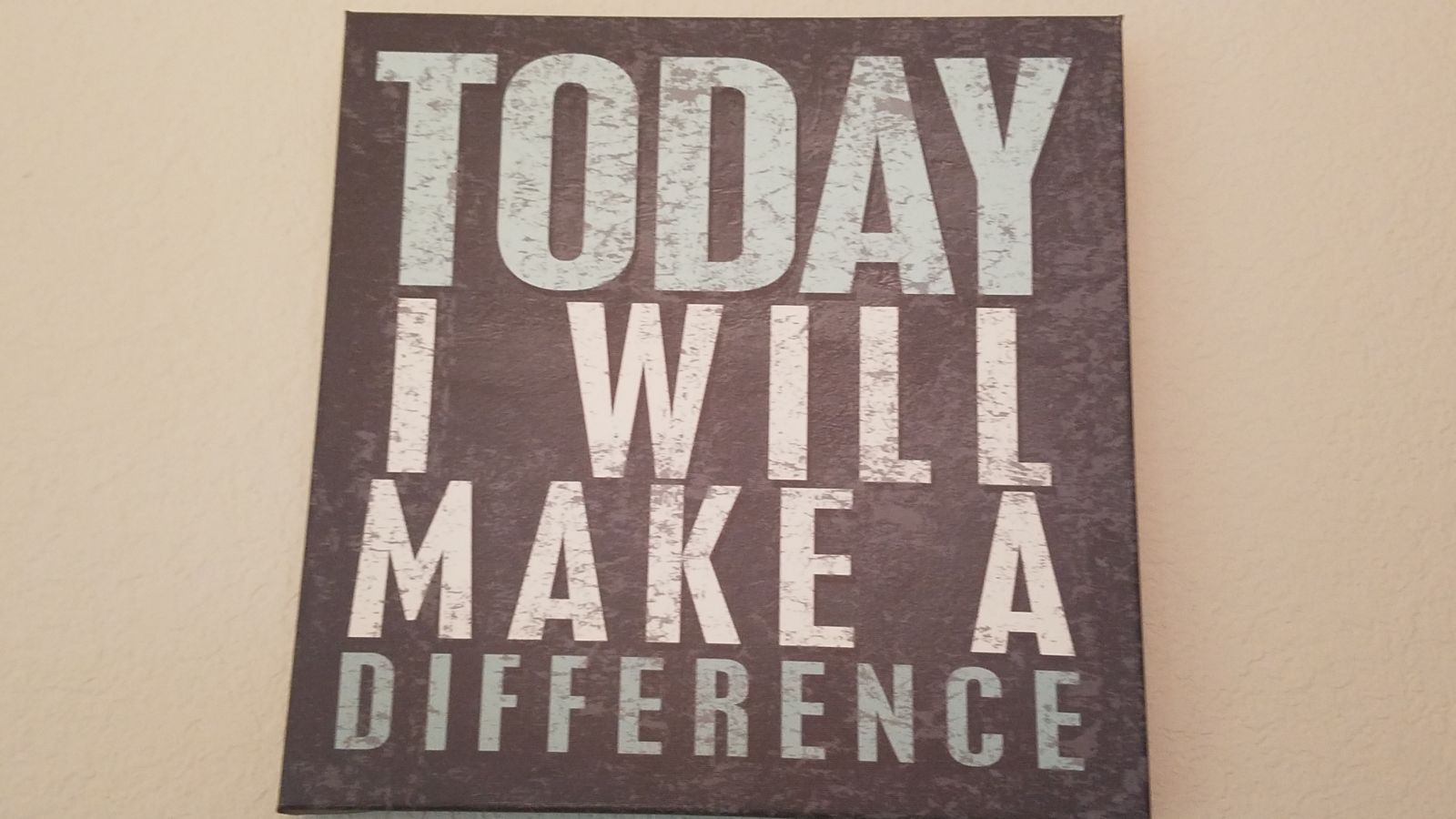
    I start each day with the purpose of making a difference.  Changing the entire world continues to prove to be beyond my ‘super powers’ so I focus on the small victories in life.

    The picture above hangs next to my front door, so I must pass it on my way out into the world.  It is a simple reminder to ensure my focus remains on the small victories in life that can make a difference to someone.

    My psychology educational background was selected because of a desire to understand others better.  My thought process has always been to understand what makes people do or think what they do.  Psychology provided me with the foundation to understand the importance of helping others.  Please note, helping someone can be as simple as asking them how their day is going.  Doesn’t have to get super deep to impact someone you cross paths with regularly.

    I’ve written about the benefits of volunteering in the local community.  This small step can be a huge difference maker for your local community and especially someone who benefits from the organization you volunteer with.  Volunteer multiple times with an organization and you will begin to put smiles on the faces of people within the organization.

    Mentoring others has always been a huge part of my daily routine.  My current Walk into the Future allows me additional time to reach out to my tree branches and put focus on topics they want to explore.  We always did this but now my availability enhances how often we get to check in.  I enjoy catching up with my tree branches and hearing the great things ‘they’ are doing in the world.  Following their progress and seeing how they make a difference is a highlight for me.

    I’m able to expand my reach beyond my current tree branches because of my availability.  Students and organizations I was not engaged with prior are reaching out for me to help them move forward.  Some of the students knew me at FSU in passing or had a friend work with me and recommended they reach out.   I find this ‘underground referral’ process a bit flattering and it shows I’ve made enough of a difference for someone to put their friend in touch with me.  I never turn down these requests—the students have shown a tremendous amount of ambition by reaching out and requesting assistance.  Selfishly, I view this whole process as growing my tree—these new branches know they must help someone else move forward.

    Working with organizations is an area I would like to expand in 2019.  I currently do some professional development/leadership consulting with the Seminole Tribe of Florida.  We have several workshops planned and looking to add more to help them grow as a group.  Coordinating with a few local groups to highlight the Authentic Leadership principles for them to incorporate within their leadership development programs.  This process would expand my reach and provide a larger group to ensure I’m making a difference.

    So, until I gain additional ‘super powers’, making a difference daily is how I plan to conquer the world! 😊

    What can you do to make a difference today?  Who would benefit from hearing from you?  Don’t make them wait—reach out and make a difference!

    Make a Difference 2 May 2019

  • The Big Gulp: How do you handle it?

    “I never do business with anyone where I have to take a big gulp to move forward”.

    (9 Things You Simply Must do to succeed in Love and Life)

    The quote above comes from a book written by one of my favorite authors, Dr. Henry Cloud.  It is a piece of advice he received from a mentor when faced with a big business decision.  This concept can be used in multiple situations and has been a big part of my life.

    I was able to leverage this quote with one of my most positive ‘tree branches’ last week to help with a decision she was facing.  I’m encouraged with my ability to shape this quote to help my tree branch and others when faced with tough choices.

    I was introduced to the written works of Dr. Henry Cloud during a career development course while finishing my masters program in Counseling/Human Relations.  The book was so influential it was the first college text book I decided to keep for my personal library.  Most days you will find this book on me as I refer to it constantly for additional insight.

    The Big Gulp can be defined as the apprehension you may feel prior to making a commitment.  The commitment could be business related, personal or a combination of both.  How you handle life’s Big Gulp moments can increase your level of happiness as you move forward on your Walk into the Future.

    My personal Walk into the Future has been defined by leveraging Big Gulp moments to my advantage.  I never accept deals, offers or partnerships with anyone I would have to take a Big Gulp before moving forward.  I didn’t heed this concept a few times and moved forward and regretted every minute of the partnership.  It took me a few times to experience this before I became a firm believer in this process:  when offered something I would have to take a Big Gulp before moving forward, I do not accept it.

    The opportunity may seem like the best thing ever, but the Big Gulp reaction should identify additional research is needed.  The Big Gulp reaction comes from past experiences where things didn’t seem quite right or the person offering you the deal has done things in the past to make you cautious.  Trust your instincts when faced with these situations.  Better yet, run the situation by your mentors for additional insight.  I recommend you share your apprehensions with your mentors so they can provide advice to cover all angles of the decision.  The ultimate decision belongs to you but remember the Big Gulp came from somewhere.

    Can you isolate the Big Gulp to something tangible?  Can you trust the person offering you the opportunity?  There are other things to consider, but these are a few to help jump start the process.

    Have you ever experienced a Big Gulp moment and still moved ahead?  How did that experience work out for you?

    How can you leverage the Big Gulp moving forward?  I welcome your thoughts—thanks!

    References

    Cloud, Henry. (2004) 9 Thing you simply must do to succeed in love and life. Brentwood, TN: Integrity.

  • Relational Transparency – Take your leadership to the next level

    flat view photography of four persons sitting facing laptop on desk
    Photo by rawpixel.com on Pexels.com

    “The lack of transparency results in distrust and a deep sense of insecurity”.

    (Dalai Lama)

    The concept of transparency within the work environment continues to grow.  Leaders who display relational transparency show they are willing to share information and understand direct reports, peers and supervisors want to be involved.

    The quote above provides outcomes when transparency is absent from the relational process.

    Relational transparency is an authentic leadership variable that highlights leaders should understand the impact their daily interactions can have (positive or negative) within the work environment.  Relational transparency involves the leader presenting their authentic self, which helps develop trust by sharing true thoughts and feelings and displaying appropriate emotions.  Trust develops as the leader shares information openly with all levels within the organization.  Consistency with words, thoughts and actions are staples of relational transparency.

    How can Relational Transparency improve work outcomes?

    • Creates a nurturing environment
    • Shows direct reports they are valued and appreciated
    • Helps build meaningful and transparent relationships
    • Enhances overall organizational functions
    • Should be applied to both sides of a work relationship

    Relational transparency can be leveraged to improve working relationships on multiple levels of an organization.  This process can be used when working with staff members from other departments or organizations.  Building trust when working on committees across the organization will only enhance the ability of the team to meet stated goals.  A transparent leader’s authenticity can be viewed easily throughout the organization because nothing is being hidden in daily interactions with others.

    Leaders must be willing and able to balance multiple relationship levels:  direct reports, peer to peer and supervisors.  Relational transparency provides leaders with an impactful way to build productive working relationships and enhance the overall functioning of the work environment.

    How do you display relational transparency in your work environment?  How would this authentic leadership variable enhance daily interactions?


  • Leading from the Front

    We are all leaders!  The actual title you have is not as important as understanding your impact on others you interact with.  There are people in this world with the ‘title’ that implies they are the leader, but they don’t ‘move the crowd’.

    Leading from the front can be done by everyone.

    I continue to highlight the key to effective leadership is self-awareness.  Self-awareness is needed in order to lead from the front in your daily activities.   The self-aware leader understands strengths and weaknesses, have a fully developed self-view and demonstrate they understand how their interactions impact others (direct reports, clients, colleagues, etc.).

    Things a leader can/should do:

    • Inspire people
    • Empower people
    • Lead change
    • Share a vision

    So, if you can inspire people, empower people, lead change and share a vision, you are a leader.  Again, you don’t need a specific title to be viewed as a leader.  Don’t give away your influence because a specific title is not attached to you.

    encouragement_leadership blog

    We can all lead!  Look around your current work environment. Who do you inspire daily?  How do you inspire these people?  Your level of self-awareness within the work environment creates empowerment.

    Do you need anyone’s permission to inspire your students, clients, colleagues or direct reports?  I don’t think so.  Now you need to identify/understand how you inspire others.  Are your actions positive and consistent?  Do you create an environment conducive for communicating new ideas?

    I believe empowered leaders initiate, act, and adjust within the work environment.  These things are available to all of us.  I promote to direct reports, ‘Mistakes happen, just don’t make the same mistake twice’.  Use situations like this to create an environment where your people can learn and grow.

    Leveraging your ‘Why’ can also impact how you lead from the front.  Identify why you show up every day and then ensure your leadership decisions are made to positively impact your ‘Why’.  Simple enough, huh?  It can be!

    How do you lead from the front daily?  What adjustment are needed to ensure you lead from the front in your work environment?  Thanks!