Tag: Growth

  • Please Feed the Unicorns

    Unicorns: something unusual, rare or unique. (Merriam-Webster)

    The term or concept of the mythical unicorn comes up in my conversations from time to time.  The unicorn can symbolize different things for people; from the image of a horse like creature with a single horn, to a magical being or someone who is unique.

    I’ve been called a unicorn in multiple settings.  I wear this designation as a badge of pride because being a unicorn means I have a uniqueness about me.

    My life and career pivots have taken me from a computer analyst, classroom instructor, conference planner (US Air Force), career specialist (Macon State College), guidance counselor (Government contractor), adjunct psychology professor (multiple schools), employee development consultant (Goodwill), employer relations (UCF & FSU) and now a blogger/consultant/speaker.  The ability to adapt and believe I can pivot into different settings/outcomes generates the unicorn concept some associate with me.

    I have a lot of great mentors and friends who provide advice and support to ensure I’m prepared for the next pivot.  The efforts from my mentors/friends/tree branches provide me with a platform to stretch my professional boundaries to ensure I’m continually growing.

    How do they do that?  They feed the unicorn:

    • Display a desire to partner
    • Willing to share knowledge
    • Expert listeners
    • Words and actions match (Consistency)
    • Regular check-ins
    • Positive affirmations
    • Tough love when needed

    The list above can be used by YOU to feed the unicorns you meet in your daily lives.  You can add more ‘feeding’ variables based on the unique situations encountered but my list is a starting point to engage others daily.  I’m sure there’s someone you work with who would benefit from being treated as a unicorn.  They may not realize their uniqueness or potential until you start to feed the unicorn.  You may be surprised by the number of unicorns around you once you start the feeding process.

    FYI—I consider everyone who follows and/or reads the Walk Into the Future blog, unicorns.  My words, thoughts, and adventures are designed to help you forge your own unique path on your personal walk.

    Thanks for inspiring and feeding me as well!

    Unicorn

  • The Big Gulp: How do you handle it?

    “I never do business with anyone where I have to take a big gulp to move forward”.

    (9 Things You Simply Must do to succeed in Love and Life)

    The quote above comes from a book written by one of my favorite authors, Dr. Henry Cloud.  It is a piece of advice he received from a mentor when faced with a big business decision.  This concept can be used in multiple situations and has been a big part of my life.

    I was able to leverage this quote with one of my most positive ‘tree branches’ last week to help with a decision she was facing.  I’m encouraged with my ability to shape this quote to help my tree branch and others when faced with tough choices.

    I was introduced to the written works of Dr. Henry Cloud during a career development course while finishing my masters program in Counseling/Human Relations.  The book was so influential it was the first college text book I decided to keep for my personal library.  Most days you will find this book on me as I refer to it constantly for additional insight.

    The Big Gulp can be defined as the apprehension you may feel prior to making a commitment.  The commitment could be business related, personal or a combination of both.  How you handle life’s Big Gulp moments can increase your level of happiness as you move forward on your Walk into the Future.

    My personal Walk into the Future has been defined by leveraging Big Gulp moments to my advantage.  I never accept deals, offers or partnerships with anyone I would have to take a Big Gulp before moving forward.  I didn’t heed this concept a few times and moved forward and regretted every minute of the partnership.  It took me a few times to experience this before I became a firm believer in this process:  when offered something I would have to take a Big Gulp before moving forward, I do not accept it.

    The opportunity may seem like the best thing ever, but the Big Gulp reaction should identify additional research is needed.  The Big Gulp reaction comes from past experiences where things didn’t seem quite right or the person offering you the deal has done things in the past to make you cautious.  Trust your instincts when faced with these situations.  Better yet, run the situation by your mentors for additional insight.  I recommend you share your apprehensions with your mentors so they can provide advice to cover all angles of the decision.  The ultimate decision belongs to you but remember the Big Gulp came from somewhere.

    Can you isolate the Big Gulp to something tangible?  Can you trust the person offering you the opportunity?  There are other things to consider, but these are a few to help jump start the process.

    Have you ever experienced a Big Gulp moment and still moved ahead?  How did that experience work out for you?

    How can you leverage the Big Gulp moving forward?  I welcome your thoughts—thanks!

    References

    Cloud, Henry. (2004) 9 Thing you simply must do to succeed in love and life. Brentwood, TN: Integrity.

  • Relational Transparency – Take your leadership to the next level

    flat view photography of four persons sitting facing laptop on desk
    Photo by rawpixel.com on Pexels.com

    “The lack of transparency results in distrust and a deep sense of insecurity”.

    (Dalai Lama)

    The concept of transparency within the work environment continues to grow.  Leaders who display relational transparency show they are willing to share information and understand direct reports, peers and supervisors want to be involved.

    The quote above provides outcomes when transparency is absent from the relational process.

    Relational transparency is an authentic leadership variable that highlights leaders should understand the impact their daily interactions can have (positive or negative) within the work environment.  Relational transparency involves the leader presenting their authentic self, which helps develop trust by sharing true thoughts and feelings and displaying appropriate emotions.  Trust develops as the leader shares information openly with all levels within the organization.  Consistency with words, thoughts and actions are staples of relational transparency.

    How can Relational Transparency improve work outcomes?

    • Creates a nurturing environment
    • Shows direct reports they are valued and appreciated
    • Helps build meaningful and transparent relationships
    • Enhances overall organizational functions
    • Should be applied to both sides of a work relationship

    Relational transparency can be leveraged to improve working relationships on multiple levels of an organization.  This process can be used when working with staff members from other departments or organizations.  Building trust when working on committees across the organization will only enhance the ability of the team to meet stated goals.  A transparent leader’s authenticity can be viewed easily throughout the organization because nothing is being hidden in daily interactions with others.

    Leaders must be willing and able to balance multiple relationship levels:  direct reports, peer to peer and supervisors.  Relational transparency provides leaders with an impactful way to build productive working relationships and enhance the overall functioning of the work environment.

    How do you display relational transparency in your work environment?  How would this authentic leadership variable enhance daily interactions?


  • Leading from the Front

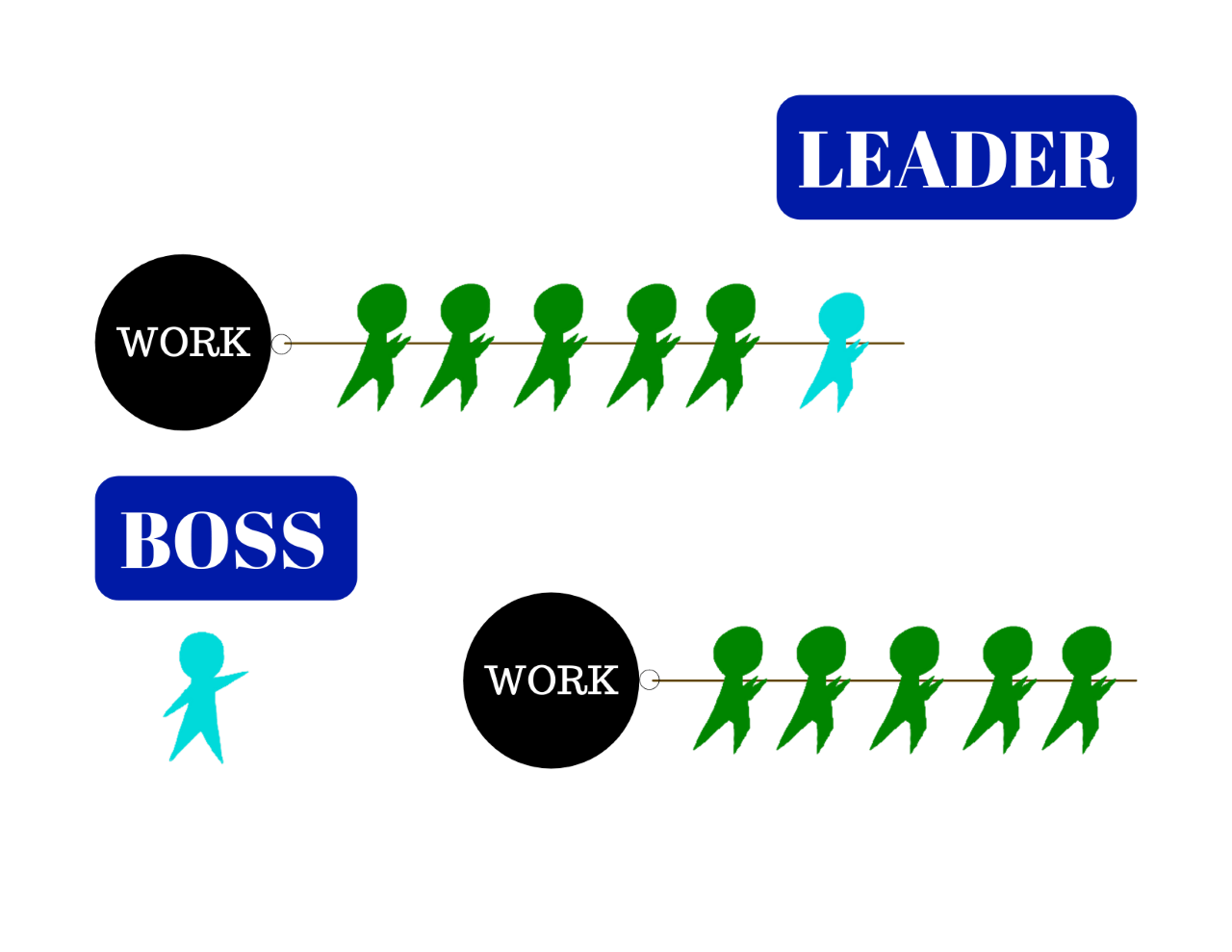
    We are all leaders!  The actual title you have is not as important as understanding your impact on others you interact with.  There are people in this world with the ‘title’ that implies they are the leader, but they don’t ‘move the crowd’.

    Leading from the front can be done by everyone.

    I continue to highlight the key to effective leadership is self-awareness.  Self-awareness is needed in order to lead from the front in your daily activities.   The self-aware leader understands strengths and weaknesses, have a fully developed self-view and demonstrate they understand how their interactions impact others (direct reports, clients, colleagues, etc.).

    Things a leader can/should do:

    • Inspire people
    • Empower people
    • Lead change
    • Share a vision

    So, if you can inspire people, empower people, lead change and share a vision, you are a leader.  Again, you don’t need a specific title to be viewed as a leader.  Don’t give away your influence because a specific title is not attached to you.

    encouragement_leadership blog

    We can all lead!  Look around your current work environment. Who do you inspire daily?  How do you inspire these people?  Your level of self-awareness within the work environment creates empowerment.

    Do you need anyone’s permission to inspire your students, clients, colleagues or direct reports?  I don’t think so.  Now you need to identify/understand how you inspire others.  Are your actions positive and consistent?  Do you create an environment conducive for communicating new ideas?

    I believe empowered leaders initiate, act, and adjust within the work environment.  These things are available to all of us.  I promote to direct reports, ‘Mistakes happen, just don’t make the same mistake twice’.  Use situations like this to create an environment where your people can learn and grow.

    Leveraging your ‘Why’ can also impact how you lead from the front.  Identify why you show up every day and then ensure your leadership decisions are made to positively impact your ‘Why’.  Simple enough, huh?  It can be!

    How do you lead from the front daily?  What adjustment are needed to ensure you lead from the front in your work environment?  Thanks!

  • Permission granted; Go ahead and free your mind

    ‘Freedom is a road seldom traveled by the multitude.’

    (Fredrick Douglas)

    I laughed a bit at myself when I did some actual research on this Fredrick Douglas quote.  Originally heard this in an old Public Enemy (PE) song, ‘Show em what you got’ from the late 1980’s.  Turns out PE was dropping knowledge as usual by integrating activism into their music to help listeners gain a new level of consciousness.

    But let’s leverage this quote into a bit of ‘mind magic’ to help with your Walk into The Future.

    How many times have you talked yourself out of accepting a new challenge?  How often do you stay stuck because you can’t free yourself (mind, body, soul)?

    It may be time for the multitude to travel down the road.

    Give yourself the freedom to accept and then conquer new challenges.  Most times people view challenges with dread and then go into negative self-talk mode.  Why is that?  You haven’t freed your mind enough to let yourself move forward with the challenge.

    You may want to view potential challenges as opportunities available to you.

    Go ahead and give yourself permission to release your ‘preconceived’ thought formations and leverage the clean slate available once you free your thought process.

    A free mind allows you to:

    • Start with a clean slate
    • Concentrate
    • Eliminates stress
    • Jump start positive self-talk
    • Strategize for the task at hand

    There will be other benefits of allowing yourself the freedom to clear your head from time to time.  We all carry mental clutter throughout the day.  How often do you make the time to clear this clutter to enhance your day?  A meditation practice could be leveraged to help with this process.

    Go ahead and give yourself the permission to experience the mental freedom you need to soar.  It’s okay to get out of your own head for a bit.

    What things do you need to ‘clear’ out of your head to experience a new level of freedom?  Write them down to help you Walk into The Future!


  • Success

    “I find the harder I work, the more luck I seem to have.”

    (Thomas Jefferson)

    Success2

    What does success look like?  How would you define success?  How did you gain success in your life?

    These were a few questions a branch on my tree asked me a few weeks back.  To be fair, I asked several branches on my tree for topics they have interest in to see if I can develop into a blog article that would benefit them in their Walk into The Future.

    It took be awhile to wrap my mind around the concept of success—I view myself as enjoying my Walk into the Future, but success must be on display in some format for me to be able to control this walk.  So, I thought back to some advice I received as a young Air Force instructor that was gifted to me:

    ‘Be where you’re supposed to be;

    Doing what you’re supposed to be doing;

    When you’re supposed to be doing it.’ (U.S. Air Force Mentor, 1997)

    Thinking about the topic of success allowed me to reflect on this advice and it follows me into every activity I pursue.

    This advice on face valuable is simple.  But reflecting on the concept of success allowed me to see how the advice I received years ago has allowed me to find successful outcomes in most endeavors I tackle.  I’ve used this advice over the years but now realize it has been the foundation of my daily interactions—every day and every project!

    This foundation has allowed me to form outstanding working relationships with direct reports and peers because I’m always focused on “where, what, when”.  This provides my interactions with a level of consistency to ensure successful outcomes.  Some may say they give 110% percent effort when facing a task or challenge.  I’ve never attributed the phase ‘110% effort’ to myself when taking on a task.  I view each task or challenge with a focus to get things done with maximum effort within a minimum amount of time.  The advice I was gifted years ago provided me with a formula to get things down with an eye towards the integrity of the process.

    I talk with students I work with on how they can become visible and viable when seeking employment.  The concept of “where, what, when” is used in my conversations to give them a simple formula to work with when engaging with recruiters in their search for employment.  This concept is relatable for students and provides them with guidance towards a successful outcome when engaged in the recruitment process.

    So, to come back to the questions I was asked on success:

    What does success look like?  How would you define success?  How did you gain success in your life?

    Success varies from person to person.  My view on success is having the ability to navigate a situation or task where the outcome exceeds the level of expectations.  Success is defined as having the mental capacity to adapt, think and build on past experiences to navigate the situation or task.

    I gained success by using the “where, what, when” concept daily in all interactions.

    • Examples: supervision, mentoring, speaking engagements, volunteering.

    In each of these examples, being where I’m supposed to be, doing what I’m supposed to be doing, when I’m supposed to be doing it has led to successful outcomes.

    My last view on ‘my’ success is tied to the people (branches) I work with.  I feel successful when I watch and hear how well others are doing in their professional and personal lives.  My success is a direct reflection of their success—the more successful they are the more successful I will become.  Kind of a large circle of success!

    So, what does success look like for you the reader?  Curious for your thoughts—thanks!

    “Success is liking yourself, liking what you do, and liking how you do it”.

    (Maya Angelou)

    Success3


  • Balanced Leadership

    balancedleadership

    “Leadership is a potent combination of strategy and character.  But if you must be without one, be without the strategy”.

    (Norman Schwarzkopf)

    I try to leverage things I’ve learned over time from diverse leadership principles daily.  This quote signals leaders are concerned with positive outcomes not who should receive the credit.  How many times have you heard a leader exclaim what ‘they’ did but maybe not provide full credit to the team who helped along the way.

    Balanced processing is an Authentic Leadership variable that encourages leaders to seek the ‘big’ picture within the work environment before making decisions.  This concept provides a ‘full view’ of the current situation and solicits input to ensure decision making is done with sound information.  Leaders can leverage balanced processing to build trust, encourage professional growth for direct reports and provide the organization with reliable decision-making techniques.

    How can leaders initiate balanced processing in the work environment?

    • Look at both sides of a situation
      • Positive and negative
    • Show the ability and willingness to gather multiple viewpoints
      • Not just what you want to hear
    • Actively seek different views and professional opinions
    • Eliminate a defensive or negative position when receiving information

    balancedleadership3

    Work place impact of balanced processing

    Leaders who leverage balanced processing actively seek information from others (direct reports, colleagues, etc.) then make decisions based on collected information.  This decision- making model highlights the importance of feedback to direct reports and encourages them to seek feedback for themselves.  Balanced processing helps build trust in the work environment—it emphasizes ‘all’ opinions are valued and expected.  The concept also eliminates personal bias from the decision-making process, everyone in the organization has input prior to the final decision.   Finally, balanced processing allows for the development of objective action plans in decision making.

    Balanced processing encourages direct reports to be engaged in the work place.  Leaders are viewed as approachable, trusted and influential because they want and seek feedback in the decision-making process.

    *Leaders should also explain they value input from all but the decision made must be the best for the organization. *

    My Authentic Leadership research identified balanced processing as the variable that best explains job satisfaction for direct reports.  They want to be involved!

    How can you leverage balanced processing in the work environment?  What impact would a leader who displays balanced processing have on your daily outcomes?  Curious, thanks!

    balancedleadershipchess

    (Play chess, not checkers!)

  • The Humble Leader

    close up photography of a cellphone
    Photo by Prateek Katyal on Pexels.com

    The concept of the humble leader sounds contradictory to what most people envision in the workplace.  The traditional leadership view (real or perceived) cast leaders as hard charging, take no prisoner and only out for themselves.

    Humility: the quality or condition of being humble; modest opinion or estimate of one’s importance, rank, etc. (Dictionary.com)

    A true leader understands you lead people and manage programs.  Not the other way around.

    A humble leader displays a level of self-awareness within the workplace to ensure growth for everyone.  A humble leader does not seek or need the spotlight to highlight the great work of the team.  The humble leader can inspire better team cohesion, eagerness to learn and a better performance outcome for their teams.

    The process of leading by example and a leader with a humble approach when working with individuals and teams is an excellent example of this concept.  This consistent approach provides a template for others to follow and allows the team to perform knowing the true nature of their leader.

    Humble leaders:

    • Build relationships
    • Listen
    • Enable trust in the workplace
    • Show appreciation
    • Reflect
    • Display authenticity

    A humble leader puts the needs of others before themselves.  This could be a simple process of ensuring direct reports have the tools needed to perform their duties.  Sounds simple but how many times are work assignments delegated with deadlines, but instructions/tools needed to perform are not provided.  The humble leader looks to provide tools needed to ensure overall team success.  They are also not afraid to ask questions to ensure the assignment is fully understood.  Asking follow-up questions does not show weakness but shows the leader cares and wants to optimize time spent on a specific project.

    Being a humble leader does not imply weakness.  Humble leaders are always looking to improve themselves and focus on larger, organizational goals—not just their individual goals.

    A leader is best when people hardly know that they exist. (Lao Tzu)

    What impact does humility have within your current work environment?  How would this concept enhance overall productivity in the work environment?


  • The Self-Aware Leader

    Self Awareness2

    “If we agree on everything, one of us is redundant”

    (Colin Powell)

    This is one of my favorite leadership quotes from Colin Powell.  This statement identifies true leaders want and encourage feedback from their direct reports.

    This concept provides the leader with information needed to make sound decisions to help organizational growth.  New and ineffective leaders miss the opportunity to engage with direct reports on decision making for multiple reasons.  Some can be attributed to inexperience, lack of trust, and lack of self-awareness.  All can be overcome with concerted efforts to develop as a leader and engage within the work environment.  Leaders who are self-aware can begin to mitigate the inexperience and lack of trust mentioned earlier.

    How do you become a self-aware leader?

    • Look inside and become introspective
    • Identify your strengths, weaknesses, values and how others view you
    • Understand how your self-view impacts others and the work environment
    • Knowledge of how your interactions (positive or negative) influence direct reports
    • Ensure actions and decisions are based in an authentic framework
    • Strive to build authentic relationships with everyone within the organization
    • Adjust based on interactions and feedback from others
    • Advocate for a continuous learning work environment

    Work place impact of the Self-Aware Leader

    The self-aware leader improves the work environment by modeling the attributes of self-awareness.  This modeling allows direct reports to see and understand the importance of self-awareness.  The leader actively acknowledges strengths and weaknesses.  This provides a framework to enhance staff members’ development within the work environment by catering to staff strengths and working to mitigate weaknesses.

    The self-aware leader provides direct reports an engaging work environment where they know they are valued and input is encouraged.  This attribute showcases a leader who fully understands how they are viewed within the work environment.

    Finally, the self-aware leader provides an organizational foundation for success by creating additional self-aware leaders.

    How can you model self-awareness in your daily interactions?  What benefits would self-awareness bring to your work environment?

    Self Awareness

  • Building Resiliency

    Resilience Bottom

    Resilience is that affable quality that allows some people to be knocked down by life and come back stronger than ever (Psychology Today).

    Building resiliency can provide a new window towards stated goals and help adjust your mental outlook.  There will still be days where you will face challenges, but resiliency helps adapt to the challenges and come out stronger.

    There are multiple techniques to use to build resiliency.  The American Psychological Association (APA) list the following:

    • Make connections
    • Avoid seeing crisis as insurmountable
    • Accept change
    • Move towards your goals
    • Take decisive actions
    • Look for opportunities for self-discovery
    • Nurture a positive view of yourself
    • Keeps things in perspective
    • Maintain a hopeful outlook
    • Take care of yourself

    These are great reminders to add to your toolkit to help your personal and professional growth.

    Two stand out to me:  Move towards your goals and nurture a positive view of yourself.

    Goal Setting

    Setting SMART (Specific, Measurable, Attainable, Results-focused, time based) goals can enhance your journey towards resiliency. The SMART goal process will create a platform to view progress and adjust as needed.  SMART goal formation shows if you are truly moving towards your goals and highlights growth.

    Nurture a positive view of yourself

    This trait comes back to self-awareness and the ability to foster positive self-talk.  We can be our own worst critic in life, but it doesn’t have to be that way.  Look for ways to give yourself credit for your progress (SMART goals) and generate positive thoughts (Irie) needed to enjoy the day.  There will be bumps in the road, but resiliency helps you navigate the tough times and come out on the other side better than before.  Continue to practice positive self-talk as you interact throughout the day.

    Building resiliency is an on-going process.  Practice resiliency daily and adjust as needed.  It will be well worth it as resiliency will help you power through your day.

    References

    The Road to Resilience. (n.d.). Retrieved September 24, 2018, from http://www.apa.org/helpcenter/road-resilience.aspx

    Resilience