Author: WalkintotheFuture

  • Volunteer

    The Salvation Army states, ‘We are dedicated to doing the most good’ when researching the organizational mission statement.

    This simple concept caught my eye as I looked for opportunities to volunteer and make a difference in the local community.  There are multiple local organizations geared to help others, but the Salvation Army was a great starting point to dip my toes back into the volunteer world.

    I reached out to their Volunteer Coordinator to check on the process and see what opportunities they had available.  She was quick to reply and let me know they always need help in the Retail Store, but the most pressing need was organizing the donated items for the Library.

    I decided to tackle the Library project since it was identified as a pressing need.  Turns out they had hundreds of donated items (bibles, hymnals, books, games) but no real organizational structure for the room.  My task was to bring some order to the Library and get items off the floor and on shelves—easy enough!

    Took me a little over two hours to create an organizational structure for the donated items and get everything on the shelves.  This project was not rocket science, but it was something the staff needed done to enhance their operations and introduce visitors to the Library.

    I shared a little about my academic and professional background with the Volunteer Coordinator and quickly discovered I could help them in additional ways.  Her major volunteer need for the holiday season will be Red Kettle bell ringers around the city.  Statistics show volunteer bell ringers garner more donations than paid bell ringers.  This is because the volunteers truly want to be there and are more engaging when greeting potential donors.

    I’m using my local network of contacts to help the Salvation Army with their recruitment program to find bell ringers for the holiday season.  I’m sure they will have a few other projects I can lend a hand with and enhance programming to meet their needs.  Looking forward to a long and productive partnership with the Salvation Army.

    What organizations can you help in your local area?  What special ‘skills’ can you lend to enhance the organizational mission and make a difference?

    Make it a great day!

    Volunteer

  • Authentic Leadership – Part 2 / The Interview

    Authentic Leadership and the four variables (self-awareness, internalized moral perspective, balanced processing and relational transparency) were introduced in Part 1.

    This posting will highlight an interview conducted by Danielle Sebranek who was an Employer Relations Graduate Assistant (GA) at the Florida State University (FSU) Career Center during my time there.

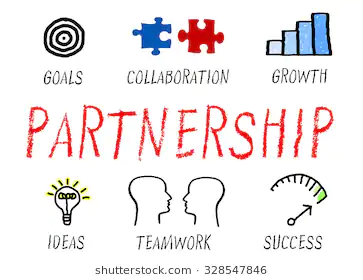
    Danielle wanted a better understanding of Authentic Leadership and we agreed to partner on this interview project in the Spring 2018 semester, so she could ask questions to get a better Authentic Leadership understanding and how to integrate this leadership style into daily interactions with direct reports.

    Danielle provided her approval to post her questions and overall summary below.  My direct responses follow her questions:

    • What first introduced you to the concept of authentic leadership? Is this something you sought out or did you naturally possess many of the qualities of a good authentic leader?
      • I stumbled across authentic leadership.  I wanted to complete my dissertation on the ‘1st Year Experience’ course but my advisor identified there was not enough Industrial/Organizational (I/O) Psychology involved with this subject.  My dissertation mentor introduced me to Authentic Leadership.  I liked the idea because I could relate to this leadership style.  After doing additional research, Authentic Leadership was selected as my preferred leadership style.
    • What are some ways you seek to create a positive work environment for your team?
      • I use daily interactions, adjusted for each person. Some team members I high five, some get a fist bump or elbow, etc.  Others, I just say good morning.  Establishing this daily routine and having personal conversations helps them know you are there for them.  I also take their input into consideration.  It is not my style to only talk to my team when I need something from them.
    • Who/What inspired these practices? In your work history, have you had a positive work environment stand out to you?
      • Honestly, I look back on two of my worst supervisors. I made a vow to not do things I didn’t like about their supervisory style.  My years at Macon State College standout because my supervisor (now mentor) gave our team the freedom to find our niche and conduct outreach to students as we saw fit.  I played volleyball with students on-campus as part of my outreach program.  The students saw me as a person and approachable.  Overall, my supervisor was willing to see things differently.  Colin Powell’s leadership approach also influences me daily.
    • What experiences have shaped your self-awareness?
      • Becoming a leader in the Air Force was the start of being self-aware because I couldn’t assume everyone learns the same and knows what I mean without explanation. The National Association of Colleges and Employers (NACE) Management Leadership Institute (MLI) feedback program was also important because I heard what past colleagues had to say about my work and I learned how others viewed me.  I learned you always need to check yourself and you need to be self-aware every day.  I approach my team on purpose; they don’t need to come to my office to approach me.
    • Is there someone in your past work experiences who showed relational transparency?
      • My mentor at Macon State College showed relational transparency. She took the time to explain processes.  My last Air Force supervisor was also good at pushing the team out to do things to understand the big picture.
    • How do you demonstrate relational transparency with your team?
      • I never sit on a high horse and say I’m the boss. I always listen to my team.  If something can’t be done, I make sure to explain the limitations.
    • What past experiences have helped you develop a strong internalized moral perspective?
      • I’ll share a conversation that has stuck with me and feels like it just happened yesterday. When I was a young Air Force instructor, a more veteran administrator observed my work and pulled me to the side for a quick chat.  He praised my work and asked me out of the blue if I wanted to know how to be successful in life.  He gifted me with this knowledge, “Be where you’re supposed to be, doing what you’re supposed to be doing, when you’re supposed to do it”.  Never compromise yourself and not be able to look yourself in the mirror.
    • Using balanced processing and welcoming feedback from your team is something you practice on a regular basis. Is this something you received training on or did you learn from experience?
      • I learned from experience and through reading Colin Powell’s book on leadership principles. If you don’t get up and walk around, it gives the perception you don’t care.  That’s why I go to my people.  I realized this concept (walking around) was tied to authentic leadership after conducting additional research.
    • How has your leadership style changed from each industry you’ve worked in? Have some environments been easier or more difficult to lead with authenticity?
      • Yes, I have grown as a leader. In the Air Force, leadership was based on rank.  People can complain but ultimately you can order people to do things.  Leadership is adaptable, and I have grown to be adaptable by learning how different people on my team work.  I talk with Gen X team members differently than Millennials. I’m comfortable enough to understand conversations with team members will all be different.  I know when certain team members ask ‘why’, they aren’t questioning authority but looking to understand.  Overall, authentic leadership works with and helps balance a team with multiple generations present.

    Danielle’s Summary:

    My conversation with Dr. Williams provided valuable insight into how to both grow as a leader and adopt authentic leadership in the workplace.  Leaders are not born overnight; it takes conscious reflection and communication with others to develop the necessary self-awareness.  Practicing authentic leadership foremost entails establishing approachability with your direct reports.  Daily interactions, visiting your team in their space, taking the time to learn about their individual personalities and backgrounds, and valuing their voices and opinions all help to show you care.  Adaptability is also an essential component of authentic leadership.  Recognizing team members think and behave differently allows you to cater your interactions in a way that is relatable to them.  Lastly, Dr. Williams stressed the importance of mentorship and learning from example.  Find someone you look up to in your workplace and sit down with them to hear their story and how they implement leadership in their role.


    Authentic Leadership

  • Authentic Leadership

    “Be yourself.  Everyone else is already taken”.

    (Oscar Wilde)

    Authentic Fish

    Authentic Leadership is rooted in positive psychology and can lead to greater self-awareness and regulated behavior of leaders.  This leadership style continues to grow and can be applied to multiple organizations and work settings.

    Authentic Leadership can be used to create positive work outcomes and improve organizational performance.  Authentic leaders are true to themselves, to others and are trusted by all levels.  Authentic leaders seek continued growth and can align thoughts, feelings and actions.  They are humble and consistent; this can be a positive predictor of direct report satisfaction.

    The four components or variables of Authentic Leadership are:  self-awareness, internalized moral perspective, balanced processing and relational transparency.

    • Self-awareness: the authentic leader has a full understanding of their strengths, values, weaknesses and how others view their leadership
    • Relational Transparency: the authentic leader presents authentic self to build trust.  They are consistent with words, thoughts and actions.
    • Internalized Moral Perspective: ability to integrate personal morals with self-perspective.  The leader must be self-aware to understand how their internal morals influence their actions.
    • Balanced Processing: the authentic leader can view both sides of an issue (positive and negative) before deciding.  This encourages the leader to seek multiple views and opinions and eliminates taking a defensive position when information is received.
      • My research shows direct report job satisfaction is best explained when leaders display balanced processing.

    Authentic Leadership implications for the work place

    • Interventions are received better
    • Work place efficiency improves
    • Encourages direct reports engagement
    • The leader is approachable, trusted, influential and displays relational interactions with direct reports

    How can you leverage Authentic Leadership in your work environment?  How would an Authentic leader impact your current work place?

    Authentic Leadership Part 2


  • Wisdom

    The series of daily challenges presented

    Provides a template to view

    How to conquer the challenges?

    It is all up to you

    Life provides many opportunities to grow

    The direction you chose, only you will know

    Continue to strive through the growing process

    Knowing you hold the key to it all

    The wisdom you gain

    Helps to move your journey forward

    And makes the challenges easier to maintain

    Wisdom

    Difference

  • Kayak Adventures

    Decided to explore the Wacissa River today via Kayak.  Wanted to add a new adventure to my ‘Walk into the Future’ and did some research on local Kayak outfitters.  Discovered the Wacissa River Canoe and Kayak Rentals outfit was only a 20-minute drive from me and had very reasonable prices for their rental options.

    The owners and staff were very friendly and had great knowledge of the Wacissa River and the multiple channels that branched off from the main river.  They outfitted me with a sit-on kayak, life vest, paddle, map and final instructions for my adventure.

    Launching off was easy and the day on the river began with me exploring multiple local inlets close to the outfitters docks.  I realized it has been right at 4 years since I last kayaked so needed to get my balance and paddle rotations down again.  Took me about 10 minutes to get the hang of kayaking again and I was off.

    There was a lot off overhead cover (shade) on the initial part of my adventure.  The outfitters also rent cabins that sit right on the river, so I rode by several of them on my way out to the open waters of the Wacissa river.  There were a few other kayakers out but not a lot of water traffic or noise during the time out on the water.

    The wild life on the river was close by and amazing!  Saw several different type and shape turtles just hanging out and sunning themselves.  Of course, every time I tried to get close to take a picture, they immediately dove to get away from me.

    It took about an hour of paddling the river before I spotted my first eagle.  Very impressive birds but when experienced in the wild they can be awe inspiring.  I was able to float for a bit and watch one have a large fish for lunch.  Got a couple pictures of this without disturbing the eagle or making it decide to dive bomb me.

    What’s a kayak trip on a river in North Florida without gators?  Spotted my first one of the day swimming close to where I was observing my eagle friend.  Decided to paddle closer to the gator which was about 7 feet long to get some ‘up close’ photos.  This all made sense when I started paddling.  Luckily, I came to my senses before I got too close to the gator because I had no Plan B for what I would do if it took serious interest in me.  Decided to float a bit instead of heading towards the gator and freaking us both out.  I was able to get some pictures of smaller gators but didn’t linger too long to avoid disturbing them or freaking myself out.

    Turning to head back in allowed me to fully take in how far I had traveled on the river without really thinking about distance.  Still didn’t worry about distance but rediscovered kayaking is a great way to burn some calories.  The rotational paddle motion needed to move the kayak will really work your arms, shoulders and core.  Didn’t rush to get back, simply enjoyed the river and the views provided as I came back to the outfitters.

    Highly recommend getting out on a kayak or canoe and taking in a peaceful day on the river.

    Just don’t disturb gators!

    Check out my new friends if you want to kayak the Wacissa:  http://www.wacissarivercanoerentals.com/index.htm

    Kayak1

  • Thanks for Walking with me!

    Interesting to note the people who have continued to walk with me into the future.

    I have an amazing set of friends, some who have been with me for years and others who have joined my journey more recently.  I appreciate the time they invest in me and do my best to return their investment daily.

    A large part of my journey is the inclusion of my friends in this walk.  The daily interactions (texts, emails, calls) I have with my friends allows me to continue to grow and know I’m making a positive difference in their lives.  I get great joy receiving a text about a professional accomplishment or huge ‘money move’ (Cardi B. reference) from my friends.  This keeps me motivated to continue to find ways to help others exceed their stated goals.

    The ability to make a difference daily has not diminished at all.  Walking into the future has provided me additional avenues to help others while experiencing new adventures in my life.  The ability to be available for conversations, texts and emails without schedule constraints is the best aspect of my walk so far.  I’m enjoying being able to branch out into multiple areas (travel, leadership, life, music, etc.) while walking into the future.

    Really looking forward to seeing what else this walk brings into my life!  I’m sure travel and mentoring will play a huge part!

    Thank you to my Board of Directors who keep me balanced daily!

    Thank you

  • Irie

    The easiest definition for the Jamaican word Irie is total peace with your current state of being or the way you feel when you have no worries (Urban Dictionary).

    Spend anytime with or around Jamaicans and you will hear someone respond to a greeting with Irie ‘mon.  This laid back and carefree way of life can be infectious and inspiring if you let it.

    So, how can you get to the Irie level in your daily life?  Positive self-talk!

    Positive self-talk and thinking can transform your daily interactions.  The benefits to your psyche are visible as soon as you start the process.  How many people say they are not a morning person?  This is a negative self-talk concept.  You have just ruined your day by putting yourself in a negative state of mind.  Why not welcome the morning with open arms?  Change the negative thoughts of the morning with positive thoughts.  State today will be a great day and watch how your actual day matches up with your positive thoughts.

    Positive self-talk can be applied in multiple areas of your life.  Apply for a new job with confidence and know you have put your best efforts into the process.  Don’t openly doubt yourself and take on the negative side of a situation.  Positive self-talk will allow you to enjoy the prospects of going to the gym, meeting new people, finding a hobby.  I could go on and on with this concept but hopefully you can see ways to incorporate positive self-talk into your daily routines.

    Make a few declarations:

    • Today will be a great day
    • I’m a fantastic student
    • I’m feeling great
    • Looking forward to my run
    • Nothing can stop me today

    How can you add positive self-talk into your personal conversations?  Curious!

    Let’s get Irie!

    Irie

  • Walk

    Took a walk today in my hometown, Jasper, Florida.  Small farming community in North Central Florida on the Florida/Georgia line.

    Why write about a walk in a small town?

    Well, decided to take a simple walk after dinner just to get a few steps in.  I inadvertently left my cell phone behind but discovered this was a very fortunate mistake.

    No cell phone, headphones or other electronics provided me an opportunity to truly enjoy my walk.  The peacefulness I found simply taking in nature (birds, trees, the sunset) was an amazing aspect of the walk.  Yes, I’ve walked in my hometown before but how many times have you really escaped from your electronics and just enjoyed the moment?

    My stroll allowed me to burn a few calories and still enjoy the process of my walk.  No specific place to be or time to get there during this walk allowed me to get lost in plain sight and just enjoy the moment.  Enjoyed a two-mile stroll without ever thinking about the need to check email, text messages or my watch.  Felt funny at first but think I like getting away from my electronics for a little while.

    Will look to make this type of getaway a regular staple to help focus on the important things in life.

    When’s the last time you left your electronics behind on purpose?  How would this process help in your daily life?

  • Mentoring

    A mentor is someone who allows you to see the hope inside yourself.” 

    (Oprah Winfrey)

    Having a mentor is an excellent way to walk into the future.  A mentor can help with your personal and professional growth.  I recommend having multiple mentors who can give you different perspectives and maximize your efforts to walk into the future.

    Identify someone who has expertise in an area you are interested in.  Use your current network to help identify a mentor if you don’t have direct connections with the right person.

    Reach out to a potential mentor and let them know your needs and gauge their ability to serve as your mentor.  Remember, this person will be ‘giving’ their time to help you grow so make sure the fit works for you both.

    You should be responsible for setting the agenda whenever you meet with your mentor.  Provide them with regular updates so they can be prepared to sit with you.  This ensures your time together is productive.

    I let my mentees identify the day, time and agenda for our regular meetings.  This helps them take charge of their meeting and helps keep us on track to meet their stated goals.  I find myself learning and growing during my sessions as much as my mentees.  This is another form of networking and I enjoy being a mentor.

    I have multiple mentors and see my personal and professional growth expanding due to mentors who have ‘reached back’ to help me.  I continue to have my eyes open for new mentors to help my walk into the future.

    How can you leverage a mentor/mentee relationship for growth?  Who can you mentor to help them move forward?

    Note:  Received text messages from two of my mentees on the same day—they both accepted offers for new positions—well done!

    For by wise counsel you will wage your own war.  And in a multitude of counselors there is safety. (Proverbs 24:6)

    Make it a great day!

    Mentor

  • Get Fit

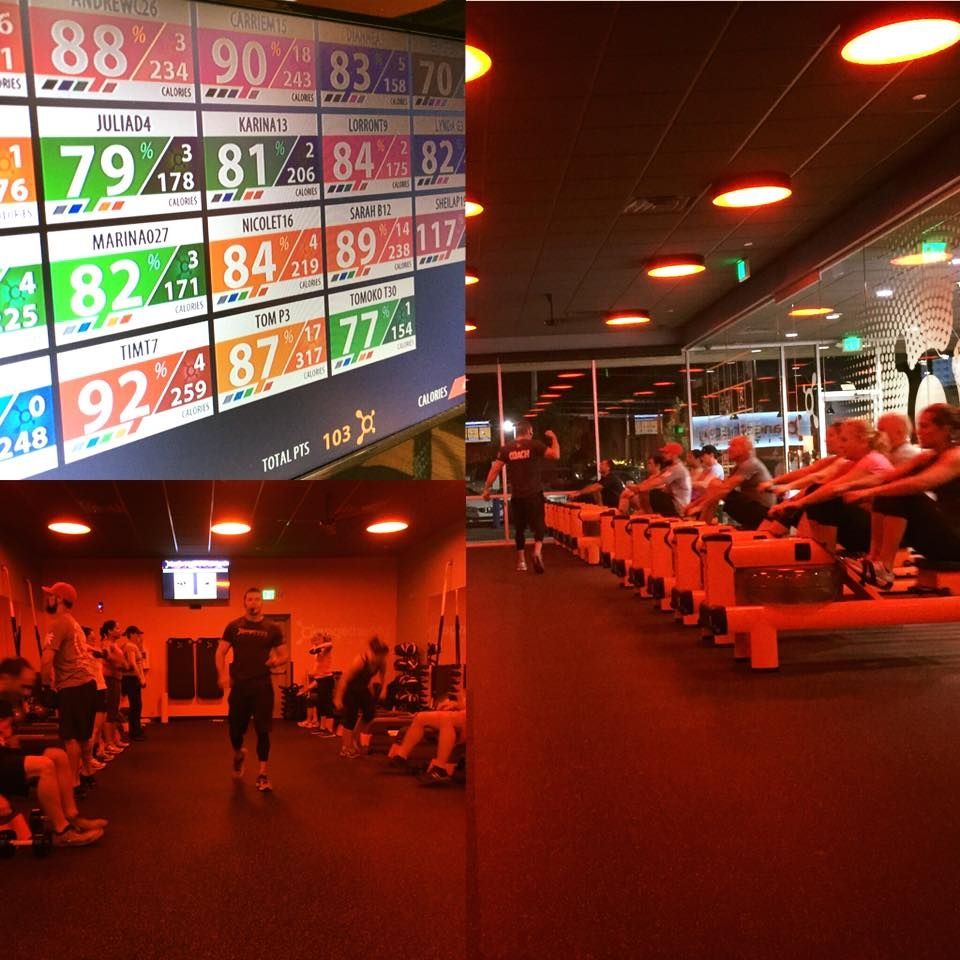
    Why not use your walk into the future to work on your physical well-being?

    A lot of people make January resolutions to motivate themselves to get fit.  You don’t have to limit your motivational time frame to January, you can decide to work on your physical goals anytime of the year.

    Check your local area for 5k races and sign up.  There are multiple ways to get ready for your first 5K (3.1 miles).  A very popular program is called ‘Couch to 5K’ which will start you out with a walk/run platform and build your endurance, so you can start and complete a 5K.  You can use this or a similar program to begin the process of joining in the fun of a race weekend when ready.  Remember to set measurable goals for yourself.  Example:  Complete your first 5k under 35 minutes.  Your training and mindset should be geared towards meeting or exceeding your measured 5k goal.

    Another area you may want to explore is strength training.  Building muscle is a great way to reshape your body and enjoy yourself in the process.  Start slow and give yourself time to get use to the ‘gym culture’ and build an individual program.  You may want to utilize a personal trainer as you get started to learn proper techniques and to create a program to maximize your results.  Again, set measurable goals for yourself and make sure you stretch those new muscles.

    My walk into the future has allowed me to update my personal fitness goals.  I read on Men’s Fitness.com about a guy who decided to walk/run a 5k daily to help him lose weight.  He was able to drop over 50 pounds with this process.  He started out walking and built himself up to being able to run a full 5k within his documented schedule.

    I’m not trying to lose 50 pounds but plan to leverage a similar approach as I gear up for my next half marathon in October.  I have completed two half marathons so far this year (Rock and Roll New Orleans and Nashville).  My stated goal for 2018 was to run 4 half marathons.  I’m well on my way to meeting this written goal.  I recently adjusted this goal a bit to include running a half marathon under 2 hours.  My personal record for a half marathon is 2 hours and 15 minutes (2:15).  I believe adjusting to the daily 5k program will help me increase my mileage base and speed as I gear up for the next half marathon.  We will see how this new approach and mindset will work for me. Gearing up for the USO Armed Forces Half in October:  http://jaxusohalfmarathon.com/#info

    (FYI—I completed 12 5k’s in July).

    What fitness goals did you set for 2018?  How’s your progress towards meeting or exceeding those goals.  Don’t be afraid to adjust as needed but keep moving forward—you can do it!

    SAMPLE Training plan below:Track Shack