“Character is the real thing, whereas reputation is merely the shadow.”
(Abraham Lincoln)
One of the most important decisions a leader makes is choosing the right people to join their team. Organizations often focus heavily on experience, technical expertise, and credentials when evaluating candidates. While those qualities matter, there is another factor that frequently determines long-term success: character.
I adopted the hire character and train the skill philosophy years ago. My mentor hired me for a role at Macon State College simply on my character. She identified traits that she saw in me and decided to train me for the role. What an amazing concept, huh? I’m being funny with that last statement. 😊
The quick lesson is skills can be taught, knowledge can be acquired, and experience can be gained. Character, however, is much harder to develop. Fun fact, the few times I went against my own hiring concept ended with me having to remove a staff member who had the skill but lacked the character we needed in the work environment.
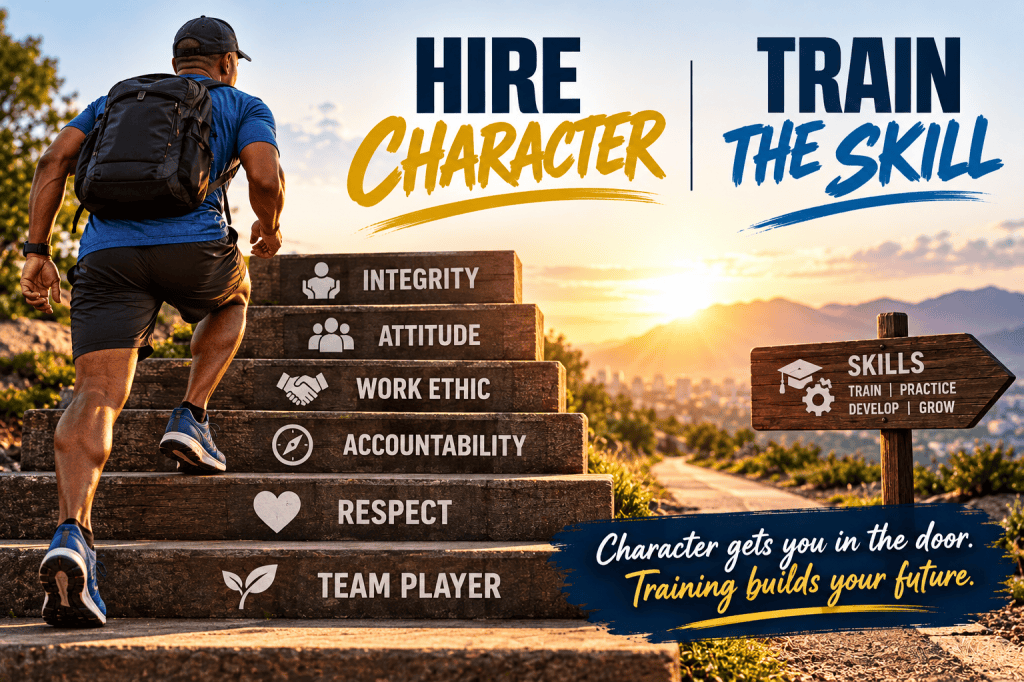
I coach new leaders to help them understand a simple but powerful principle: Hire character and train the skill.
What is character? Great question, Jayla. Character is the collection of values, habits, and behaviors that define how a person responds when no one is watching. It includes qualities such as integrity, accountability, humility, respect, work ethic and a positive attitude. I’m sure we could add more qualities, but these are the things I am looking for when hiring. All these qualities are important for me, but humility stands out when I’m making the final decision.
These traits influence how individuals interact with others, handle challenges, and contribute to organizational culture. A candidate may possess impressive technical skills, but if they lack integrity or accountability, those skills can become liabilities rather than assets.
Top organizations invest millions of dollars each year in training and development because skills are teachable. Employees can learn new software, technical procedures, customer service skills and communication strategies. Most people can improve these skills over time provided with the right work environment, coaching and a willingness to learn. What is much harder to teach is honesty, empathy, responsibility, and a genuine desire to contribute to the success of others.
Every hiring decision impacts organizational culture. This is not a huge stretch on the impact of hiring on the organizational culture. When leaders hire individuals with strong character, they strengthen the foundation of the team. These employees provide support for their colleagues, acknowledge mistakes, maintain a positive attitude during adversity and contribute to a healthy work environment.
By contrast, highly skilled employees with poor character can damage morale, create conflict, and undermine trust. Culture is not built by policies alone. It is built by people.
Many leaders have experienced the frustration of hiring someone with an outstanding resume only to discover that the individual struggles to work with others or align with organizational values. This type of employee must be identified quickly to avoid the following:
- Increased turnover / conflict in the work environment / lower team morale / lost trust
A technically skilled employee may perform tasks well, but if their behavior negatively impacts the team, the overall cost can outweigh the benefits. This is the time for leaders to eliminate the potential for this employee to cause conflict in the work environment.
When leaders hire for character, they are also investing in future leadership. People with strong character often possess qualities that make them excellent leaders. They value relationships, earn trust and place the team’s success above personal recognition. These are the individuals who often rise through organizations and positively influence those around them.
I advise leaders to look beyond technical qualifications and ask questions that reveal character during the hiring process. Consider exploring examples of overcoming adversity, times when the candidate admitted a mistake and situations where they helped a teammate succeed. You can add other examples here, but these are things that I focus on when hiring.
The answers often reveal far more about future performance than a list of accomplishments on a resume. New systems will emerge, and job requirements will adapt. Yet the qualities that define character will remain timeless: integrity, respect and accountability will always matter.
Leaders who prioritize character create organizations that can adapt, grow, and thrive regardless of changing circumstances. The best teams are not necessarily made up of the most talented individuals. They are made up of people who combine talent with character.
As leaders, our responsibility is not simply to fill positions. It is to build teams capable of achieving extraordinary results while treating people with dignity and respect.
When given the choice, hire a person whose values align with your mission, whose integrity earns trust, and whose attitude elevates others. Then invest in teaching the skills they need to succeed. Because while skills may open the door, character determines how far someone will go.
Reflection Question
When evaluating talent, do you spend more time assessing skills or character—and how might your hiring outcomes improve if character became your primary filter?
Walk Into the Future Leadership Thought:
Skills may qualify someone for the job, but character determines whether they will elevate the team. Hire for who they are, then train them for what they need to know.
Irie!
Calvin Williams
“Focus on character over reputation, as character reflects who you truly are.”
(John Wooden)


Leave a Reply